What this Russian cultural resonance quiz measures
This am I Russian quiz estimates how strongly you agree with statements about heritage identity, cultural traditions such as New Year and banya rituals, hospitality warmth, and stoic resilience humor tied to Russian diaspora culture. Twenty original agreement items group into four domains inspired by diaspora identity research and UNESCO intangible heritage listings around Slavic folk traditions and oral storytelling. Each item also maps to a fear-of-intimacy stack layer so you can see whether vulnerability pull-back pairs with guarded heritage pride or emigration stories. Your Russian cultural resonance index averages these patterns into a 0 to 100 score where higher numbers mean stronger resonance on this screener.
Heritage and identity
Language pride, ancestry curiosity, visible heritage symbols, and diaspora stories without embarrassment
Cultural traditions
Maslenitsa blini, New Year tree rituals, banya steam habits, and folk music beyond stereotype memes
Hospitality warmth
Guest-first tables, endless tea, feeding visitors before business talk, and generous hosting energy
Stoic resilience and humor
Dry wit, gallows humor, enduring hardship with minimal complaint, and blunt honesty among friends
How it works
Three steps from first question to your Russian cultural resonance report with fear-of-intimacy stack. Click Start Quiz to open the interactive quiz in a full-screen modal.
Answer 20 agreement items
Rate how much you agree with each statement about Russian culture and identity in your life, from Strongly disagree to Strongly agree. You click Next after each answer; nothing auto-advances.
Items map to culture domains and intimacy stack
Your answers accumulate percentages for heritage identity, cultural traditions, hospitality warmth, and stoic resilience humor, plus four fear-of-intimacy stack layers.
View band and dual charts
Results show Lower, Mixed, or Higher Russian Cultural Resonance with domain bars and a fear-of-intimacy stack chart. Higher resonance index means stronger cultural pull on this screener.
Take the am I Russian quiz
Rate 20 statements about how Russian culture and identity show up in your daily habits. Your answers produce a Russian cultural resonance index from 0 to 100, a fear-of-intimacy stack index, four domain scores, and a band label for reflection or family-table debate.
Opens in a focused modal. No account required. Results stay on screen.
What your Russian cultural resonance result means
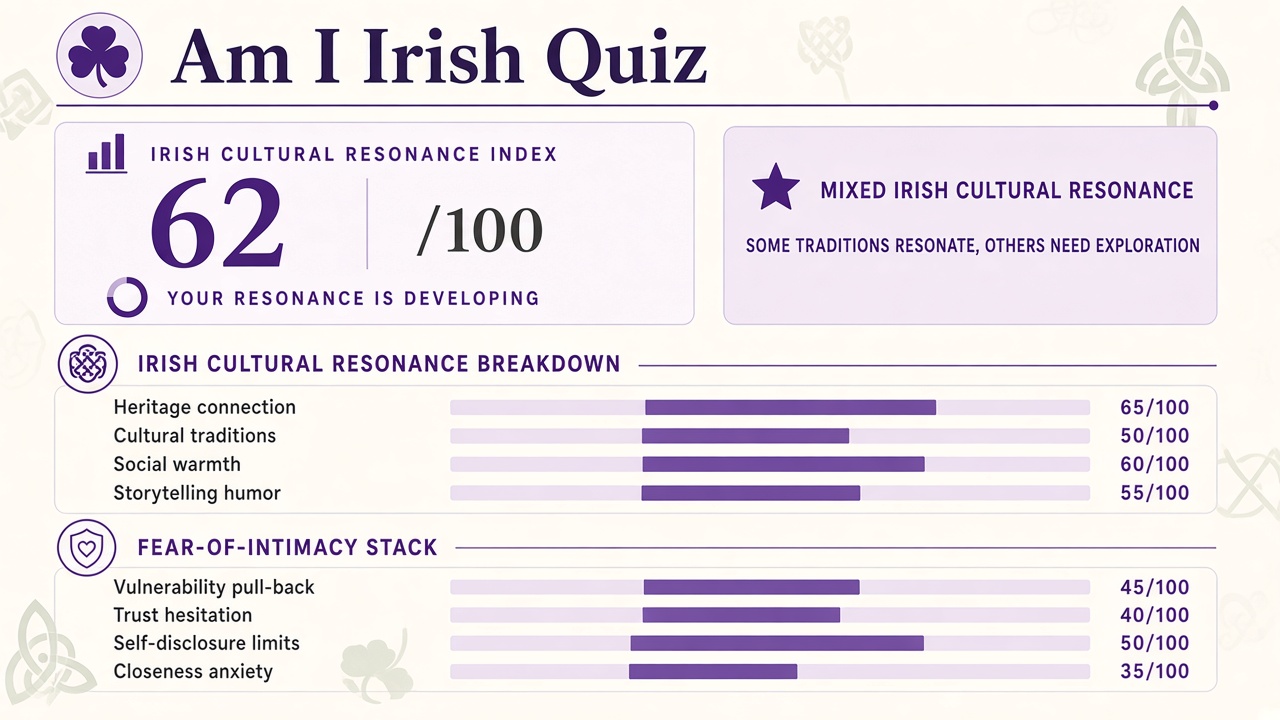
Your Russian cultural resonance index is the normalized total across all 20 items on a 0 to 100 scale, with reverse scoring on embarrassment and avoidance items so higher scores mean stronger cultural resonance overall. The fear-of-intimacy stack index uses inverted scoring on the same answers so higher stack scores mean more closeness-guarding patterns on these items.
| Band | Index range | Typical reading |
|---|---|---|
| Lower Russian Cultural Resonance | 0 to 35 | Fewer diaspora ritual habits; distant curiosity or private pride without public display |
| Mixed Russian Cultural Resonance | 36 to 65 | Blend of heritage pull and guarded identity; domain and stack charts show where habits wobble |
| Higher Russian Cultural Resonance | 66 to 100 | Frequent heritage pride, holiday rituals, guest-first hosting, and stoic humor on this screener |
What your Russian culture report looks like
After all 20 items, you get a Russian cultural resonance index from 0 to 100, a band label, four culture domain bars, and a fear-of-intimacy stack chart with vulnerability pull-back, trust hesitation, self-disclosure limits, and closeness anxiety layers.
What this quiz can and cannot tell you
Can tell you
- How often heritage pride, holiday rituals, hospitality warmth, and stoic humor showed up in your self-report
- A Russian cultural resonance index and fear-of-intimacy stack index with domain bars
- Which culture domain or intimacy stack layer feels strongest in your current habits
- A starting point for genealogy curiosity or family-table identity debates with honest limits
Cannot tell you
- Whether you hold Russian citizenship or qualify for residency without official records
- Your exact DNA ethnicity percentage without a laboratory test
- Whether locals in Moscow, Saint Petersburg, or regional cities would call you Russian
- Whether language fluency, holiday knowledge, or cooking skill makes you more authentic than anyone else
Diaspora identity, New Year rituals, and the fear-of-intimacy stack
Russian diaspora communities often center New Year with a decorated tree, Olivier salad, and televised films in ways that differ from Western Christmas timing. Banya steam culture, endless guest tables, and dry humor among friends remain touchstones in memoirs and oral history even when politics complicate public heritage display abroad.
The Quiz Hub built this am I Russian quiz as an original self-report screener inspired by those diaspora identity themes plus FOIS-style intimacy avoidance layers from Descutner and Thelen (1991), not a reproduction of any single published ethnicity scale. Our am I Irish quiz screens Celtic diaspora habits. The am I Italian quiz maps Mediterranean food rituals rather than blini and pelmeni comfort food.
| The Quiz Hub test | What it adds |
|---|---|
| Am I Irish quiz | Celtic diaspora pub warmth and storytelling, not New Year tree rituals |
| Am I Italian quiz | Mediterranean food and family ritual cues, not banya and blini habits |
| Am I French quiz | French cultural resonance habits, not Slavic guest-table traditions |
| Fear of intimacy quiz | General vulnerability avoidance, not heritage embarrassment |
| This quiz | Russian cultural resonance index plus fear-of-intimacy stack for heritage, traditions, hospitality, and stoic humor |
Sample item types include agreement ratings such as whether you set a full table before guests arrive, or whether you dodge personal topics with sarcastic anecdotes. High heritage identity with high closeness anxiety on the stack often lands in Mixed Russian Cultural Resonance bands when diaspora pride feels safe at home but guarded in mixed company. Read how we review quizzes in our editorial policy or browse more tools on our fun and novelty tests hub.
Am I Russian Quiz FAQ
What does the am I Russian quiz measure?
Twenty original agreement items ask how strongly you identify with heritage pride, holiday rituals, guest-first hospitality, and stoic humor tied to Russian diaspora culture. Each item also maps to a fear-of-intimacy stack layer. You receive a Russian cultural resonance index from 0 to 100 where higher scores mean stronger resonance on this screener, plus a parallel stack index.
Does a higher Russian cultural resonance index prove I am Russian?
No. The index measures how often you report living Russian diaspora habits in daily life, not citizenship, passport status, or DNA percentages. You can score high with no Russian ancestry, or score low while holding a Russian passport.
What is the fear-of-intimacy stack on this quiz?
The fear-of-intimacy stack is a second results chart inspired by FOIS-style intimacy avoidance themes from Descutner and Thelen (1991), adapted to heritage and guest-table framing. Higher stack scores mean more avoidance patterns on these items.
How is this different from the am I Irish quiz?
The am I Irish quiz screens Celtic diaspora habits: county curiosity, trad music, pub warmth, and banter storytelling. This am I Russian quiz focuses on New Year rituals, banya culture, guest tables, and dry Slavic humor patterns.
How is this different from ancestry DNA tests?
Commercial DNA kits estimate genetic ethnicity percentages from saliva samples. This am I Russian quiz is a self-report screener about cultural habits and identity feelings you notice in daily life. It cannot replace genealogy records or official citizenship documentation.
Can this quiz tell me if I qualify for Russian citizenship?
No. Citizenship rules depend on birth location, parent records, and documented residency history reviewed by official authorities. The cultural resonance index describes entertainment self-reflection habits only, not legal eligibility.
Who reviewed this content?
Dr. James Whitfield, reviewed the test framing and result explanations. See our editorial policy for review standards.
Reviewed by