What this move-out readiness quiz measures
This am I ready to move out quiz estimates how strongly you agree with statements about financial readiness, life skills independence, emotional coping without parental rescue, and housing logistics before signing a lease. Twenty-two original agreement items group into four domains inspired by emerging adulthood research from Jeffrey Arnett on leaving home timing and tenant education resources from the U.S. Department of Housing and Urban Development on lease basics. Each item also maps to a fear-of-intimacy stack layer so you can see whether vulnerability pull-back or trust hesitation pairs with fear of disappointing family when you discuss moving out. Your move-out readiness index averages these patterns into a 0 to 100 score where higher numbers mean stronger readiness signals on this screener.
Financial readiness
Budget tracking, rent math, savings buffers, debt awareness, and stable income planning before signing a lease
Life skills independence
Cooking, laundry, cleaning rhythms, appointment scheduling, and daily chores without a parent managing the calendar
Emotional readiness
Handling homesickness, roommate conflict, solo decisions, and stress without defaulting back to parental rescue
Housing logistics
Reading leases, vetting roommates, moving timelines, utility setup, and neighborhood research before move-in day
How it works
Three steps from first question to your move-out readiness report with domain bars and fear-of-intimacy stack.
Answer 22 agreement items
Rate how much you agree with each statement about money, chores, emotions, and lease planning, from Strongly disagree to Strongly agree. You click Next after each answer; nothing auto-advances.
Items map to readiness domains and intimacy stack
Your answers accumulate percentages for financial readiness, life skills independence, emotional readiness, and housing logistics, plus four fear-of-intimacy stack layers.
View band and dual charts
Results show Lower, Mixed, or Higher Move-Out Readiness with domain bars and a fear-of-intimacy stack chart. Higher index means stronger self-reported readiness on this screener.
Take the am I ready to move out quiz
Rate 22 statements about budgets, chores, solo coping, and lease logistics. Your answers produce a move-out readiness index from 0 to 100, a fear-of-intimacy stack index, four domain scores, and a band label for honest planning.
Opens in a focused modal. No account required. Results stay on screen.
What your move-out readiness result means
Your move-out readiness index is the normalized total across all 22 items on a 0 to 100 scale, with reverse scoring on avoidance items so higher scores mean stronger readiness patterns overall. The fear-of-intimacy stack index uses inverted scoring on the same answers so higher stack scores mean more closeness-guarding patterns on these items.
| Band | Index range | Typical reading |
|---|---|---|
| Lower Move-Out Readiness | 0 to 35 | Fewer budget, chore, and lease-planning habits; common while still at home |
| Mixed Move-Out Readiness | 36 to 65 | Blend of independence habits and planning gaps; domain chart shows priority areas |
| Higher Move-Out Readiness | 66 to 100 | Frequent budget, chore, emotional, and lease-planning habits on this screener |
What your move-out readiness report looks like
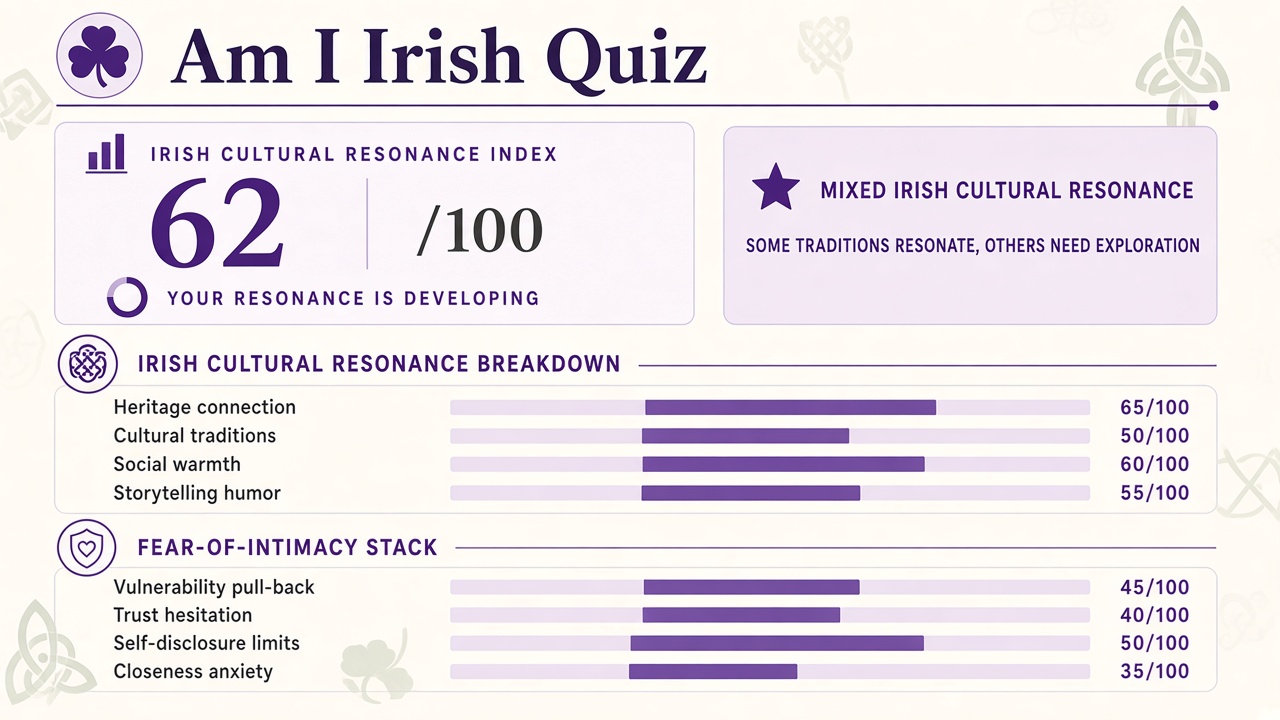
After all 22 items, you get a move-out readiness index from 0 to 100, a band label, four domain bars, and a fear-of-intimacy stack chart with vulnerability pull-back, trust hesitation, self-disclosure limits, and closeness anxiety layers.
What this quiz can and cannot tell you
Can tell you
- How often financial, life skill, emotional, and housing logistics habits showed up in your self-report
- A move-out readiness index and fear-of-intimacy stack index with domain bars
- Which readiness domain feels strongest or weakest before you browse listings
- A starting point for family conversations about timing, not a verdict on when you must leave
Cannot tell you
- Whether your income qualifies for rent in your target city without a real budget
- Whether a landlord will approve your application or require a co-signer
- Whether staying home is wrong for your culture, health, or family obligations
- Whether moving out is safe if you face housing insecurity or abuse at home
Leaving home timing, lease literacy, and the fear-of-intimacy stack
Psychologist Jeffrey Arnett described emerging adulthood as a period when leaving home timing varies widely by economics, education, and family expectations rather than a single correct age. HUD tenant education materials emphasize that first leases involve deposits, roommate agreements, and utility setup that many people never practice while living with parents.
The Quiz Hub built this am I ready to move out quiz as an original self-report screener plus FOIS-style intimacy avoidance layers from Descutner and Thelen (1991). Our am I ready for college quiz screens campus independence habits. The am I independent quiz maps general autonomy rather than lease math and rent buffers.
| The Quiz Hub test | What it adds |
|---|---|
| Am I ready for college quiz | Campus academic and social readiness, not lease signing and rent buffers |
| Am I independent quiz | General autonomy habits, not mock budgets and utility setup |
| Am I ready to buy a house quiz | Mortgage and homeownership readiness, not first apartment logistics |
| Fear of intimacy quiz | General closeness avoidance, not parental goodbye conversations |
| This quiz | Move-out readiness index plus fear-of-intimacy stack for money, life skills, emotion, and housing logistics |
Sample items include whether you would sign a lease before understanding roommate rent default rules, or whether you panic when parents cannot solve problems anymore. High financial readiness with high closeness anxiety on the stack often lands in Mixed bands when you can budget on paper but avoid honest move-out talks at home. Read our editorial policy or browse the personality and psychology tests hub.
Am I Ready to Move Out Quiz FAQ
What does the am I ready to move out quiz measure?
Twenty-two original agreement items ask about financial readiness, life skills independence, emotional coping without parental rescue, and housing logistics such as lease reading and roommate vetting. Each item also maps to a fear-of-intimacy stack layer. You receive a move-out readiness index from 0 to 100 where higher scores mean stronger readiness signals on this screener.
Does a higher move-out readiness index mean I should move out now?
No. Higher scores mean your responses suggest more frequent readiness habits on this screener. Local rent, income, family obligations, and safety still determine whether moving out is wise. This quiz cannot approve leases or replace financial counseling.
What is the fear-of-intimacy stack on this quiz?
The fear-of-intimacy stack is a second results chart inspired by FOIS-style intimacy avoidance themes from Descutner and Thelen (1991), adapted to leaving-home framing. Higher stack scores may reflect guarding vulnerability when discussing independence with family.
How is this different from the am I ready for college quiz?
The am I ready for college quiz screens academic self-management, campus social skills, and dorm life habits. This move-out quiz focuses on rent budgets, chore independence, emotional solo coping, and lease logistics for leaving home regardless of college plans.
Can this quiz tell me if my parents will support my move?
No. Family support, cultural expectations, and co-signer availability are relationship and financial facts this screener cannot measure. Use results to identify skill gaps to discuss honestly with trusted adults.
Who reviewed this content?
Dr. James Whitfield, PhD, reviewed the test framing and result explanations. See our editorial policy for review standards.
Who reviewed this content?
Dr. James Whitfield, reviewed the test framing and result explanations. See our editorial policy for review standards.
Reviewed by