
What this sexual conservatism quiz measures
This am I prude quiz estimates how strongly you agree with statements about media comfort, body talk comfort, boundary strictness, and pleasure openness. Twenty-two original agreement items group into four domains inspired by sexuality education frameworks from SIECUS on consent and comfort, plus research on sexual self-schema and boundary language. Each item also maps to a fear-of-intimacy stack layer so you can see whether vulnerability pull-back pairs with avoiding body talk with partners. Your sexual conservatism index averages these patterns into a 0 to 100 score where higher numbers mean stronger conservatism signals on this screener.
Media comfort
Comfort with nudity in films, explicit lyrics, romance scenes, and sexual humor in group settings
Body talk comfort
Ease discussing bodies, periods, STI testing, or intimacy needs without shutting conversations down
Boundary strictness
Firm limits on sexting, hookup pace, PDA, and situations that feel too fast or too public
Pleasure openness
Curiosity about desire, consent conversations, and exploring intimacy without shame or rigid rules
How it works
Three steps from first question to your sexual conservatism report with domain bars and fear-of-intimacy stack.
Answer 22 agreement items
Rate how much you agree with each statement about media, body talk, boundaries, and pleasure, from Strongly disagree to Strongly agree. You click Next after each answer; nothing auto-advances.
Items map to conservatism domains and intimacy stack
Your answers accumulate percentages for media comfort, body talk comfort, boundary strictness, and pleasure openness, plus four fear-of-intimacy stack layers.
View band and dual charts
Results show Lower, Mixed, or Higher Sexual Conservatism with domain bars and a fear-of-intimacy stack chart. Higher index means stronger self-reported conservatism on this screener.
Take the am I prude quiz
Rate 22 statements about explicit media, body conversations, personal boundaries, and pleasure openness. Your answers produce a sexual conservatism index from 0 to 100, a fear-of-intimacy stack index, four domain scores, and a band label without shaming your values.
Opens in a focused modal. No account required. Results stay on screen.
What your sexual conservatism result means
Your sexual conservatism index is the normalized total across all 22 items on a 0 to 100 scale, with reverse scoring on openness items so higher scores mean stronger conservatism patterns overall. The fear-of-intimacy stack index uses inverted scoring on the same answers so higher stack scores mean more closeness-guarding patterns on these items.
| Band | Index range | Typical reading |
|---|---|---|
| Lower Sexual Conservatism | 0 to 35 | Fewer media avoidance and body-talk shutdown habits; more openness signals |
| Mixed Sexual Conservatism | 36 to 65 | Blend of boundaries and openness; domain chart shows strongest conservatism cues |
| Higher Sexual Conservatism | 66 to 100 | Frequent media avoidance, strict boundaries, and limited pleasure openness on this screener |
What your sexual conservatism report looks like
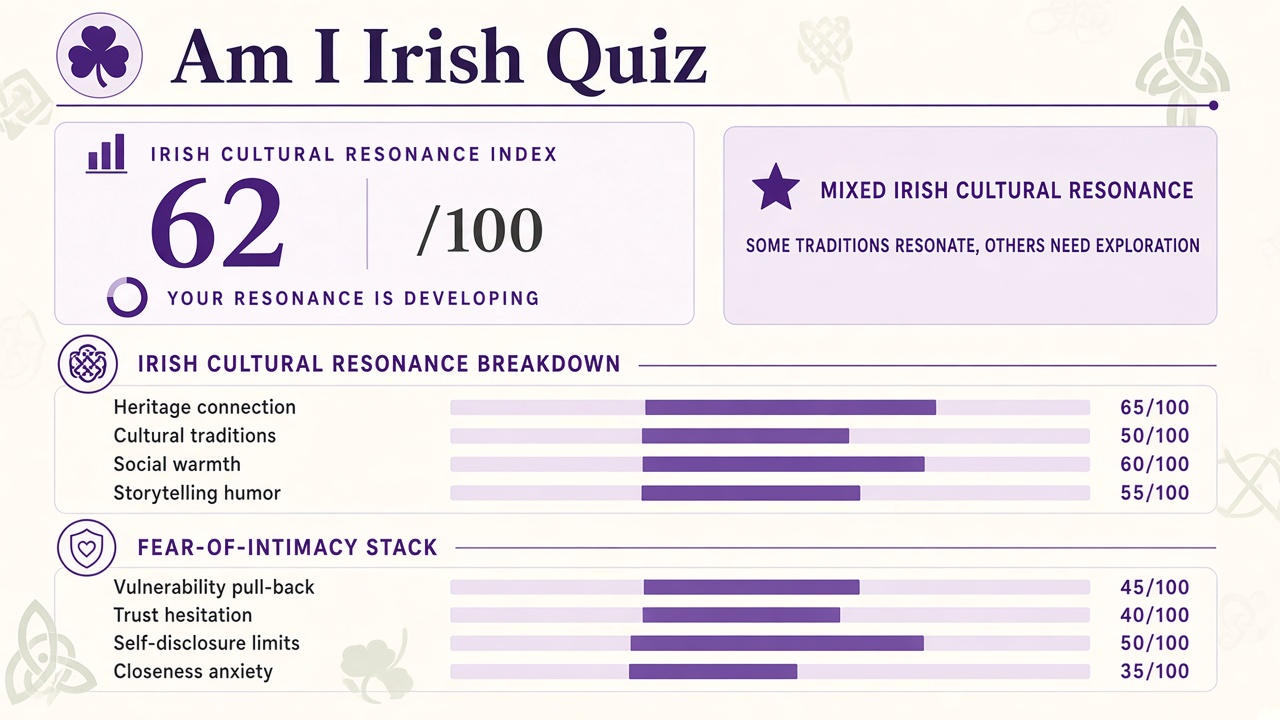
After all 22 items, you get a sexual conservatism index from 0 to 100, a band label, four domain bars, and a fear-of-intimacy stack chart with vulnerability pull-back, trust hesitation, self-disclosure limits, and closeness anxiety layers.
What this quiz can and cannot tell you
Can tell you
- How often media avoidance, body-talk shutdown, strict boundaries, and pleasure limits showed up in your self-report
- A sexual conservatism index and fear-of-intimacy stack index with domain bars
- Which domain feels strongest before you talk with a partner or therapist
- A starting point for consent and boundary conversations without prescriptive labels
Cannot tell you
- Your moral character, religion, or orientation status
- Whether you experienced trauma or need therapy based on score alone
- Whether you should change beliefs to match peer norms
- Partner compatibility without honest two-way conversation
Sexual comfort zones, consent boundaries, and the fear-of-intimacy stack
Sexuality educators emphasize that comfort with explicit media, body vocabulary, and pacing varies widely by upbringing, culture, and past experiences. Conservative boundaries can protect people from pressure; openness can support pleasure and consent when paired with trust. Neither pole is automatically healthier without context.
The Quiz Hub built this am I prude quiz as an original self-report screener plus FOIS-style intimacy avoidance layers from Descutner and Thelen (1991). Our am I asexual quiz screens attraction patterns. The fear of intimacy quiz maps general closeness avoidance rather than sexual media habits.
| The Quiz Hub test | What it adds |
|---|---|
| Am I asexual quiz | Attraction and ace spectrum patterns, not media conservatism habits |
| Fear of intimacy quiz | General closeness avoidance, not sexual boundary strictness alone |
| Am I gay quiz | Same-gender attraction signals, not conservatism comfort zones |
| Attachment style test | Anxiety and avoidance attachment, not explicit media comfort |
| This quiz | Sexual conservatism index plus fear-of-intimacy stack for media comfort, body talk, boundaries, and pleasure openness |
Sample items include whether you avoid sexting because risk feels too high, or whether you can name what you enjoy without feeling like a bad person. High boundary strictness with high self-disclosure limits on the stack often lands in Mixed bands when you hold firm public rules but avoid private wants. Read our editorial policy or browse sexuality and LGBTQ+ tests.
Am I Prude Quiz FAQ
What does the am I prude quiz measure?
Twenty-two original agreement items ask about media comfort, body talk comfort, boundary strictness, and pleasure openness. Each item also maps to a fear-of-intimacy stack layer. You receive a sexual conservatism index from 0 to 100 where higher scores mean stronger conservatism signals on this screener.
Does a higher sexual conservatism index mean I am a prude?
The index describes self-reported comfort and boundary habits on this screener, not a permanent identity label. Many people hold conservative boundaries by choice. This quiz cannot judge your morals or tell you to change.
What is the fear-of-intimacy stack on this quiz?
The fear-of-intimacy stack is a second results chart inspired by FOIS-style intimacy avoidance themes from Descutner and Thelen (1991), adapted to sexual comfort framing. Higher stack scores may reflect avoiding body talk even when boundaries are clear.
How is this different from the am I asexual quiz?
The am I asexual quiz screens attraction and ace spectrum patterns. This am I prude quiz focuses on comfort with explicit media, body conversations, boundary strictness, and pleasure openness regardless of orientation.
Can conservative scores mean something is wrong with me?
No. Higher conservatism scores can reflect values, culture, caution after bad experiences, or current season of life. Talk with a licensed therapist if shame or past harm feels stuck or coercive.
Who reviewed this content?
Dr. James Whitfield, PhD, reviewed the test framing and result explanations. See our editorial policy for review standards.
Who reviewed this content?
Dr. James Whitfield, reviewed the test framing and result explanations. See our editorial policy for review standards.
Reviewed by
