What this polyamory quiz measures
This am I polyamorous quiz estimates how often social visibility and peer warmth patterns show up in how you report handling conflict. Twenty-two original agree-disagree items group into four domains inspired by polyamory behavior research from psychotherapist Andrea Brandt on hidden anger and communication scholar Deborah Tannen on indirect speech in close ties: social visibility, peer warmth, group influence, and exclusion sensitivity. Each item also maps to a fear-of-intimacy stack layer. Your polyamory clarity index averages these patterns into a 0 to 100 score where higher numbers mean more endorsement on this screener.
Multi-partner openness
Just-kidding barbs, sarcasm instead of direct argument, backhanded compliments, and criticism hidden in a helpful tone.
Jealousy regulation
Agreeing then dragging feet, forgetting resented tasks, doing chores badly on purpose, and timing exits to signal annoyance.
Communication transparency
One-word answers, punitive silence, cold distance until apology, and withdrawing warmth without words.
Identity curiosity
Saying fine when not fine, venting to third parties, martyr positioning, and bringing up old grievances sideways.
How it works
Three steps from first question to your polyamory clarity index report with fear-of-intimacy stack. Click Start Quiz to open the interactive quiz in a full-screen modal.
Answer 22 agree-disagree items
Rate how much you agree with each statement, from Strongly disagree to Strongly agree. You click Next after each answer; nothing auto-advances.
Items map to domains and intimacy stack
Your answers accumulate percentages for covert hostility, passive resistance, withdrawal punishment, indirect blame, plus four fear-of-intimacy stack layers.
View band and dual charts
Results show Lower, Mixed, or Higher Polyamory Tendency with domain bars and a fear-of-intimacy stack chart.
Take the polyamory quiz
Rate 22 statements about relationship structure curiosity patterns. Your answers produce a polyamory clarity index from 0 to 100, a fear-of-intimacy stack index, four domain scores, and a band label for reflection or therapy conversation.
Opens in a focused modal. No account required. Results stay on screen.
What your polyamory clarity index means
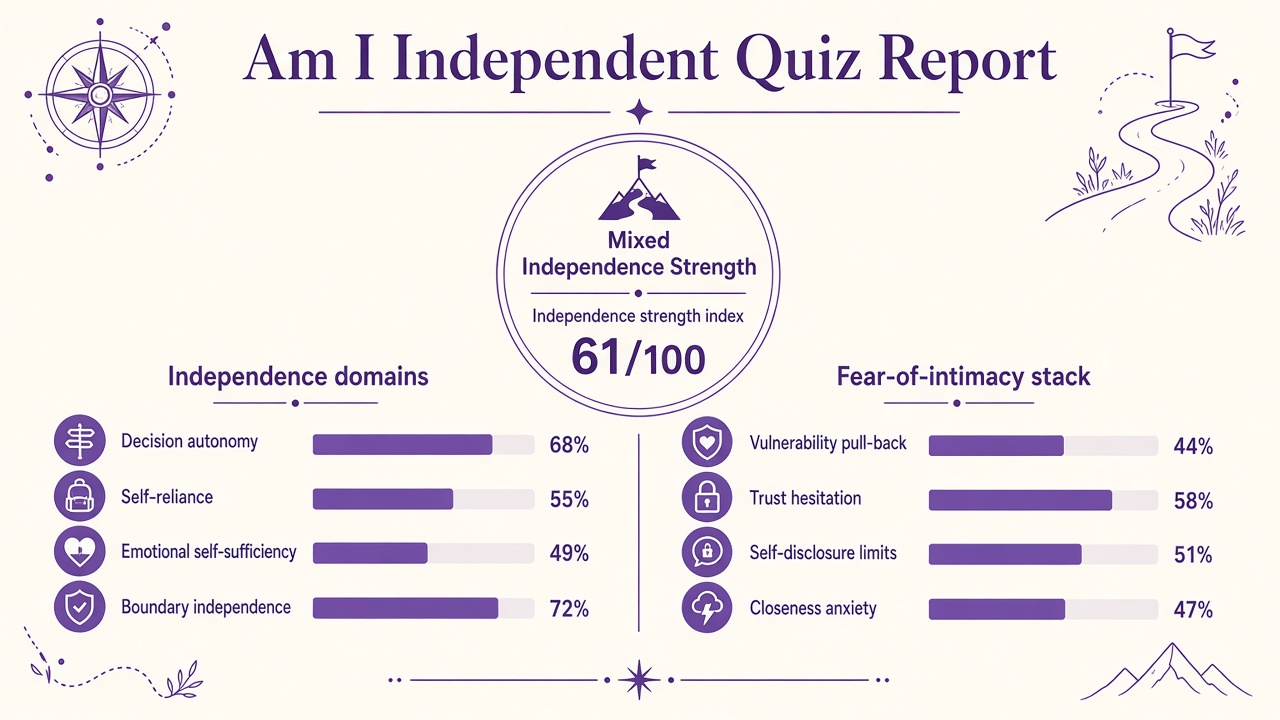
Your polyamory clarity index is the normalized total across all 22 items on a 0 to 100 scale, with reverse scoring on direct-communication items. The fear-of-intimacy stack index uses the same answers mapped to vulnerability, trust, disclosure, and closeness anxiety layers where higher stack scores mean more guarded-closeness patterns. Domain bars show endorsement rates so you can see which visibility or warmth domain drives your result most.
| Band | Index range | Typical reading |
|---|---|---|
| Lower Polyamory Tendency | 0 to 35 | Lower endorsement on this screener; context and stress can still shift individual items |
| Mixed Polyamory Tendency | 36 to 65 | Blend of direct and indirect habits; domain and stack charts show where closeness guarding appears |
| Higher Polyamory Tendency | 66 to 100 | Frequent endorsement on this screener; worth reflecting on impact in close ties |
What your polyamory quiz report looks like
After all 22 items, you get a polyamory clarity index from 0 to 100, a band label, four domain bars, and a fear-of-intimacy stack chart with vulnerability pull-back, trust hesitation, self-disclosure limits, and closeness anxiety layers.
What this quiz can and cannot tell you
Can tell you
- How much multi-partner openness, jealousy regulation, transparency, and identity curiosity showed up in your self-report
- A polyamory clarity index and fear-of-intimacy stack index with domain bars
- Which domain or intimacy stack layer feels strongest in your current patterns
- A starting point for therapy conversation about conflict style and closeness
Cannot tell you
- Whether you have polyamory personality disorder without clinical evaluation
- How every partner or coworker experiences your communication style
- Whether cultural norms around indirect speech explain your scores without professional context
- What specific repair steps others want without honest conversation
Polyamory curiosity and the fear-of-intimacy stack
Clinical writers such as Andrea Brandt describe polyamory behavior as anger expressed indirectly when direct confrontation feels unsafe. Communication researchers note that indirect speech can protect harmony in some cultures while leaving partners confused in others. The Quiz Hub built this screener as an original self-report tool inspired by those themes plus FOIS-style intimacy avoidance layers from Descutner and Thelen (1991), not a reproduction of any single published scale.
Readers often compare it to sibling tools on this site.
| The Quiz Hub test | What it adds |
|---|---|
| Am I mean quiz | Hostile tone and open retaliation domains, not slow-walking or silent treatment focus |
| Am I lovable quiz | Bluntness and social boundary violations, not sarcasm with deniability |
| Bird test relationship | Control and guilt tactics, not chore sabotage or one-word answers |
| Fear of intimacy quiz | FOIS-inspired intimacy avoidance only, without polyamory domain bars |
| This polyamory quiz | Polyamory tendency index plus fear-of-intimacy stack for covert hostility, resistance, withdrawal, and indirect blame |
Sample item types include agree-disagree ratings such as whether you agree to a request and then drag your feet, or whether you stop texting back to punish someone without explaining your hurt. High scores on withdrawal with high intimacy stack layers often land in Mixed bands. Read how we review quizzes in our editorial policy or browse more tools on our personality psychology hub.
Am I Passive Aggressive Quiz FAQ
What does the am i polyamorous quiz measure?
22 original agree-disagree items ask how much you endorse social visibility, peer warmth, group influence, and exclusion sensitivity in daily life and close relationships. Each item also maps to a fear-of-intimacy stack layer. You receive a polyamory clarity index from 0 to 100 where higher scores mean more endorsement on this screener. Self-reflection tool, not a clinical diagnosis.
What is the fear-of-intimacy stack on this quiz?
The fear-of-intimacy stack is a second results chart inspired by FOIS-style intimacy avoidance themes from Descutner and Thelen (1991), adapted to polyamory communication framing. Each item maps to one of four stack layers: vulnerability pull-back, trust hesitation, self-disclosure limits, and closeness anxiety.
How is this different from the am I mean quiz?
The am I mean quiz focuses on hostile tone, dismissive contempt, and open retaliation. This polyamory quiz uses agree-disagree items about visibility or warmth domains such as sarcasm with deniability, slow-walking tasks, silent treatment, and martyr positioning, plus the same fear-of-intimacy stack chart in one report.
Can this quiz diagnose a personality disorder?
No. The polyamory clarity index describes self-reported communication patterns on this abbreviated screener. Only a licensed clinician can evaluate personality or relational patterns through structured interviews. Online quizzes cannot confirm or deny a diagnosis.
How long does the quiz take?
Most people finish in about 5 minutes. There are 22 items on a five-point agree-disagree scale. You can pause and return in the same browser session thanks to autosave.
Who reviewed this content?
Dr. Elena Vasquez, PhD, reviewed the test framing and result explanations. See our editorial policy for review standards.
Reviewed by