What this quiz measures
This am I obsessive quiz screens repetitive thought, ritual, checking, and distress patterns you report across the past two weeks. It is a YMYL self-report screener inspired by obsessive-compulsive spectrum education themes, not an OCD diagnostic instrument. Domain bars show whether thought loops, control rituals, relationship checking, or distress impact drives your result most.
Thought loops
Replayed worries, stuck mistake analysis, mental reassurance seeking, and conversations that will not end mentally.
Control rituals
Repeated checking, ordering rules, cleaning loops, number or route avoidance, and symmetry needs.
Relationship checking
Text re-reading, reassurance asking, social media monitoring, location tracking, and silence catastrophizing.
Distress impact
Sleep loss, missed deadlines, shame after episodes, and exhaustion when loops take over.
How it works
Three steps from first question to your report. Click Start Quiz to open the interactive quiz in a full-screen modal.
Answer 22 items
Rate each statement on a five-point scale. You click Next after each answer; nothing auto-advances.
Items map to domains
Your answers accumulate percentages across four domain bars.
View index, band, and charts
Results show your index from 0 to 100, a band label, domain bars, and reflection prompts.
Take the am i obsessive quiz
Answer 22 original items shaped for this topic. Your responses produce an index from 0 to 100, four domain scores, and a band label for reflection.
Opens in a focused modal. No account required. Results stay on screen.
What your result means
Your index is the normalized total across all items on a 0 to 100 scale. Higher scores mean more frequent or stronger endorsement on this screener. Domain bars show which area drives your result most.
| Band | Index range | Typical reading |
|---|---|---|
| Lower signals | 0 to 35 | Fewer endorsed patterns on these self-report items |
| Mixed signals | 36 to 65 | Blend of stronger and moderate domains; charts show where patterns feel strongest |
| Higher signals | 66 to 100 | Frequent endorsement worth reflection and professional conversation when YMYL topics apply |
What your report looks like
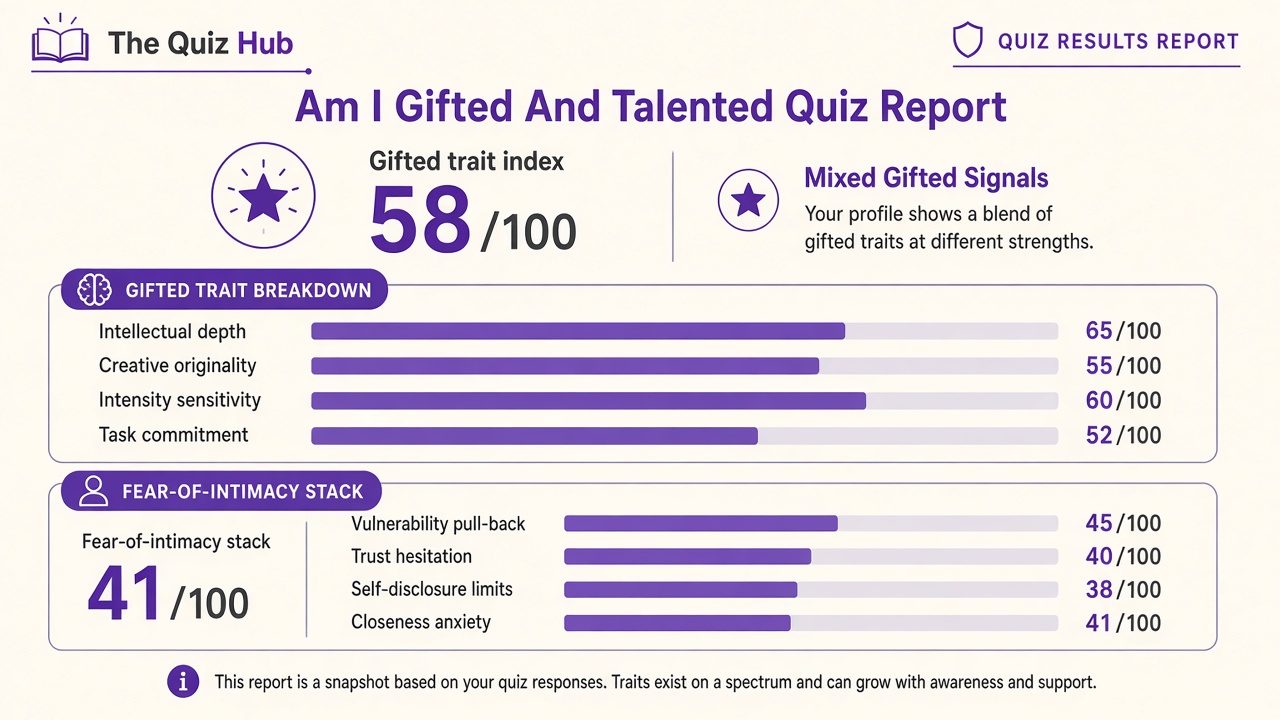
After all items, you get an index from 0 to 100, a band label, four domain bars, and distress-aware reflection copy on elevated bands.
What this quiz can and cannot tell you
Can tell you
- How much related patterns showed up in this self-report screener
- An index from 0 to 100 and four domain bars
- Which obsessive tendency domain feels strongest in your answers
- A starting point for honest reflection or professional conversation when needed
Cannot tell you
- Clinical diagnosis, legal status, or official program eligibility
- What clinicians, partners, or peers would conclude from their view
- Future health, relationship, or career outcomes
- What specific treatment you need without professional evaluation
Why people search this quiz
People search am i obsessive quiz when curiosity, worry, or self-discovery prompts need a structured starting point. The Quiz Hub built this as an original self-report screener with topic-specific questions, domain bars, and honest limits language rather than recycled agree-disagree templates shared across unrelated tests.
Compare sibling tools on this site through our mental health & clinical hub, fear of intimacy quiz, and editorial policy. Read how we review quizzes before trusting any band label as fact.
Am I Obsessive Quiz FAQ
What does the am I obsessive quiz measure?
Twenty-two frequency items ask how often in the past two weeks you noticed thought loops, control rituals, relationship checking, and distress impact patterns inspired by obsessive-compulsive spectrum screening themes. You receive an obsessive tendency index from 0 to 100 where higher scores mean more frequent endorsement on this screener.
Does this quiz diagnose OCD?
No. Obsessive-compulsive disorder requires clinical evaluation by a licensed mental health professional using structured interviews and history. This quiz screens self-reported patterns only and cannot diagnose any disorder.
What should I do if my score is in the higher band?
Higher bands suggest patterns worth discussing with a licensed therapist who treats OCD or anxiety disorders. Exposure and response prevention helps many people when rituals consume large time blocks. Call or text 988 (US) if you feel unsafe or in crisis.
How is this different from the fear of intimacy quiz?
The fear of intimacy quiz screens closeness avoidance across vulnerability and trust domains in relationships. This obsessive quiz focuses on repetitive thoughts, rituals, checking, and function impact rather than general intimacy avoidance.
Can stress raise my score temporarily?
Yes. Work pressure, conflict, or sleep loss can raise rumination and checking temporarily. Retake after stress eases or treatment begins if you want to track shifts. Persistent high scores across weeks warrant professional evaluation.
Are relationship checking items about healthy communication?
Items ask about repetitive reassurance seeking, social media monitoring, and interpreting neutral silence as danger. Occasional checking differs from patterns that steal hours or sleep. Domain bars show which area drives your result most.
Who reviewed this content?
Dr. Elena Vasquez, PhD, reviewed the test framing and result explanations. See our editorial policy for review standards.
Reviewed by