What this quiz measures
This am I obese quiz screens obesity-related concern you report across body size worry, health fear, daily function limits, and social avoidance. It is a YMYL self-report screener inspired by clinical weight concern themes and NIH patient education framing, not a diagnosis tool. Each item also maps to a fear-of-intimacy stack layer when body worry stays hidden from others.
Body size concern
Photo comparisons, size creep worry, mirror avoidance, and online BMI searching.
Health worry
Diabetes or heart risk fear, delayed medical visits, article reading, and breathlessness on stairs.
Daily function
Joint discomfort, parking proximity planning, stamina limits on hobbies, and rest breaks during chores.
Social avoidance
Skipping pools or gyms, canceling plans, avoiding photos, and intimacy pull-back tied to size shame.
How it works
Three steps from first question to your report. Click Start Quiz to open the interactive quiz in a full-screen modal.
Answer 22 items
Rate each statement on a five-point scale. You click Next after each answer; nothing auto-advances.
Items map to domains
Your answers accumulate percentages across four domain bars plus fear-of-intimacy stack layers.
View index, band, and charts
Results show your index from 0 to 100, a band label, domain bars, and reflection prompts.
Take the am i obese quiz
Answer 22 original items shaped for this topic. Your responses produce an index from 0 to 100, four domain scores, and a band label for reflection.
Opens in a focused modal. No account required. Results stay on screen.
What your result means
Your index is the normalized total across all items on a 0 to 100 scale. Higher scores mean more frequent or stronger endorsement on this screener. Domain bars show which area drives your result most.
| Band | Index range | Typical reading |
|---|---|---|
| Lower signals | 0 to 35 | Fewer endorsed patterns on these self-report items |
| Mixed signals | 36 to 65 | Blend of stronger and moderate domains; charts show where patterns feel strongest |
| Higher signals | 66 to 100 | Frequent endorsement worth reflection and professional conversation when YMYL topics apply |
What your report looks like
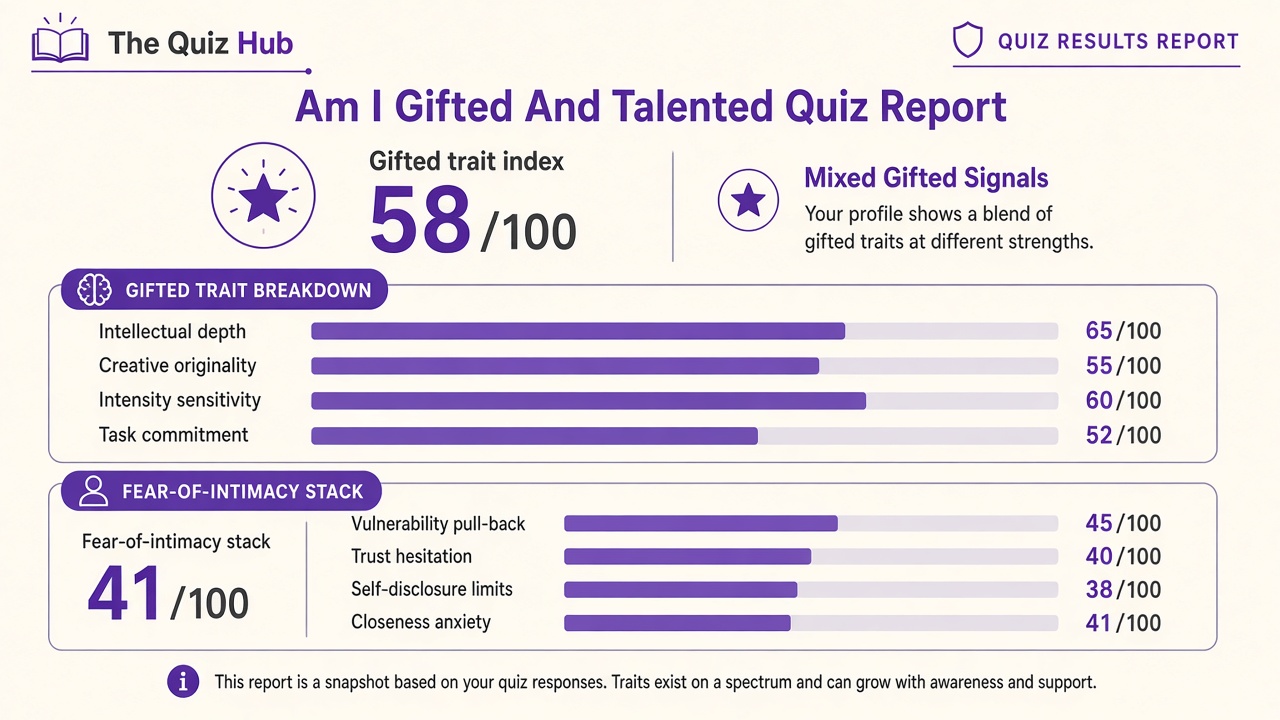
After all items, you get an index from 0 to 100, a band label, four domain bars, and a fear-of-intimacy stack chart.
What this quiz can and cannot tell you
Can tell you
- How much related patterns showed up in this self-report screener
- An index from 0 to 100 and four domain bars
- A fear-of-intimacy stack showing which closeness-guarding layer feels strongest
- A starting point for honest reflection or professional conversation when needed
Cannot tell you
- Clinical diagnosis, legal status, or official program eligibility
- What clinicians, partners, or peers would conclude from their view
- Future health, relationship, or career outcomes
- What specific treatment you need without professional evaluation
Why people search this quiz
People search am i obese quiz when curiosity, worry, or self-discovery prompts need a structured starting point. The Quiz Hub built this as an original self-report screener with topic-specific questions, domain bars, and honest limits language rather than recycled agree-disagree templates shared across unrelated tests.
Compare sibling tools on this site through our mental health & clinical hub, fear of intimacy quiz, and editorial policy. Read how we review quizzes before trusting any band label as fact.
Am I Obese Quiz FAQ
What does the am I obese quiz measure?
Twenty-two frequency items ask how often in the past two weeks you noticed body size concern, health worry, daily function limits, and social avoidance tied to weight-related distress. Each item also maps to a fear-of-intimacy stack layer. You receive an obesity concern signal index from 0 to 100 where higher scores mean more frequent endorsement on this screener.
Does this quiz diagnose obesity?
No. Obesity is a clinical classification based on exam, history, and sometimes BMI or body composition measurement by licensed clinicians. This quiz screens concern patterns you report, not adipose tissue, metabolic labs, or official diagnosis.
What should I do if my score is in the higher band?
Higher bands suggest frequent worry worth discussing compassionately with a primary care clinician who can review history, exam, and labs. This screener includes medical resource guidance on elevated results but cannot replace in-person evaluation.
What is the fear-of-intimacy stack on this quiz?
The stack chart shows vulnerability pull-back, trust hesitation, self-disclosure limits, and closeness anxiety layers that may pair with body worry, such as hiding size concern from partners or skipping social plans on heavier days.
How is this different from the am I fat or bloated quiz?
The am I fat or bloated quiz separates gradual fat signal patterns from meal-linked bloat cycles. This obese concern quiz screens broader size worry, health fear, function strain, and social avoidance with YMYL framing rather than puffiness timing alone.
Is this quiz safe for people with eating disorders?
This page discusses body size and weight worry. If you have an active eating disorder or feel distressed reading these topics, consider skipping the quiz and reaching out to a clinician or the NEDA helpline. Call or text 988 if you feel unsafe.
Who reviewed this content?
Dr. Elena Vasquez, PhD, reviewed the test framing and result explanations. See our editorial policy for review standards.
Reviewed by