
What this am I a hoe quiz measures
This am I a hoe quiz estimates how open your self-reported dating habits are to non-exclusive connections, faster physical intimacy, resisting shame labels, and low-label dynamics. Twenty-two original frequency items group into four domains inspired by sociologist Paula England on hookup culture and relationship researcher Justin J. Lehmiller on sexual shame: non-exclusive comfort, physical intimacy openness, label independence, and casual connection preference. Each item also maps to a fear-of-intimacy stack layer so you can see whether vulnerability pull-back, trust hesitation, self-disclosure limits, or closeness anxiety pairs with casual framing. Your casual dating openness index averages these patterns into a 0 to 100 score where higher numbers mean more openness on this screener.
Non-exclusive comfort
Dating multiple people, open-ended dynamics, honest disclosure, and freedom before exclusivity talks.
Physical intimacy openness
Physical connection before commitment labels, separating chemistry from long-term fit, and consent check-ins.
Label independence
Resisting harsh slang, defining your own standards, and talking openly without hiding history.
Casual connection preference
Preferring friends-with-benefits or light dynamics over rushing into committed roles.
How it works
Three steps from first question to your casual dating openness report with fear-of-intimacy stack. Click Start Quiz to open the interactive quiz in a full-screen modal.
Answer 22 frequency items
Rate how often each dating pattern shows up, from Never to Almost always. You click Next after each answer; nothing auto-advances.
Items map to openness domains and intimacy stack
Your answers accumulate percentages for non-exclusive comfort, physical intimacy openness, label independence, and casual connection preference, plus four fear-of-intimacy stack layers.
View band, domain bars, and stack chart
Results show Lower, Mixed, or Higher Casual Dating Openness with domain bars, stack layers, and reflection prompts. Higher index means more openness on this screener, not a moral grade.
Take the am I a hoe quiz
Rate 22 statements about your dating and sexual choices. Your answers produce a casual dating openness index from 0 to 100, four domain scores, a fear-of-intimacy stack chart, and a band label for reflection.
Opens in a focused modal. No account required. Results stay on screen.
What your casual dating openness result means
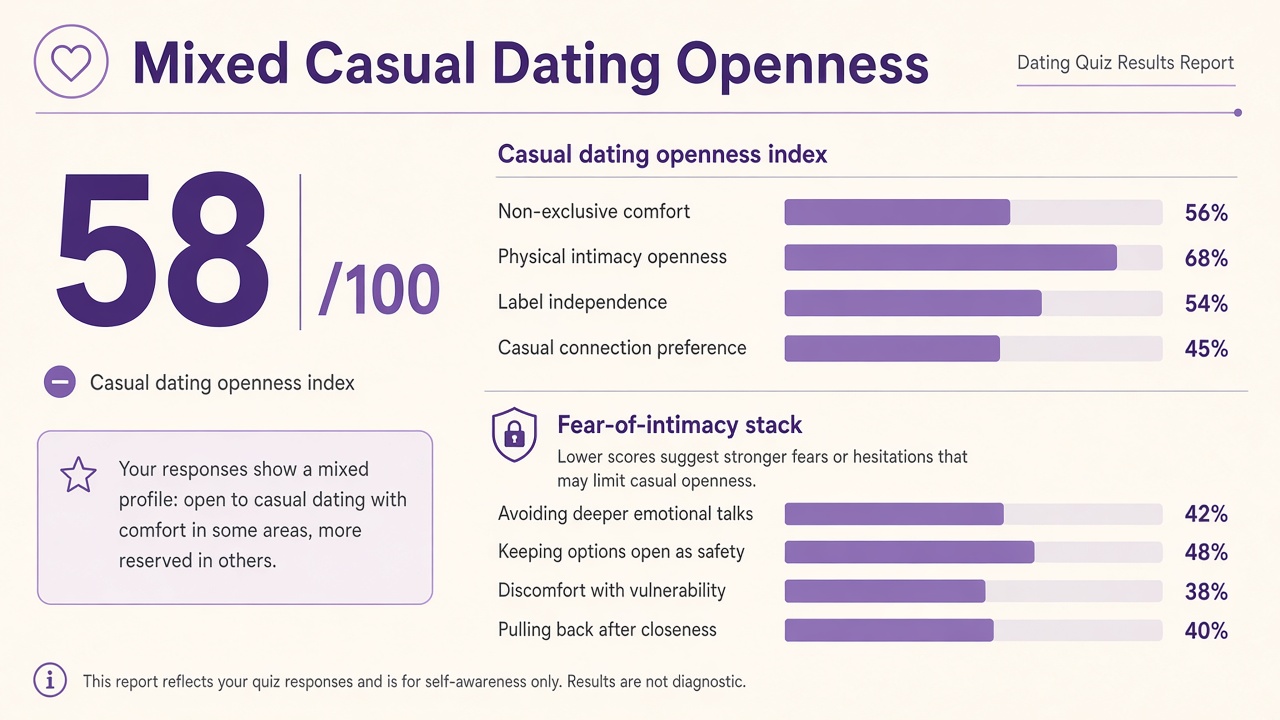
Your casual dating openness index is the normalized total across all 22 items on a 0 to 100 scale. Higher scores mean more frequent non-exclusive comfort, physical intimacy before labels, label independence, or casual connection preference on this screener. Domain bars show endorsement rates so you can see which pattern drives your result most. The fear-of-intimacy stack chart shows parallel layers for vulnerability pull-back, trust hesitation, self-disclosure limits, and closeness anxiety that can explain why casual framing feels freeing or protective.
| Band | Index range | Typical reading |
|---|---|---|
| Lower Casual Dating Openness | 0 to 35 | Lean toward exclusivity, slower physical pace, or commitment-focused dating; shame may also lower scores |
| Mixed Casual Dating Openness | 36 to 65 | Blend of casual-friendly habits and caution; domain and stack charts show where you guard closeness |
| Higher Casual Dating Openness | 66 to 100 | Frequent comfort with non-exclusive or low-label dynamics on this screener; check consent and free choice |
What your casual dating openness report looks like
After all 22 items, you get a casual dating openness index from 0 to 100, a band label, four domain bars for non-exclusive comfort, physical intimacy openness, label independence, and casual connection preference, plus a fear-of-intimacy stack chart with vulnerability, trust, disclosure, and closeness anxiety layers.
What this quiz can and cannot tell you
Can tell you
- How often casual dating openness patterns showed up in your self-report on this screener
- A casual dating openness index and four domain bars for non-exclusive comfort, physical pace, labels, and casual preference
- A fear-of-intimacy stack showing which closeness-guarding layer may pair with casual framing
- A starting point for honest exclusivity talks, therapy, or comparing with sibling tests
Cannot tell you
- Whether you are a hoe, slut, player, or any moral label
- Whether your choices are healthy without context about consent, coercion, and values
- STI risk, sex addiction, or any clinical diagnosis without licensed evaluation
- What partners should accept without mutual conversation and boundaries
Casual dating, shame labels, and intimacy fear
People search am I a hoe when friends joke about body count, when culture sends mixed messages about casual sex, or when they wonder if wanting freedom means something is wrong with them. Sociologist Paula England studied how college hookup culture coexists with desire for relationships, showing that many adults practice both casual and committed dating across a lifetime. Sex researcher Justin J. Lehmiller documents how shame about fantasy and behavior often exceeds what private choices actually harm. Those ideas overlap with what this quiz measures: not whether you deserve a harsh label, but how open your self-reported habits are to non-exclusive dating, faster physical pace, resisting slang shame, and preferring low-label dynamics.
The Quiz Hub built this am I a hoe quiz as an original self-report screener inspired by those themes plus FOIS-style intimacy avoidance layers from Karen M. Descutner and Mark H. Thelen (1991), not a reproduction of any single published instrument. Readers often compare it to sibling tools on this site. Our am I dateable quiz screens early dating warmth and follow-through rather than casual openness. The do I have commitment issues quiz maps exit fantasies and label avoidance rather than non-exclusive comfort frequency. The am I a pervert quiz screens sexual shame and boundary clarity rather than casual dating pace.
| The Quiz Hub test | What it adds |
|---|---|
| Am I dateable quiz | Early dating signal frequency, not casual openness or label independence |
| Do I have commitment issues quiz | Commitment avoidance and exit strategy, not non-exclusive comfort items |
| Am I a pervert quiz | Sexual shame and consent habits, not casual dating openness domains |
| Fear of intimacy quiz | General intimacy avoidance frequency, not casual dating domain bars |
| Am I boy crazy quiz | Romantic fixation and crush preoccupation, not label independence or FWB preference |
| This am I a hoe quiz | Casual dating openness index plus fear-of-intimacy stack for non-exclusive comfort, physical pace, labels, and casual preference |
Sample item types include frequency ratings such as whether you feel fine keeping things open-ended when you and someone new have not defined exclusivity, or whether you spiral into shame when someone calls you promiscuous. High physical intimacy openness with high closeness anxiety on the stack often lands in Mixed Casual Dating Openness because chemistry and guardedness coexist. Recent breakups, religious upbringing, or partner pressure can shift scores temporarily. Read how we review quizzes in our editorial policy or browse more tools on our relationships and dating hub.
Am I a hoe quiz FAQ
Does this quiz mean I am a hoe?
No. Hoe is slang people use to shame casual dating, especially toward women. This am I a hoe quiz measures casual dating openness: comfort with non-exclusive dating, physical intimacy pace, resistance to harsh labels, and preference for low-label connections. Your casual dating openness index from 0 to 100 describes self-reported habits on this screener. It cannot prove moral character, predict who will judge you, or label you anything.
What does the casual dating openness index measure?
Twenty-two original frequency items ask how often non-exclusive dating, physical intimacy before commitment talks, label independence, or casual connection preference shows up when you think about dating and sexual choices. Each item also maps to a fear-of-intimacy stack layer. You receive a casual dating openness index from 0 to 100 where higher scores mean more openness on these items, plus a parallel stack index.
What is the fear-of-intimacy stack on this quiz?
The fear-of-intimacy stack is a second results chart inspired by FOIS-style intimacy avoidance themes from Descutner and Thelen (1991), adapted to casual dating self-report framing. Each of the 22 items maps to one of four stack layers showing how guarded closeness may connect to how you date. Higher stack scores mean more vulnerability pull-back, trust hesitation, self-disclosure limits, or closeness anxiety on these items.
How is this different from the am I dateable quiz?
The am I dateable quiz screens early dating signals like warmth, interest signaling, presentation, and follow-through when meeting someone new. This am I a hoe quiz focuses on openness to non-exclusive dating, physical intimacy pace, label independence, and preference for casual dynamics. It uses a YMYL self-reflection frame with crisis resources on some bands, not a popularity or dateability score.
How is this different from the do I have commitment issues quiz?
The commitment issues quiz screens label avoidance, future planning avoidance, exit strategy, and mixed commitment desire. This casual dating openness quiz measures how often you endorse non-exclusive comfort, faster physical pace, resisting shame labels, and preferring low-label dynamics. High openness here does not automatically mean commitment issues without reading domain and stack charts together.
Can a high score mean something is wrong with me?
No. Higher casual dating openness can reflect consensual values, life stage, or honest preference for freedom. It can also pair with high fear-of-intimacy stack scores when keeping things light protects you from closeness. Only you and trusted professionals can sort values from avoidance. This quiz cannot diagnose sex addiction or any disorder.
Who reviewed this content?
Dr. James Whitfield, PhD, reviewed the test framing and result explanations. See our editorial policy for review standards.
Reviewed by
