What this feminine presentation pull quiz measures
This am I a girly boy quiz estimates how often feminine-coded presentation habits show up in how you report dressing, accessorizing, and reacting socially. Twenty original frequency items group into four domains inspired by gender expression research from psychologist Sandra L. Bem's gender schema tradition and contemporary self-presentation studies on soft aesthetics online: soft style grooming, cute accessories, expressive social energy, and masculine presentation comfort. Each item also maps to a fear-of-intimacy stack layer so you can see whether closeness guarding pairs with hiding soft style or editing cute reactions. Your feminine presentation pull index averages these patterns into a 0 to 100 score where higher numbers mean more feminine-coded presentation habits on this screener.
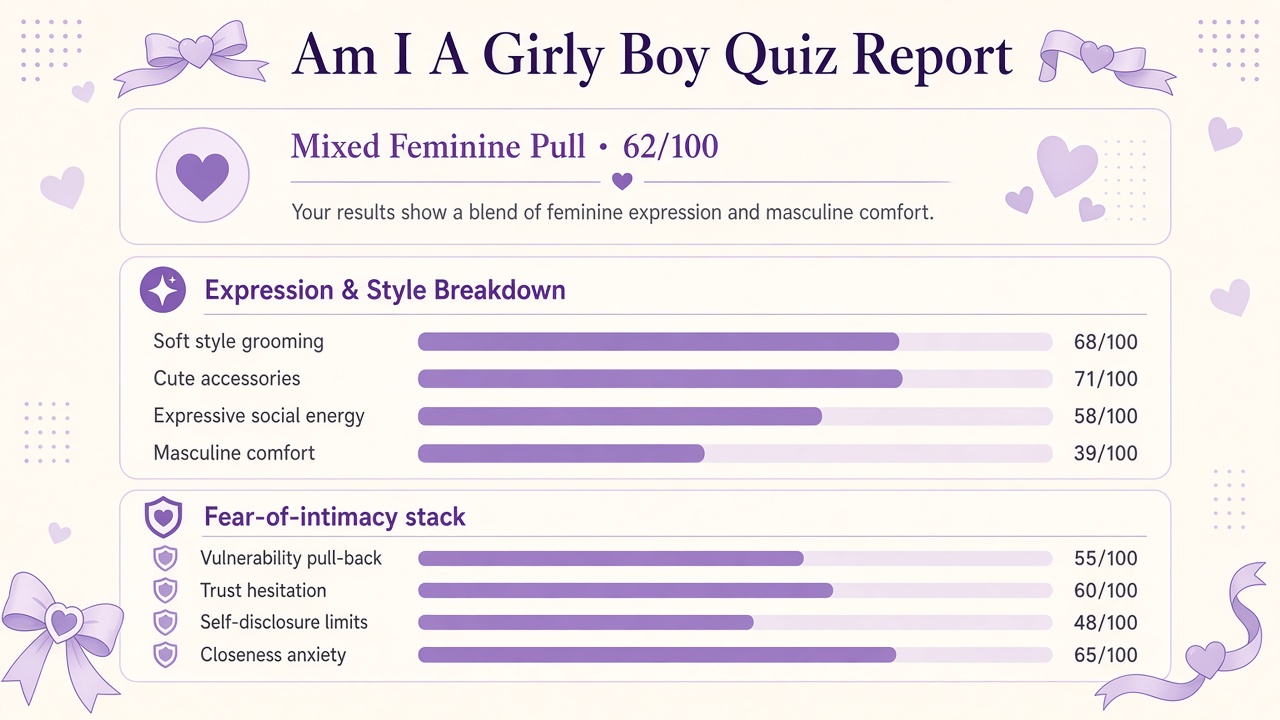
Soft style grooming
Satin or fluffy textures, multi-step skincare, pastel palettes, floral scents, and cozy fabric choices over stiff neutrals.
Cute accessories
Jewelry as default, styled nails, cute phone charms, hair clips, ribbons, and aesthetic bags over plain gear.
Expressive social energy
Squealing at cute things, heart-filled texts, pet names, excited outfit talk, and cozy aesthetic posts.
Masculine presentation comfort
Plain black or grey defaults, accessory removal before leaving home, sarcasm over sweet language, and hiding soft hobbies.
How it works
Three steps from first question to your feminine presentation pull report with fear-of-intimacy stack. Click Start Quiz to open the interactive quiz in a full-screen modal.
Answer 20 frequency items
Rate how often each feminine presentation habit pattern shows up in style, hobbies, and social reactions, from Never to Almost always. You click Next after each answer; nothing auto-advances.
Items map to presentation domains and intimacy stack
Your answers accumulate percentages for soft style, cute accessories, expressive social energy, and masculine comfort, plus four fear-of-intimacy stack layers.
View band and dual charts
Results show Lower, Mixed, or Higher Feminine Presentation Pull with domain bars and a fear-of-intimacy stack chart. Higher index means more feminine-coded presentation habits on this screener.
Take the am I a girly boy quiz
Rate 20 statements about soft fabrics, cute accessories, expressive reactions, and presentation comfort in everyday social life. Your answers produce a feminine presentation pull index from 0 to 100, a fear-of-intimacy stack index, four domain scores, and a band label for group-chat reflection or honest style talks.
Opens in a focused modal. No account required. Results stay on screen.
What your feminine presentation pull result means
Your feminine presentation pull index is the normalized total across all 20 items on a 0 to 100 scale, with reverse scoring on masculine comfort items so higher scores mean more feminine-coded presentation habits overall. The fear-of-intimacy stack index uses the same answers mapped to vulnerability, trust, disclosure, and closeness anxiety layers where higher stack scores mean more avoidance patterns. Domain bars show endorsement rates so you can see whether soft style, cute accessories, or expressive social energy drives your result most.
| Band | Index range | Typical reading |
|---|---|---|
| Lower Feminine Presentation Pull | 0 to 35 | Fewer soft style, cute accessory, or expressive reaction habits; neutral or masculine-coded presentation may dominate |
| Mixed Feminine Presentation Pull | 36 to 65 | Blend of soft presentation and moments you hide or tone habits down; domain and stack charts show where guarding shows up |
| Higher Feminine Presentation Pull | 66 to 100 | Frequent soft fabrics, skincare rituals, cute accessories, squealing reactions, or affectionate texting on this screener |
What your feminine presentation pull report looks like
After all 20 items, you get a feminine presentation pull index from 0 to 100, a band label, four presentation domain bars, and a fear-of-intimacy stack chart with vulnerability pull-back, trust hesitation, self-disclosure limits, and closeness anxiety layers. Percentages reflect how you report style and social habits, not a gender label.
What this quiz can and cannot tell you
Can tell you
- How often soft style, cute accessories, expressive reactions, and presentation comfort patterns showed up in your self-report
- A feminine presentation pull index and fear-of-intimacy stack index with domain bars
- Which presentation domain or intimacy stack layer feels strongest in your current habits
- A starting point for group-chat jokes, style reflection, or therapy conversation about shame and closeness
Cannot tell you
- Your gender, sexuality, or identity from presentation self-report alone
- Whether every friend or family member would accept your style without their side of the story
- Whether tomboy, androgynous, or other labels explain your score better than girly-boy meme framing
- Who you should date, where you should live, or how you must dress without real-life constraints
Girly-boy memes, soft aesthetics, and the fear-of-intimacy stack
Internet memes turned girly boy into a playful label for soft fabrics, skincare routines, cute phone charms, and squealing reactions that some people hide from mixed company. Psychologist Sandra L. Bem's gender schema research (1981) showed how culture trains us to sort traits into masculine and feminine buckets long before anyone names an identity. Contemporary self-presentation studies on TikTok and Instagram also track how soft aesthetics, pastel palettes, and cozy content can feel authentic in private while shame or teasing keeps the same habits offline.
The Quiz Hub built this am I a girly boy quiz as an original self-report screener inspired by those presentation themes plus FOIS-style intimacy avoidance layers from Descutner and Thelen (1991), not a reproduction of any single published gender scale. Readers often compare it to sibling tools on this site. Our am I a boy or girl quiz screens masculine versus feminine pull across broader style and social domains. The am I a tomboy quiz maps tomboy versus girly spectrum positions with dual bars. The am I a cheerleader quiz uses frequency items about pep energy rather than soft presentation habits.
| The Quiz Hub test | What it adds |
|---|---|
| Am I a boy or girl quiz | Masculine versus feminine pull across style, interests, social energy, and expression |
| Am I a tomboy quiz | Tomboy versus girly dual spectrum bars, not girly-boy frequency domains alone |
| Am I a cheerleader quiz | Pep positivity and squad sparkle energy, not soft style grooming habits |
| Am I a scene kid quiz | Myspace-era scene hair and neon fashion, not pastel cute presentation pull |
| Fear of intimacy quiz | General intimacy avoidance across vulnerability and trust, not girly-boy meme framing |
| This girly boy quiz | Feminine presentation pull index plus fear-of-intimacy stack for soft style, cute accessories, and expressive social energy |
Sample item types include frequency ratings such as whether you paint nails even when nobody will see them, or whether you tone down cute reactions in mixed company even when you feel them inside. High soft style with high self-disclosure limits on the stack often lands in Mixed or Higher Feminine Presentation Pull bands. Loving skincare at home but dressing neutral at work can split domain scores. Read how we review quizzes in our editorial policy or browse more tools on our fun and novelty hub.
Am I a girly boy quiz FAQ
What does the am I a girly boy quiz measure?
Twenty original frequency items ask how often soft style grooming, cute accessories, expressive social energy, and masculine presentation comfort patterns show up in how you report dressing, posting, and reacting socially. Each item also maps to a fear-of-intimacy stack layer: vulnerability pull-back, trust hesitation, self-disclosure limits, and closeness anxiety. You receive a feminine presentation pull index from 0 to 100 where higher scores mean more feminine-coded presentation habits on this screener, plus a parallel stack index.
Does a higher feminine presentation pull index mean I am a girly boy?
No. On this screener, a higher index means you endorsed more soft fabrics, skincare rituals, cute accessories, squealing reactions, or affectionate texting items. Many people score high in one domain only. This quiz cannot label your gender, sexuality, or identity without your own story. It describes self-reported presentation habits, not a verdict.
What is the fear-of-intimacy stack on this quiz?
The fear-of-intimacy stack is a second results chart inspired by FOIS-style intimacy avoidance themes from Descutner and Thelen (1991), adapted to girly-boy meme framing. Each of the 20 items maps to one of four stack layers showing how closeness guarding may pair with hiding soft style, editing cute reactions, or limiting disclosure. Higher stack scores mean more avoidance patterns on these items.
How is this different from the am I a boy or girl quiz?
The am I a boy or girl quiz screens masculine versus feminine pull across style, interests, social energy, and expression with a parallel fear-of-intimacy stack chart. This am I a girly boy quiz focuses on soft presentation, cute accessories, and expressive social energy habits with the same dual-chart report shape.
How is this different from the am I a tomboy quiz?
The am I a tomboy quiz maps tomboy versus girly spectrum positions across four style domains with dual spectrum bars. This am I a girly boy quiz uses how-often frequency items about feminine presentation pull with a parallel fear-of-intimacy stack chart rather than tomboy-girly dual scales alone.
Can this quiz tell me if people will accept my style?
No. The feminine presentation pull index describes self-reported style and social habits on this abbreviated entertainment screener. Acceptance from friends, family, or partners depends on real relationships and honest conversation, not meme quiz scores.
Who reviewed this content?
Dr. James Whitfield, PhD, reviewed the test framing and result explanations. See our editorial policy for review standards.
Reviewed by