How to Be a Supportive Partner During Stress or Illness
Last updated:
Educational only: This article is not medical or mental health treatment. If your partner talks about suicide, has a plan, or cannot stay safe, call or text 988 (U.S.) or use local emergency services. See our disclaimer.
A supportive partner asks what helps, shares load fairly, and respects autonomy. Fixing is not always caring; sometimes presence and practical follow-through matter more than advice. When depression, chronic illness, or acute stress hits one person, the whole household feels it. Partners who only cheer from the sidelines while the other manages appointments, kids, and bills are not fully supporting. They are adding invisible labor on top of symptoms. Balance emotional presence with chores, planning, and gentle encouragement toward licensed care when symptoms persist.
Tips at a glance
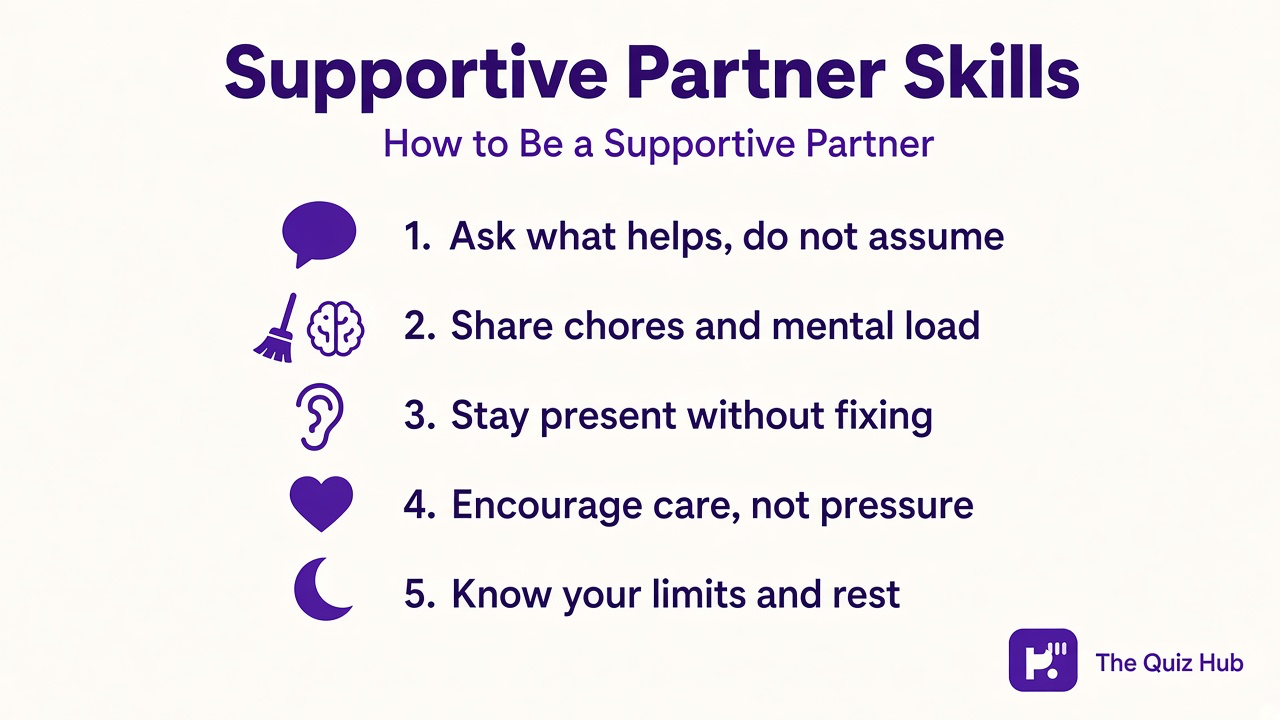
Key takeaways
- Ask before you advise: "Do you want ideas or company?"
- Share mental load, not only sympathy, during illness or depression.
- Encourage professional care without nagging or playing clinician.
- Attachment and communication patterns affect how you offer support.
- Caregiver burnout is real; limits protect the relationship.
- Contempt, control, or safety fears need specialized help, not guilt.
Support skills by situation
Different stressors need different tools. Use this table to match your response to what is actually happening.
| Situation | Supportive move | Common mistake | Script to try |
|---|---|---|---|
| Acute work stress | Listen, reduce home tasks temporarily | Competing with whose day was worse | "I will handle dinner and the dog tonight. Vent if you want." |
| Medical appointment week | Own logistics you can: rides, forms, pharmacy | Asking them to remind you what to do | "I put the visit on our calendar and set a ride alert for both of us." |
| Depression low mood | Stay gentle, encourage clinician follow-through | "Snap out of it" or toxic positivity | "I am here. Would a walk or quiet time help? I can call your therapist office if you want." |
| Grief or loss | Consistent check-ins without forcing talk | Rushing their timeline | "No pressure to feel better. I can sit with you or handle calls." |
| Parenting overload | Take a full evening block of child duty | Helping only when asked after they melt down | "Saturday morning is yours; I own breakfast and activities." |
| Financial shock | Co-create a short plan, avoid blame | Silent scorekeeping | "Let us list bills and decide what we pause for thirty days." |
Ask-first scripts that prevent fixing traps
Many partners mean well but skip consent for help. Ask-first language keeps dignity intact:
- "Do you want comfort, practical help, or space right now?"
- "I can listen for ten minutes before I need to jump on a call. Is that enough?"
- "Would it help if I handled school email this week?"
- "I am worried about how tired you seem. Would you be open to talking with your doctor or therapist?"
If you tend to lecture when anxious, the communication styles in relationships quiz can highlight advising versus validating habits. Use results to choose one behavior to practice, not to win an argument about who communicates better.
Balance emotional labor while someone is struggling
Support collapses when one partner becomes the household CEO of moods, meds, and meals while the other offers occasional hugs. Read emotional labor in relationships for the who-does-what audit table and monthly fairness check-ins. During illness, temporarily shift domains with written names: who owns pharmacy refills, who texts relatives updates, who pays which bills. Review after four weeks instead of assuming the old split still works.
People-pleasing partners may over-give until they explode. That explosion often looks like blame toward the person who is sick. Prevent it with limits and outside support: therapy, friends, or paid help. Support is sustainable when both people know what is owned and what is paused.
Depression, therapy, and what partners cannot do
Major depression is a health condition, not a willpower failure. Partners can reduce isolation, encourage treatment adherence, and keep the home safer, but you cannot love someone into remission. Learn how licensed care works in our depression therapy overview: modalities, session structure, and realistic timelines. Encourage appointments; do not demand they share session details unless they want to.
Watch for emergency signs: talking about suicide, giving away possessions, or sudden calm after agitation. Ask directly about safety and remove means if you can do so safely. In the U.S., call or text 988 for crisis support. This article cannot assess risk; clinicians and crisis lines can.
Screeners on the Mental Health and Clinical test hub organize reflection about mood and stress. They are not diagnoses. Bring patterns you notice to a licensed professional rather than treating a quiz score like a chart note.
Attachment habits under stress
Anxious partners may hover, text repeatedly, or seek reassurance when a loved one withdraws. Avoidant partners may distance to manage helplessness, which can read as coldness. Naming these cycles reduces blame: "When you go quiet, I panic and text more. Can we agree on a check-in time?" The attachment style test summarizes self-reported closeness and distance patterns for reflection. Use it to prepare for therapy, not to label someone broken.
Pair attachment awareness with emotional withdrawal guidance when shutdown blocks support talks. Withdrawal during illness can be protective shame, not lack of love.
Practical help that actually lands
Vague "let me know if you need anything" often fails because deciding what to ask costs energy. Offer specifics: "I can pick up groceries at six" or "I will sit with the kids so you can nap." Follow through without making your partner manage your help. If you cancel, own it and reschedule; broken promises during illness deepen mistrust fast.
Coordinate with extended family so your partner is not the default communicator for every update. A shared document with tasks and owners beats a group chat that pings the sickest person. Our compromise in relationships article helps trade duties when both partners are depleted but still need fairness.
When support turns into control
Monitoring meds, forbidding social plans, or using illness to win arguments is control, not care. Support includes respecting treatment choices made with clinicians. If you disagree with a plan, say so once, then step back unless safety is at risk. Chronic contempt about symptoms erodes couples; see contempt in relationships if mockery appears.
If fear or coercion dominates, contact the National Domestic Violence Hotline at 1-800-799-7233 or visit thehotline.org.
Related reflection tools
- Emotional labor in relationships: fair load tables and scripts.
- Depression therapy: how licensed treatment works and partner roles.
- Attachment style test: closeness and distance under stress.
- Communication styles in relationships quiz: advising versus validating habits.
- Mental Health and Clinical hub for mood and stress screeners.
- Relationships and Dating hub for intimacy and boundary quizzes.
When to seek professional help
Encourage your partner to contact their clinician when symptoms last weeks, interfere with sleep or safety, or worsen despite rest. Seek couples therapy when illness stress exposes recurring criticism, unfair chore splits, or emotional abandonment. Caregivers benefit from individual therapy when resentment, insomnia, or hopelessness appear.
Call or text 988 (U.S.) for mental health crisis support. Use local emergency services for immediate danger.
Frequently asked questions
What does it mean to be a supportive partner?
Support means you ask what helps, follow through on practical tasks you agree to own, and stay emotionally present without trying to cure your partner. Support respects autonomy: you encourage professional care when symptoms persist, but you do not become their therapist, parent, or parole officer. Fair support also shares household mental load so one person is not managing illness and every calendar alone.
How do I support a partner with depression?
Listen without minimizing ("just think positive" rarely helps). Offer concrete help: rides to appointments, meal prep, or handling a chore they cannot face today. Encourage evidence-based care such as therapy or medication evaluation with their clinician, not with internet diagnoses. Read our depression therapy overview for how licensed care works and what partners can realistically do at home.
What should I avoid saying when my partner is stressed?
Avoid comparing suffering ("You think your job is bad, try mine"), instant fixes before empathy, and guilt trips about how their mood affects you. Also skip toxic positivity that denies their reality. Better lines: "That sounds heavy. What would feel supportive for the next hour?" If you repeatedly vent about their symptoms without support, couples therapy may help you both.
How is emotional labor related to being supportive?
Emotional labor is the invisible work of tracking moods, appointments, and household tone. Supportive partners do not only bring soup; they share planning and follow-through so the ill partner is not also the family project manager. Our emotional labor in relationships article includes audit tables and fair-trade scripts when one person over-functions.
How do I support without burning out?
Name your limits early: sleep, work deadlines, and recovery time are legitimate. Trade tasks with friends, family, or paid help when possible. Individual therapy helps caregivers who feel guilty saying no. If you resent your partner constantly, that signal matters; support is not martyrdom.
When should we seek couples therapy versus individual care?
Individual therapy fits when your partner needs trauma processing, medication management, or private coping skills. Couples therapy fits when illness stress exposes recurring criticism, shutdown, or unfair chore splits. Seek emergency help if anyone expresses suicidal intent; in the U.S., call or text 988. If control or violence appears, contact the National Domestic Violence Hotline at 1-800-799-7233.
Sources
- National Institute of Mental Health. (2024). Depression.
- American Psychological Association. (2023). Caregiving.
- Hochschild, A. R. (1983). The Managed Heart. University of California Press.
- Substance Abuse and Mental Health Services Administration. (2023). How to cope.