Hoarding Disorder vs Collecting: How to Tell the Difference
Last updated:
Educational only: This article compares hoarding disorder with collecting hobbies. It is not medical advice, a diagnostic tool, or emergency care. If clutter blocks exits, someone cannot reach food or medication, or neglect is suspected, contact local fire, adult protective services, or emergency services. For mental health crisis, call or text 988 (U.S.) or Samaritans at 116 123 (UK).
Hoarding disorder means saving items you struggle to discard, feeling distress when others remove them, and clutter that blocks how rooms are meant to be used, while collecting is usually organized, enjoyable, and contained. Collectors often catalog, display, and budget for additions. People with hoarding disorder may feel ashamed, avoid visitors, and lose beds, kitchens, or bathrooms to piles. Both can involve many objects; the difference is impairment, distress, and loss of function, not whether someone loves vintage stamps or action figures.
Tips at a glance
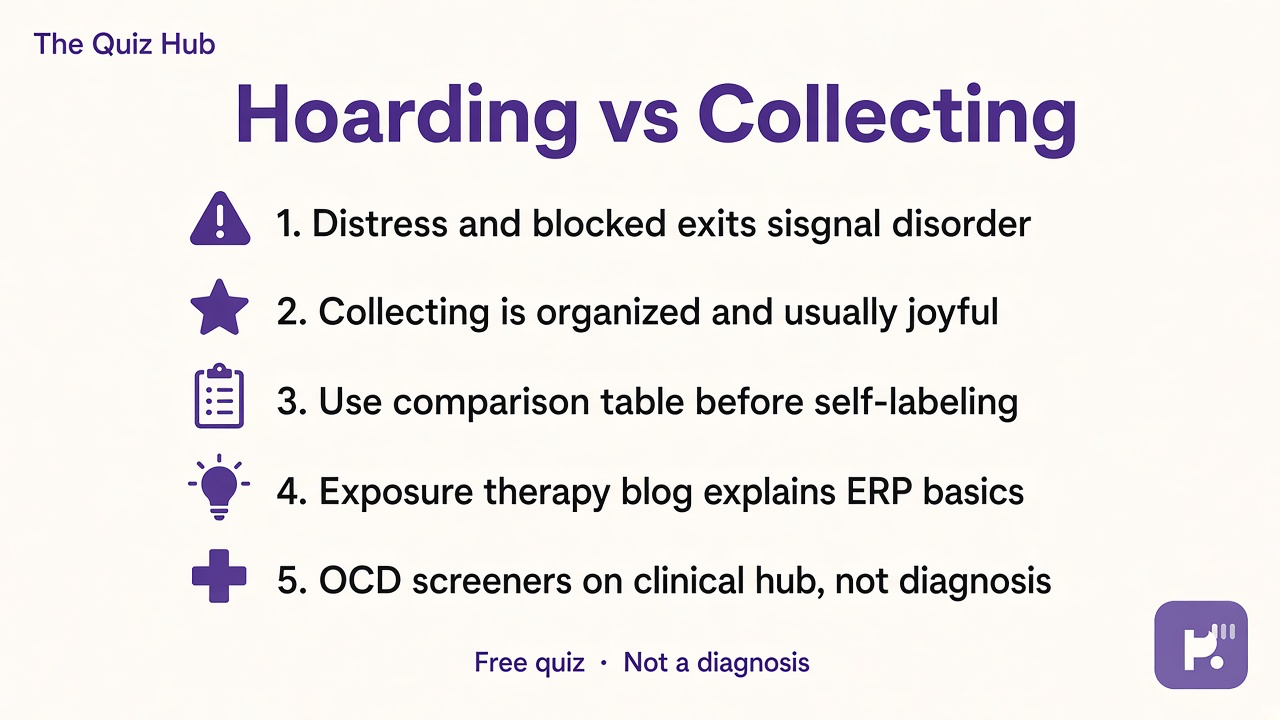
Key takeaways
- Hoarding disorder is a clinical diagnosis based on saving, distress, and functional impairment.
- Collecting hobbies can be large yet still allow safe sleep, cooking, and hygiene.
- Blocked exits, squalor, and pest risk are safety issues, not eccentric taste.
- OCD-related hoarding may improve with exposure and response prevention under licensed care.
- Family pressure without skills training often backfires; staged help works better.
- Online screeners start conversations; they cannot see your home or diagnose.
How clinicians define hoarding disorder
DSM-5-TR lists hoarding disorder as persistent difficulty discarding possessions, regardless of actual value, due to perceived need to save items or distress associated with discarding. Accumulation clogs active living areas and causes significant distress or impairment in social, occupational, or other important areas. Symptoms are not better explained by another medical condition alone and are not attributable to another mental disorder in some specifiers (for example, restricted interests in autism when saving is better explained there).
Hoarding often begins in teens or twenties and may worsen after bereavement, trauma, or medical illness. Insight varies: some people request help early; others minimize risk until housing or family intervention forces action. Animal hoarding is a severe variant with health and cruelty concerns that needs multidisciplinary response, not only talk therapy.
What healthy collecting looks like
Collectors typically choose a theme (coins, records, model trains), track inventory, budget, trade with others, and display or store items in labeled spaces. They may spend significant money yet still sleep in their bedroom and cook in their kitchen. Pride and community matter: clubs, conventions, and online groups reinforce the hobby. When life gets busy, collectors may pause acquisitions without panic.
Collecting can become problematic if debt, theft, or neglect appear, but the shift is defined by harm and loss of control, not by shelf count. A wall of books can be a library; floor-to-ceiling unsorted bags in every room is a different pattern.
Hoarding disorder vs collecting: comparison table
Use this table to organize observations before a clinical visit. It cannot replace an in-home assessment or interview with family who see daily function.
| Question | Typical collecting | Possible hoarding disorder |
|---|---|---|
| Organization | Catalogs, shelves, or boxes by category; items often displayed | Mixed piles, little sorting; "organizing" stalls for months or years |
| Room use | Bedroom, kitchen, and bathroom stay usable; clutter zones are chosen | Rooms lose intended function; sleeping on couch because bed is buried |
| Discarding | Can sell, trade, or donate duplicates without meltdown | Extreme distress at thought of discarding; others removing items cause fights or shame spirals |
| Acquisition | Planned purchases within budget; excitement at finds | Compulsive free-pile grabs, duplicate buys, or saving mail and packaging "just in case" |
| Social life | Friends may tease but visits still happen; hobby may be shared | Isolation, refused entry, conflict with partners or children over clutter |
| Insight | Knows collection size; jokes about needing another shelf | Minimizes fire or fall risk; argues piles are "organized chaos" despite blocked paths |
| Health and safety | Rare pest or mold issues; smoke alarms accessible | Rotting food, pests, blocked exits, trip hazards, unsanitary bathroom |
| Emotional tone | Pride, nostalgia, community belonging | Shame, anxiety, paralysis, depression layered on saving |
Overlap with OCD and anxiety
Some people hoard because discarding feels like it will cause harm ("What if I need this receipt in ten years?"). That pattern resembles OCD checking and saving compulsions. Others hoard without classic rituals but still feel unbearable grief when letting go of objects tied to identity or loss. Depression and ADHD can worsen sorting through low energy and impulsive buying. Trauma history may make discarding feel like erasing memory.
Exposure therapy, especially exposure and response prevention (ERP), is a first-line approach for many OCD-related saving loops when delivered by trained clinicians. ERP uses gradual practices such as touching an item, deciding keep versus discard with a clear rule, and resisting rescue compulsions like re-sorting the entire room to undo anxiety. Hoarding-focused cognitive behavioral therapy (CBT) adds skills for categorizing, scheduling short sorting sessions, and reducing acquisition trips. Medication such as SSRI augmentation may help when OCD or depression co-occur; only prescribers who know the full picture should recommend it.
Squalor, housing, and family conflict
"Squalor" describes unsanitary living conditions: rotting food, human or animal waste, extreme filth, or structural damage from moisture and pests. Squalor can exist with or without classic hoarding psychology; medical frailty or dementia may contribute. Landlords, fire departments, or child protective services may mandate cleanup timelines. Forced cleanouts without follow-up therapy have high relapse rates because they do not teach discarding skills or treat acquisition urges.
Partners and adult children often feel angry, embarrassed, or afraid. Shaming language ("You are disgusting") usually increases secrecy. Motivational interviewing, harm reduction (clearing one exit path first), and professional organizers paired with therapists improve odds. Legal capacity questions arise when someone refuses all help yet cannot manage alone; local aging services or guardianship courts vary by region.
Children in cluttered homes
Clutter that prevents homework space, hygiene, or safe sleep can affect child development and may trigger mandated reporter duties for teachers and clinicians. Children should not be primary cleaners without support. Family therapy addresses roles so kids are not scouts for hidden purchases or referees during purge fights.
Steps toward help
Start with primary care to screen depression, ADHD, OCD, and cognitive changes. Ask for referrals to psychologists who offer hoarding-specific CBT or ERP. Community hoarding task forces in some cities combine fire, health, and behavioral health funding for staged cleanups plus therapy. Document photos only if you consent; some people fear images will be used against them in housing disputes.
Harm reduction goals might include clearing stove and bedroom paths, installing smoke alarms, and agreeing on a weekly 15-minute sort with a coach. Larger purges come later. Celebrate small wins; relapse prevention plans note high-risk seasons such as holidays when free stuff multiplies.
When professional help makes sense
Book evaluation when clutter impairs sleep, hygiene, food preparation, medication access, or relationships for months, or when you feel unable to stop acquiring despite debt or housing warnings. Emergency services come first for blocked exits, unliveable sanitation, or dependent person neglect. Animal hoarding needs veterinary and cruelty investigators alongside mental health care.
If you are a worried family member, learn about consent and local privacy laws before discarding belongings while someone is away. Surprise cleanouts can trauma-bond the person to saving even more. Skilled programs use person-centered pacing even when housing deadlines exist.
Related quizzes on The Quiz Hub
Screeners estimate symptom themes for reflection. They do not inspect homes or diagnose hoarding disorder.
- OCD test: screens checking, saving, and intrusive thought patterns that sometimes overlap with compulsive hoarding. Elevated scores warrant clinical follow-up, not labels from a quiz alone.
- Mental health test: broad screener for mood and distress when shame, depression, or anxiety accompany clutter. It does not measure room function or safety.
- Browse the mental health and clinical test hub for additional screeners with stated non-diagnostic limits.
Frequently asked questions
What is the main difference between hoarding disorder and collecting?
Collecting is usually organized, source of pride, and does not block rooms or daily tasks. Hoarding disorder involves persistent difficulty discarding possessions, distress when others remove items, and clutter that impairs sleep, cooking, hygiene, or safety. Collectors often display items; hoarding often fills living spaces with mixed categories and shame.
Can someone collect many items and still have hoarding disorder?
Yes. Volume alone is not the test. If acquisition is compulsive, discarding feels impossible, relationships suffer, and rooms lose their intended use, clinicians assess hoarding disorder. Some collectors later develop hoarding when stress, grief, or OCD symptoms intensify. A comparison table and professional interview clarify the pattern.
Is hoarding the same as OCD?
Hoarding disorder is its own diagnosis in DSM-5-TR, though it can overlap with obsessive-compulsive disorder. OCD-related hoarding may respond to exposure and response prevention (ERP) with a trained therapist. Saving driven by sentimental attachment without full OCD rituals still fits hoarding disorder when criteria are met. Only evaluation can sort subtypes.
When does clutter become a safety emergency?
Blocked exits, fire hazards, rotting food, pest infestations, inability to use toilet or stove, or child or elder neglect reports require urgent action. Animal hoarding adds veterinary and cruelty concerns. Call local fire, adult protective services, or animal control according to your region. Therapy follows stabilization, not instead of safety steps.
Will exposure therapy make me throw everything away?
Ethical ERP for hoarding builds gradual sorting skills, decision rules, and tolerance for discarding low-value items while keeping truly needed possessions. Therapists collaborate on goals; they do not surprise-dump belongings. Our exposure therapy article explains how ERP works for anxiety and OCD-related saving when matched to a licensed clinician.
Do online OCD quizzes diagnose hoarding?
No. Screeners flag saving and checking themes worth discussing with a professional. They cannot inspect your home, interview family, or apply DSM criteria. Use results to start conversations with primary care or mental health providers, not to label yourself or a loved one from a single score.
Sources
- American Psychiatric Association. (2022). Diagnostic and statistical manual of mental disorders (5th ed., text rev.). Hoarding disorder criteria.
- International OCD Foundation. (2024). Hoarding disorder overview.
- Frost, R. O., & Hartl, T. L. (1996). A cognitive-behavioral model of compulsive hoarding. Behaviour Research and Therapy, 34(4), 341-350.
- Tolin, D. F., et al. (2015). Buried in treasures: Help for compulsive acquiring, saving, and hoarding (2nd ed.). Oxford University Press.
- Substance Abuse and Mental Health Services Administration. (2023). Find support for mental health and substance use.