Grief Counseling: What It Is and When to Seek It
Last updated:
Educational only: This article explains grief counseling in plain language. It is not medical advice, funeral law, or emergency care. If you think about suicide, cannot care for yourself safely, or are in immediate danger, call or text 988 (U.S.), contact Samaritans at 116 123 (UK), or use local emergency services. See our disclaimer.
Grief counseling is licensed talk therapy that helps you carry loss without losing basic functioning. Mourning is not a straight line: shock, anger, guilt, relief, and numbness can rotate for months. Counseling offers structure when waves disrupt sleep, work, parenting, or safety. It differs from casual support because clinicians track symptoms, screen for depression and prolonged grief, and adjust care when hopelessness deepens.
Tips at a glance
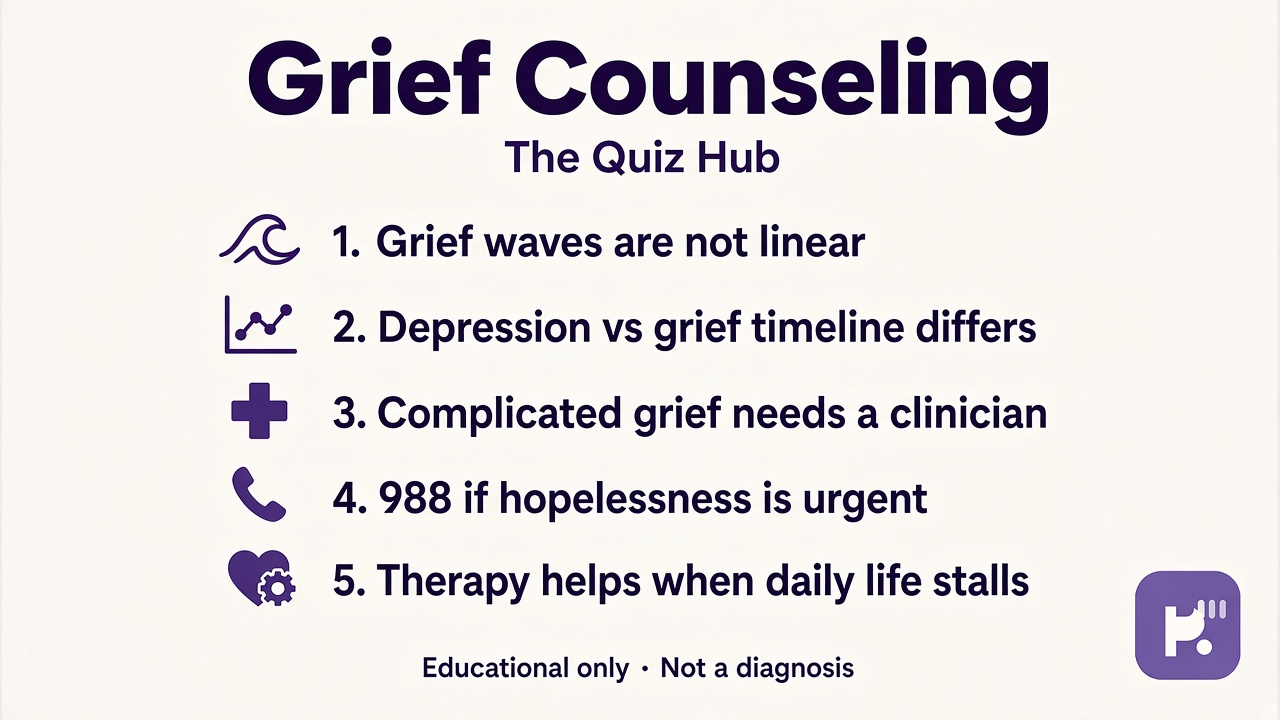
Key takeaways
- Grief counseling targets adaptation to loss, not "getting over it" on a calendar.
- Normal grief waves differ from major depression; overlap is common after bereavement.
- Prolonged grief disorder has duration criteria assessed by a clinician (APA, 2022).
- Hospice, EAP, and community clinics may offer affordable bereavement series.
- 988 and emergency services handle acute suicide risk; therapy waitlists are not crises lines.
- Screeners organize mood symptoms; they cannot diagnose grief disorders.
What grief counseling helps with
Counselors normalize mourning while building skills: telling the story without drowning, handling anniversaries, negotiating family rituals, and returning to routines at a humane pace. After a spouse dies, tasks pile up alongside feelings. Our guide to coping after your husband's death covers practical and emotional markers; counseling adds professional pacing when those markers turn red.
Divorce grief is real even when you chose to leave. Identity, finances, and co-parenting rewrite overnight. Read how to cope with divorce for legal-emotional basics, then consider therapy when rumination blocks work or you lean on unhealthy numbing.
Grief versus depression versus complicated grief
Confusing grief with depression delays the right care. Depression treatment may need medication or cognitive behavioral therapy focused on thought loops. Grief therapy emphasizes meaning, connection to the deceased, and gradual re-engagement with life. Prolonged grief sits between: stuck yearning that will not soften. Use the table to prepare intake questions; only a clinician can diagnose.
| Feature | Typical grief | Major depression | Prolonged / complicated grief |
|---|---|---|---|
| Core feeling | Yearning, sadness tied to the loss | Low mood or emptiness across most days | Intense yearning and identity disruption long after loss |
| Triggers | Anniversaries, songs, places, holidays | May lack clear loss trigger; global negativity | Reminders avoided or obsessively sought; little relief over time |
| Self-worth | Guilt about "should haves" common; self-esteem may stay intact | Worthlessness, self-hatred, excessive guilt | Life feels meaningless without the person; difficulty imagining a future |
| Function | Impaired for weeks, then gradual return with support | Work, hygiene, and social life often collapse for two weeks or more | Disabling impairment beyond twelve months (adults) with little improvement |
| Joy | Moments of laughter or connection possible between waves | Anhedonia: little interest or pleasure in most activities | Rare positive emotion; life narrows around the loss |
| Care focus | Support groups, psychoeducation, time | CBT, IPT, medication per prescriber | Specialized prolonged grief therapy with trained clinician |
When low mood dominates, read our depression therapy overview for modality options. Some people need both grief work and depression treatment in sequence or together.
How grief counseling sessions usually work
Early sessions map the loss story, supports, medical history, substance use, trauma, and safety. Clinicians may use the Patient Health Questionnaire (PHQ-9) or Grief and Mourning Status Interview style questions to track severity. You set goals: sleep, one social contact weekly, finishing probate paperwork without panic attacks, or tolerating a wedding anniversary.
Middle sessions blend narrative retelling, chair work, letter writing (sent or unsent), and behavioral activation such as short walks or memorial rituals. Complicated grief protocols add imaginal revisiting with therapist guidance to reduce avoidance. Telehealth works when you have private space; in-person may help when home triggers are constant.
Later sessions focus on integrating the loss into identity: "I am still a parent/partner/friend, and I mourn." Relapse prevention plans note early warning signs (isolation, alcohol, suicidal thoughts) and who to call. Booster sessions around holidays are normal, not failure.
Types of providers and how to choose
Licensed clinical social workers, counselors, psychologists, and psychiatrists can offer grief-focused therapy. Ask about training in prolonged grief treatment or trauma-informed care after violent death. Hospice bereavement coordinators often provide free groups after a home death. Employee assistance programs may cover six sessions quickly while you wait for long-term therapy.
Prepare for intake with our guide to formulating a request for a psychologist. Bring a symptom timeline, medications, and questions about fees, telehealth, and whether the clinician coordinates with your primary care doctor if antidepressants are considered.
Self-care that supports counseling homework
Sleep, hydration, and gentle movement stabilize the nervous system enough to process stories in session. Limit alcohol and sedatives unless prescribed; they blunt grief but worsen depression risk. Accept help with meals and childcare. Tell one trusted friend what you need (listening, not fixing). Journaling five minutes daily can track waves without forcing insight.
Spiritual communities can help when leaders are grief-literate and respect your beliefs. Avoid groups that shame anger or rush forgiveness. Cultural mourning practices (meals, prayer, anniversaries) belong in therapy planning when they comfort you.
Children, teens, and family grief counseling
Kids grieve in spurts between play. Family sessions can align language about death, school updates, and memorial plans. Teens may prefer individual therapy plus peer groups. Watch for school refusal, self-harm talk, or regression; those warrant prompt clinical assessment beyond parent reassurance alone.
When medication enters the picture
Antidepressants are not grief erasers. They may help when a major depressive episode sits on top of bereavement and blocks therapy participation. Sleep aids should be short-term and monitored. Discuss risks and benefits with a prescriber who knows your loss history. Never stop psychiatric medication abruptly without medical guidance.
Related quizzes on The Quiz Hub
Screeners highlight symptoms to discuss with a clinician. They cannot measure prolonged grief duration or replace compassionate interviews.
- Mental Health and Clinical hub: browse mood, anxiety, and trauma screeners with stated limits before therapy intake.
- Anxiety and depression screening (PHQ-4): brief four-item screener when grief waves bring panic, low mood, or loss of interest.
- Depression test: longer symptom checklist to print or share at a primary care or psychiatry visit if hopelessness persists two weeks or more.
Frequently asked questions
What is grief counseling?
Grief counseling is talk therapy focused on adapting to loss: death of a loved one, divorce, miscarriage, job loss, or other life ruptures. Licensed counselors, social workers, and psychologists use psychoeducation, narrative work, ritual planning, and coping skills so mourning does not swallow daily functioning. Hospice bereavement programs and employee assistance plans may offer short series at low cost.
How is grief different from depression?
Grief centers on yearning for someone or something lost, with waves tied to reminders and anniversaries. Depression often brings global hopelessness, self-hatred, and loss of interest across life domains without a clear loss trigger. They overlap: prolonged grief can look like depression, and depression can follow bereavement. A clinician uses interviews and duration criteria rather than online lists alone.
What is complicated or prolonged grief?
Prolonged grief disorder (in DSM-5-TR) describes intense yearning, identity disruption, and emotional pain lasting more than about twelve months after a death (or six months in children), with little improvement. Avoidance of reminders or excessive guilt may dominate. Specialized grief therapy (sometimes called complicated grief treatment) targets these stuck patterns. It is not weakness to need that care.
When should I seek grief counseling?
Seek help when you cannot eat or sleep, cannot return to work or childcare, use alcohol or sedatives to numb pain, withdraw from all support, or feel life is not worth living. Early counseling after sudden or traumatic loss can also prevent isolation. Call or text 988 (U.S.) if you have suicidal thoughts with intent or plan.
Does insurance cover grief counseling?
Many plans cover psychotherapy with a licensed provider when symptoms meet medical necessity, sometimes coded as adjustment disorder or major depression alongside grief. Pure bereavement without a diagnosis may not qualify on some plans; ask about sliding-scale community clinics, faith-based bereavement groups with trained leaders, and hospice follow-up programs after a death.
Can online quizzes diagnose grief disorders?
No. PHQ-4 and depression screeners on our site highlight mood and anxiety symptoms worth discussing with a clinician. They cannot measure prolonged grief duration, replace compassionate interviews, or tell you whether you should sell a home or return to dating. Use them as conversation prep before intake.
Sources
- American Psychiatric Association. (2022). DSM-5-TR prolonged grief disorder criteria.
- National Institute of Mental Health. (2024). Depression overview.
- Centers for Disease Control and Prevention. (2023). Mental health resources.
- Substance Abuse and Mental Health Services Administration. (2024). Coping with loss and trauma.