What this purity test measures
This purity test screens seven experience domains with classic have-you-ever yes-no items. Each yes marks a listed life experience. Each no keeps your purity index higher on that item. The score reflects checked boxes on this playful list, not your worth, religion, or sexual virtue.
Romance and flirting
Hands, kisses, flirting back, and labeled dating experiences on the checklist.
Party and nightlife
Late curfews, clubs, secret sleepovers, and skipping school or work for social plans.
Alcohol and substances
Sipping drinks, feeling buzzed, vape or smoke tries, and drinking-heavy parties.
Internet habits
Deleted posts, stranger DMs, mature content clicks, and alt accounts for chaotic posting.
Mild rule-breaking
Copied homework, location lies, small shoplifting, and minor intentional trespassing.
Physical intimacy
Making out, cuddling while crushing, suggestive photos, and sharing spicy dreams with friends.
Social drama
Hurtful gossip, behind-the-back posts, fights, and betrayed secrets.
How it works
Three steps from first checkbox to your purity band. Click Start Test to open the interactive purity test in a full-screen modal.
Answer 28 yes-no items
Mark whether you have ever done each listed experience. There is no timer and no auto-advance between questions.
Yes answers lower purity on that item
Your purity index counts no answers as untouched experiences. Domain bars show where yes checks cluster across romance, party, internet, rule-breaking, intimacy, and drama.
View index and domain chart
Results show a purity index from 0 to 100, a band label, seven domain bars ranked lowest to highest purity, and suggested next steps.
Take the purity test
Check yes or no on 28 have-you-ever items about romance, parties, online habits, and mild mischief. Your answers produce a purity index and one of three bands with a seven-domain breakdown chart.
Opens in a focused modal. No account required. Results stay on screen.
What your result means
Your purity index equals the percentage of no answers across all 28 items. Higher percentages mean fewer checked experiences on this list today. Lower percentages mean more yes boxes. The band label groups that score into plain-language stages for meme sharing, not moral ranking.
| Purity band | Percentage range | Typical reading |
|---|---|---|
| High Purity | 66 to 100 | Fewer checked experiences across most domains on this list |
| Mixed Experiences | 36 to 65 | Blend of yes and no answers; domain chart shows where checks cluster |
| Lower Purity Score | 0 to 35 | Many yes answers; busier social or online life on these items, not a bad-person label |
Seven domains of the purity checklist
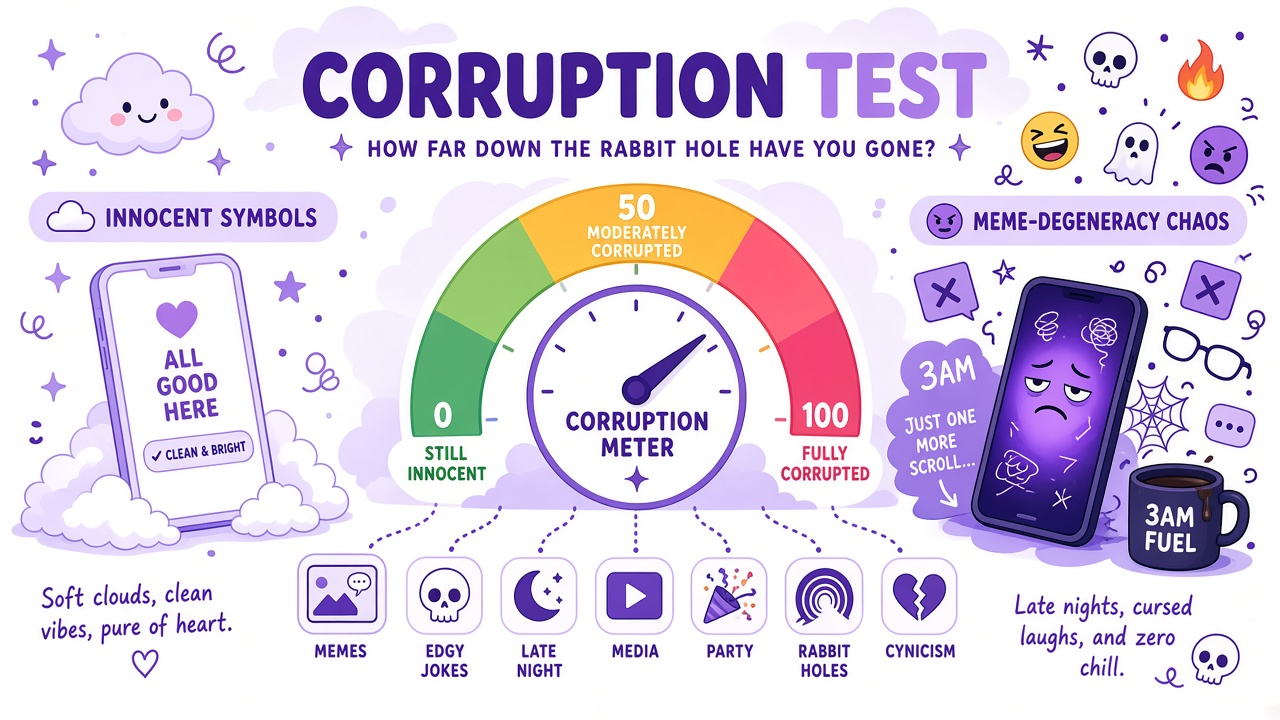
The diagram below shows how domain scores feed an overall purity index. Strong internet yes checks with untouched romance items, for example, can still land you in Mixed Experiences until party or substance boxes catch up.
What this test can and cannot tell you
Can tell you
- How many listed experiences you checked yes on today
- A purity index and band for meme-friendly reflection
- Which domain bar scores lowest and may deserve attention first
- A checklist baseline before comparing with innocence or corruption siblings
Cannot tell you
- Whether you are morally pure, corrupt, or sexually virtuous
- How others should judge your dating or party history
- Whether you should chase wilder or safer experiences
- A clinical diagnosis or religious confession outcome
Classic purity tests, meme culture, and checklist quizzes
Internet purity tests exploded as dorm-room checklists long before TikTok repackaged them as shareable scores. The format is simple: mark yes for each life experience you have had, then compare totals with friends. Psychologists treat these lists as curiosity toys, not validated moral instruments. This purity test borrows the meme structure with 28 original yes-no items and seven domain bars while refusing slut-shaming language in results.
It differs from our live how innocent are you quiz, which measures sheltered attitudes with agree-disagree statements instead of experience boxes. For mainstream taste comfort rather than party history, try our live am I basic quiz. For quirky self-image framing, try our live am I weird quiz. Planned rice-purity-test and corruption-test siblings will offer parallel meme angles when they ship.
Sample item: answering yes to flirting back lowers your romance domain purity bar for that checklist. Answering no to shoplifting keeps your rule-breaking bar higher. Retake after a major life chapter if your social scene shifted. Read how we review quizzes in our editorial policy.
Purity test FAQ
Is this purity test moral judgment or slut-shaming?
No. This purity test is a playful yes-no checklist of common teen and young adult experiences across seven domains: romance and flirting, party and nightlife, alcohol and substances, internet habits, mild rule-breaking, physical intimacy, and social drama. It produces a purity index from 0 to 100 where higher scores mean fewer checked experiences. It is not a virtue score, religious confession, or shame tool.
How is this purity test different from the how innocent are you quiz?
The how innocent are you quiz uses Likert agree-disagree items about sheltered vibes, trust habits, and media comfort. This purity test uses classic have-you-ever yes-no checkboxes about life experiences. Innocence reflects attitudes; purity here reflects checked boxes on a meme-friendly list. Both avoid moral ranking.
How is the purity index calculated?
Each no answer adds purity because fewer listed experiences were checked. The purity index equals the percentage of no answers across all 28 items, rounded to a whole number from 0 to 100. Three bands group the score: High Purity (66 to 100), Mixed Experiences (36 to 65), and Lower Purity Score (0 to 35).
How long does the purity test take?
Most people finish in about seven minutes. There are twenty-eight yes-no questions with manual next buttons and session autosave in the same browser.
What age is this purity test for?
Items are framed for teen and young adult life (roughly 16 plus). Romance and intimacy items stay suggestive but not explicit. Parents may prefer the how innocent are you quiz for attitude reflection instead of experience checklists.
Who reviewed this content?
Dr. Elena Vasquez, PhD, reviewed the test framing and result explanations. See our editorial policy for review standards.
Reviewed by