What the PGWBI well-being quiz measures
This quiz does not administer the published Dupuy Index of General Psychological Well-Being, diagnose depression or anxiety disorders, or prescribe treatment from bar height. It measures how much you agree with unofficial PGWBI-inspired literacy grouped four ways: positive well-being and vitality about energy without toxic cheer; anxiety and depression humility about notice-not-verdict habits; self-control and general health habits about steady routines with clinicians; and quiz-not-published-PGWBI limits about humble captions. You rate 22 statements from strongly disagree to strongly agree, with reverse-worded traps so one good week cannot inflate every bar. Your answers also feed a second chart on closeness and trust habits.
Positive well-being and vitality
Energy not toxic cheer.
Anxiety and depression humility
Notice not verdict.
Self-control and general health habits
Steady not hustle cosplay.
Quiz not published PGWBI
Mirror not mailer dx.
How it works
Answer 22 agreement items
Rate each statement from Strongly disagree to Strongly agree. Tap Next after each answer.
Answers sort into four domains
Each answer feeds one of four PGWBI-inspired literacy groups, and every item also feeds a closeness and trust layer.
See your index and charts
You get a 0 to 100 index, a band, four domain bars, and a second chart for intimacy habits.
Take the Index of General Psychological Well-Being PGWBI
Answer 22 short statements to see your PGWBI-inspired well-being literacy index, four domain bars, and a closeness and trust chart.
What your result means
Your index is the average of all 22 answers, scaled from 0 to 100, with reverse-worded items flipped first. Read published-PGWBI limit bars together with anxiety-depression humility before you treat a high score as clinical authority. Licensed clinicians still own formal assessment when symptoms persist.
| Band | Index range | Typical reading |
|---|---|---|
| Building PGWBI-inspired literacy | 0 to 35 | Fewer agreed habits on vitality, anxiety-depression humility, self-control health, or unofficial PGWBI limit items. |
| Mixed PGWBI-inspired literacy | 36 to 65 | Solid literacy in some domains with softer bars on limits, humility, or health cosplay slips. |
| Strong PGWBI-inspired literacy | 66 to 100 | Frequent agreement with literacy and limits; still unofficial reflection only. |
Tips at a glance
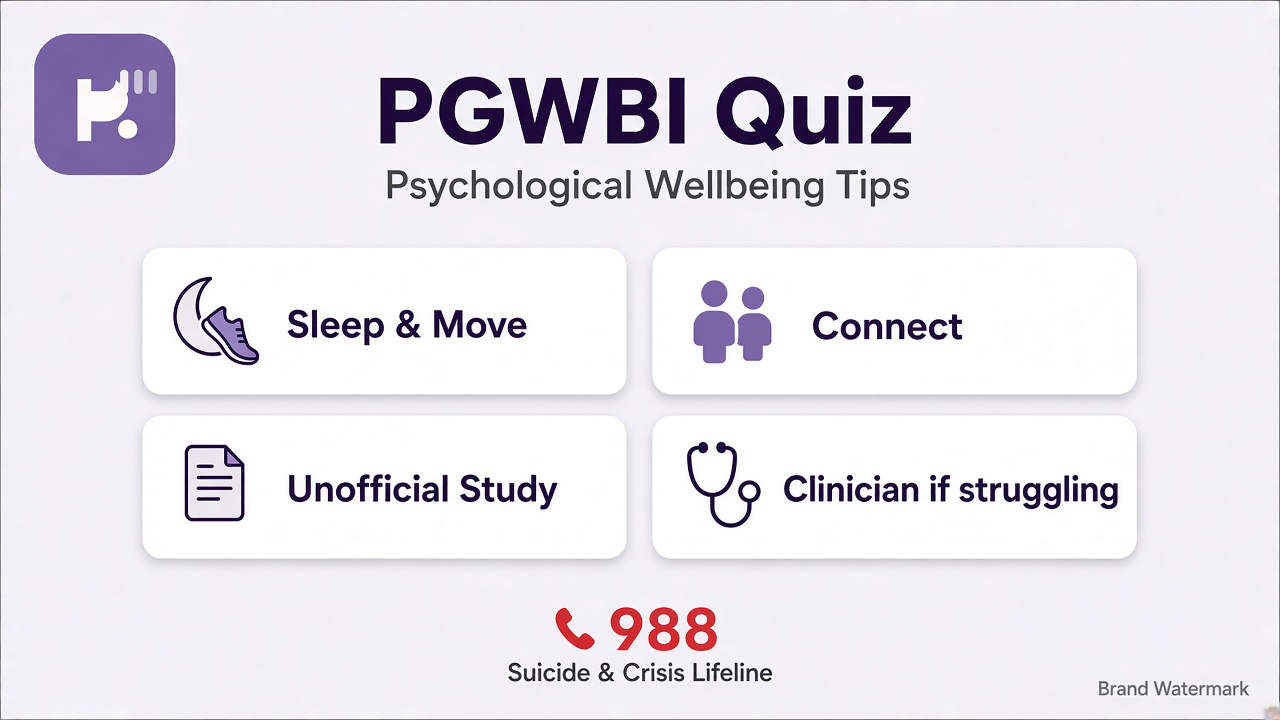
A quick takeaway graphic with topic tips (not your personal quiz scores). Start the quiz for your index, bands, and charts.
What this quiz can and cannot tell you
Can tell you
- Highlight vitality, humility, and health study habits worth revisiting before well-being debates
- Separate literacy reflection from published PGWBI mailer cosplay and stranger diagnosis threads
- Encourage clinician questions without toxic positivity dunk spirals
- Spark better study goals without claiming prescriber authority
Cannot tell you
- Replace published Dupuy PGWBI batteries or proctored clinical interviews
- Diagnose depression, anxiety, or medical conditions from couch scores
- License public shame threads about who should smile more
- Prove disability, hiring fitness, or treatment response from agree totals alone
Why PGWBI name drops need vitality literacy, mood humility, health habits, and mailer limits
Search traffic around PGWBI often follows psychology courses citing Dupuy general well-being themes while feeds collapse research into smile-more dunk threads and stranger diagnosis cosplay. Those goals help when readers name vitality, anxiety-depression humility, and quiz-not-mailer caps together. They hurt when couch scores become licenses to shame tired friends.
Dr. Elena Vasquez reviews YMYL well-being screeners with a split between honest literacy and refusal of published-scale cosplay. Vitality items track interest and calm energy without toxic cheer myths. Anxiety-depression items track notice-not-verdict habits without online diagnosis threads. Health items track clinician partnerships without influencer stack proof.
Real readers mix bars. You might score high on vitality literacy while anxiety-depression humility stays moderate during a grief month. Reverse items catch smile-more polls, stranger psychiatry cosplay, and bar-height PGWBI mailer fantasies.
Pair results with siblings instead of forcing one well-being story. Our psychological well-being scale explores measurement-style stems with separate wording. Our Ryff psychological well-being scale PWB-M stays on six-dimension inventory habits rather than PGWBI literacy caps here. Our life satisfaction quiz widens mood satisfaction themes rather than Dupuy-inspired agree items on this page. Browse the mental health and clinical hub for more YMYL screeners.
| Test | Focus |
|---|---|
| Psychological well-being scale | Measurement-style well-being stems rather than PGWBI-inspired literacy agree items here |
| Ryff psychological well-being scale PWB-M | Six-dimension inventory habits rather than unofficial Dupuy limit language on this page |
| Life satisfaction quiz | Satisfaction mood habits rather than PGWBI vitality and humility caps here |
Index of General Psychological Well-Being PGWBI FAQ
What does the PGWBI well-being quiz measure?
It measures self-reported habits around PGWBI-inspired vitality literacy, anxiety-depression humility, self-control and general health study themes, and unofficial published-PGWBI limit items, plus a parallel fear-of-intimacy stack chart.
Is this the official Dupuy PGWBI mailer?
No. Limit items reject mailer cosplay. Published PGWBI batteries use separate items and scoring rules administered by trained professionals when appropriate.
Does this quiz diagnose depression or anxiety?
No. It is literacy reflection only. Licensed clinicians diagnose mood and anxiety disorders with history, interview, and appropriate tools.
Can high bars prove I do not need therapy?
No. Bars describe literacy habits you endorsed here, not treatment decisions or proof that symptoms are harmless.
Who reviewed this quiz?
Dr. Elena Vasquez reviewed the framing, limit language, and result explanations. See our editorial policy for review standards.
Reviewed by