What How Long Can You Last In Bed Quiz measures
This screener does not diagnose premature ejaculation, erectile dysfunction, or any clinical condition, and it does not prescribe medications or stunt training from bar height. It measures how much you agree with unofficial sexual wellness pacing habits grouped four ways: pace and comfort habits about breath and body kindness; partner talk habits about asking and adjusting; anti-stunt bragging about refusing scoreboard culture; and quiz-not-medical-diagnosis limits about clinicians owning persistent symptoms. You rate 22 statements from strongly disagree to strongly agree, with reverse-worded traps so one brag mindset cannot inflate every bar. Your answers also feed a second chart on closeness and trust habits. The total becomes an index from 0 to 100 where higher means more reported wellness habits on this screener, not proof you may skip care when pain or coercion appears.
Pace and comfort habits
Breath not timers.
Partner talk habits
Ask and adjust.
Anti-stunt bragging
No locker-room courts.
Quiz not medical diagnosis
Clinicians own care.
How it works
Answer 22 agreement items
Rate each statement from Strongly disagree to Strongly agree. Tap Next after each answer.
Answers sort into four domains
Each answer feeds one of four sexual wellness pacing groups, and every item also feeds a closeness and trust layer.
See your index and charts
You get a 0 to 100 index, a band, four domain bars, and a second chart for intimacy habits.
Take the How Long Can You Last In Bed Quiz
Answer 22 short statements to see your sexual wellness pacing reflection index, four domain bars, and a closeness and trust chart.
What your result means
Your index is the average of all 22 answers, scaled from 0 to 100, with reverse-worded items flipped first. Read partner-talk bars together with quiz-not-medical-diagnosis limits before you treat a high score as clinical clearance. Urologists, sex therapists, and crisis lines still own care when symptoms or safety threats persist.
| Band | Index range | Typical reading |
|---|---|---|
| Building pace wellness | 0 to 35 | Fewer agreed habits on core domains or unofficial limit items on this screener. |
| Mixed pace wellness | 36 to 65 | Solid habits in some domains with softer slips or limit corners elsewhere. |
| Strong pace wellness | 66 to 100 | Frequent agreement with habits and limits; still unofficial reflection only. |
Tips at a glance
A quick takeaway graphic with topic tips (not your personal quiz scores). Start the quiz for your index, bands, and charts.
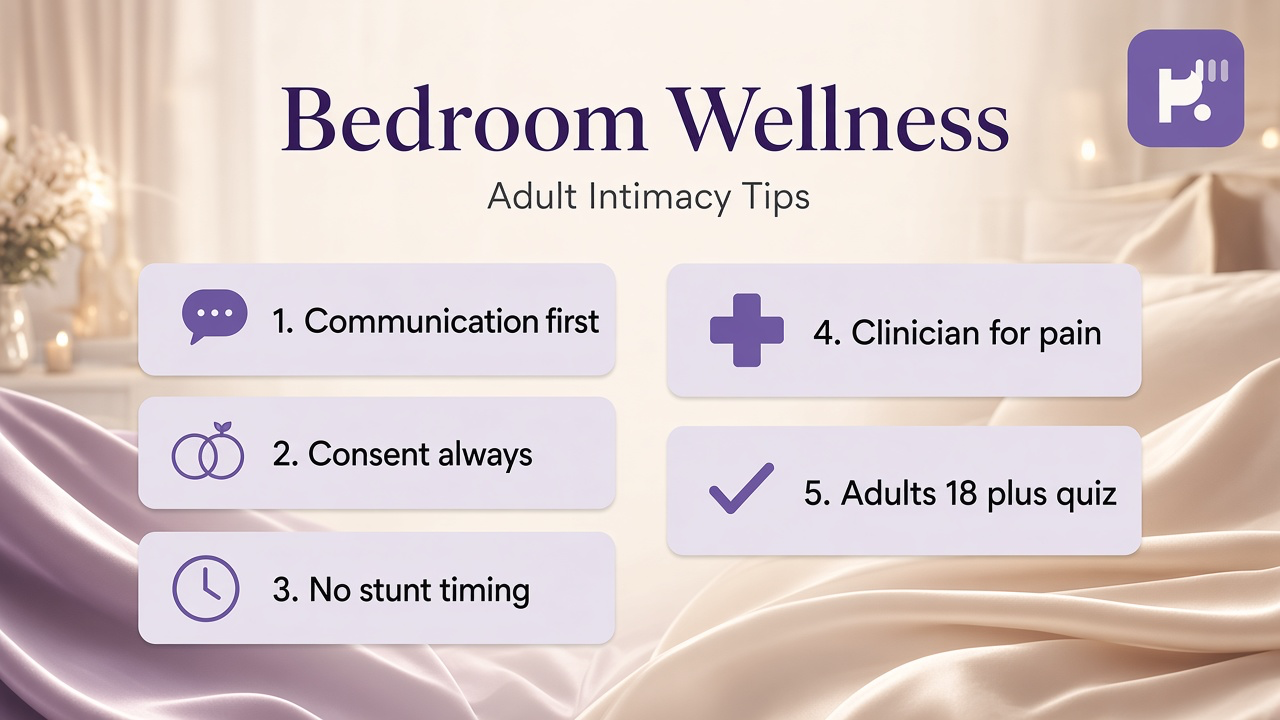
What this quiz can and cannot tell you
Can tell you
- Highlight pace, comfort, and partner-talk habits worth revisiting before shame spirals
- Separate wellness reflection from stunt-scoreboard culture and porn-script cosplay
- Encourage clinician or sex-therapy outreach when pain or distress persists
- Spark kinder intimacy talk without claiming diagnostic authority
Cannot tell you
- Diagnose sexual dysfunction or prescribe treatments from couch scores
- Certify stunt endurance or rank partners from bar height
- Replace urology, sex therapy, or assault-survivor support
- Pressure anyone to meet viral timer challenges from agree totals alone
Why pacing quizzes need comfort, partner talk, anti-stunt habits, and medical separation
Stamina search traffic mixes honest comfort questions with brag threads that treat partners like scoreboards and skip consent. Wellness reflection helps when readers prioritize breath, talk, and boundaries. It hurts when couch scores become urology cosplay or locker-room dunk fuel.
Dr. Elena Vasquez reviews sexuality screeners with a split between honest comfort habits and honest medical limits. Pace and comfort tracks kindness without porn timers. Partner talk tracks ask-and-adjust without silent performance. Anti-stunt bragging refuses hours-long brag courts. Quiz-not-medical-diagnosis keeps clinicians owning persistent symptoms.
Reverse items catch pain-ignoring stamina myths, partner mockery, and skipped follow-up from bar height. Those traps should not inflate bars meant to track respectful pacing manners.
Pair with our sexual health quiz when broader intimacy literacy needs another lens. Our libido quiz explores desire reflection with separate stems. Browse the sexuality and LGBTQ+ hub for more screeners with unofficial limits.
| Test | Focus |
|---|---|
| Sexual health quiz | Broader sexual health literacy rather than pacing-and-stunt refusal stems here |
| Libido quiz | Desire reflection rather than pace-and-comfort caps on this page |
| Sexuality and LGBTQ+ hub | More intimacy screeners with separate unofficial question banks |
How Long Can You Last In Bed Quiz FAQ
Does this measure how many minutes I should last?
No. It measures self-reported comfort, partner talk, anti-stunt, and limit habits on this screener. Bodies and contexts vary; timers are not medical standards here.
Is this a urology diagnosis or treatment plan?
No. Licensed clinicians own diagnosis and prescriptions. This page stays unofficial wellness reflection only.
Can I use my score in locker-room brag threads?
No. Anti-stunt items reject scoreboard culture. Share consented tips privately if helpful, not to rank partners publicly.
When should I see a clinician instead of retaking?
Persistent pain, distress, coercion, or sudden changes that worry you deserve medical or sex-therapy support beyond any couch screener.
Who reviewed this screener?
Dr. Elena Vasquez reviewed the framing, limits language, and result explanations. See our editorial policy for review standards.
Reviewed by