What How Do You Feel At Work measures
This screener does not diagnose burnout, depression, or anxiety disorders, and it does not create HR files from bar height. It measures how much you agree with unofficial mood awareness statements grouped four ways: mood naming at work about noticing strain without forever-fine cosplay; recovery pacing habits about breaks before collapse; boundary and support habits about EAP and clinicians without manager-as-therapist traps; and quiz-not-clinical-diagnosis limits about inspired framing and refusal to treat hobby bars like medical clearance. You rate 22 statements from strongly disagree to strongly agree, with reverse-worded items flipped first. Your answers also feed a second chart on closeness and trust habits. The total becomes an index from 0 to 100 where higher means more reported awareness habits on this screener, not proof you are clinically burned out.
Mood naming at work
Name strain early.
Recovery pacing habits
Breaks before collapse.
Boundary and support habits
Help without cosplay.
Quiz not clinical diagnosis
Mirror not HR file.
How it works
Answer 22 agreement items
Rate each statement from Strongly disagree to Strongly agree. Tap Next after each answer.
Answers sort into four domains
Each answer feeds one of four workplace mood groups, and every item also feeds a closeness and trust layer.
See your index and charts
You get a 0 to 100 index, a band, four domain bars, and a second chart for intimacy habits.
Take the How Do You Feel At Work
Answer 22 short statements to see your workplace mood awareness index, four domain bars, and a closeness and trust chart.
What your result means
Your index is the average of all 22 answers, scaled from 0 to 100, with reverse-worded items flipped first. Read support bars together with unofficial-limit bars before you treat a high score as medical clearance. Clinicians, HR policies, and crisis lines still own care when distress threatens safety or daily roles.
| Band | Index range | Typical reading |
|---|---|---|
| Building workplace mood awareness | 0 to 35 | Fewer agreed habits on mood naming at work, recovery pacing habits, boundary and support habits, and quiz-not-clinical-diagnosis limits or unofficial limit items. |
| Mixed workplace mood awareness | 36 to 65 | Solid coping with softer pacing, boundary, or unofficial limit corners. |
| Strong workplace mood awareness | 66 to 100 | Frequent agreement with habits and limits; still unofficial reflection only. |
Tips at a glance
A quick takeaway graphic with topic tips (not your personal quiz scores). Start the quiz for your index, bands, and charts.
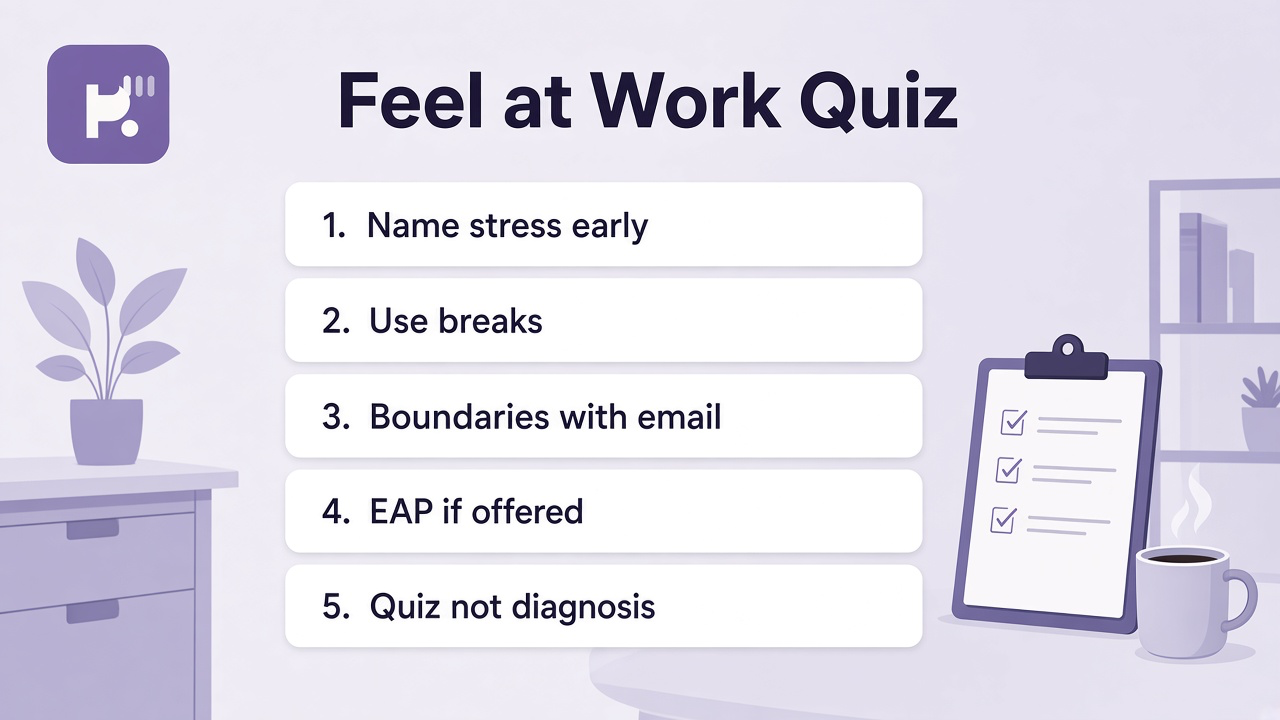
What this quiz can and cannot tell you
Can tell you
- Highlight mood naming, recovery pacing, and boundary habits during work stress
- Separate educational reflection from burnout diagnosis cosplay and teammate surveillance
- Encourage EAP or clinician outreach without shaming normal strain
- Spark better recovery conversations without claiming bars equal clinical scores
Cannot tell you
- Diagnose burnout, depression, anxiety, or any disorder from couch bars
- Replace occupational health evaluations, accommodations, or crisis services
- Prove you may label or monitor coworkers from one agree session
- Predict job performance or termination risk from awareness totals alone
Why workplace mood screeners need naming, pacing, support, and clinical separation
Burnout listicles spread faster than recovery plans, and comment sections treat tired coworkers like moral failures. Mood awareness screeners help when readers name strain, pace breaks, and seek support without turning managers into therapists. They hurt when agree bars become surveillance tools or fake medical clearance.
Dr. Priya Sharma reviews workplace wellness copy with a simple split: reward honest pacing habits and reward refusal of diagnosis substitution at the same time. Mood naming tracks early signals. Recovery pacing tracks breaks before collapse. Boundary items track EAP and clinicians. Limit items keep the page separate from HR cosplay.
Reverse items catch grind bravado, teammate shaming, and Slack trauma dumps without care. Those myths should not inflate bars meant to track respectful workplace mood habits.
Pair with our basic needs satisfaction scale at work when autonomy and relatedness need another lens. Our do you know yourself and your workplace sibling explores fit reflection with separate stems. Our coping skills quiz stays on regulation habits rather than workplace mood caps here. Browse the mental health and clinical hub for more YMYL lite screeners.
| Test | Focus |
|---|---|
| Basic needs satisfaction scale at work | Workplace needs satisfaction frequency rather than mood awareness limits here |
| Do you know yourself and your workplace | Workplace fit reflection rather than mood naming stems on this page |
| Coping skills quiz | Coping regulation habits rather than workplace boundary lanes here |
How Do You Feel At Work FAQ
What does How Do You Feel At Work measure?
It measures how much you agree with statements about mood naming at work, recovery pacing habits, boundary and support habits, and quiz-not-clinical-diagnosis limits. You get an index from 0 to 100 plus four bars reflecting self-rated habits on this screener.
Does this diagnose burnout or depression?
No. Limit items reject diagnosis cosplay. Licensed clinicians own formal assessment and treatment planning.
Should I share results with my manager?
Only if you choose to and policy supports it. Bars are unofficial reflection habits, not HR documentation or medical clearance.
Can high bars mean I do not need therapy or EAP?
No. Reverse items reject skip-support myths. Seek clinicians or employee assistance when distress disrupts sleep, safety, or daily roles.
Who reviewed this screener?
Dr. Priya Sharma reviewed the workplace wellness framing, crisis language, and result explanations. See our editorial policy for review standards.
Reviewed by