What How Confident Are You In Yourself measures
This screener does not diagnose social anxiety disorder, score clinical self-esteem batteries, or certify interview outcomes from bar height. It measures how much you agree with unofficial confidence reflection grouped four ways: kind self-talk habits about coach voice instead of critic loops; try-anyway learning habits about practice while nervous; comparison and scroll limits about your lane instead of highlight-reel courts; and quiz-not-therapy-diagnosis limits about playful captions and refusing friend-label cosplay. You rate 22 statements from strongly disagree to strongly agree, with reverse-worded traps so one hustle mindset cannot inflate every bar. Your answers also feed a second chart on closeness and trust habits. The total becomes an index from 0 to 100 where higher means more reported confidence habits on this screener, not proof you may skip mental health care.
Kind self-talk habits
Coach not critic.
Try-anyway learning habits
Practice over perfection.
Comparison and scroll limits
Your lane matters.
Quiz not therapy diagnosis
Mirror not Rx.
How it works
Answer 22 agreement items
Rate each statement from Strongly disagree to Strongly agree. Tap Next after each answer.
Answers sort into four domains
Each answer feeds one of four confidence reflection groups, and every item also feeds a closeness and trust layer.
See your index and charts
You get a 0 to 100 index, a band, four domain bars, and a second chart for intimacy habits.
Take the How Confident Are You In Yourself
Answer 22 short statements to see your self-confidence reflection index, four domain bars, and a closeness and trust chart.
What your result means
Your index is the average of all 22 answers, scaled from 0 to 100, with reverse-worded items flipped first. Read therapy-cap bars together with self-talk habits before you treat a high score as clinical clearance. Licensed professionals still own structured diagnosis and treatment when distress persists.
| Band | Index range | Typical reading |
|---|---|---|
| Building confidence reflection | 0 to 35 | Fewer agreed habits on self-talk, try-anyway, comparison limits, or unofficial cap items. |
| Mixed confidence reflection | 36 to 65 | Solid self-trust with softer comparison slips, perfection gates, or therapy cosplay myths. |
| Strong confidence reflection | 66 to 100 | Frequent agreement with self-talk, try-anyway, limits, and caps; still not therapy diagnosis. |
Tips at a glance
A quick takeaway graphic with topic tips (not your personal quiz scores). Start the quiz for your index, bands, and charts.
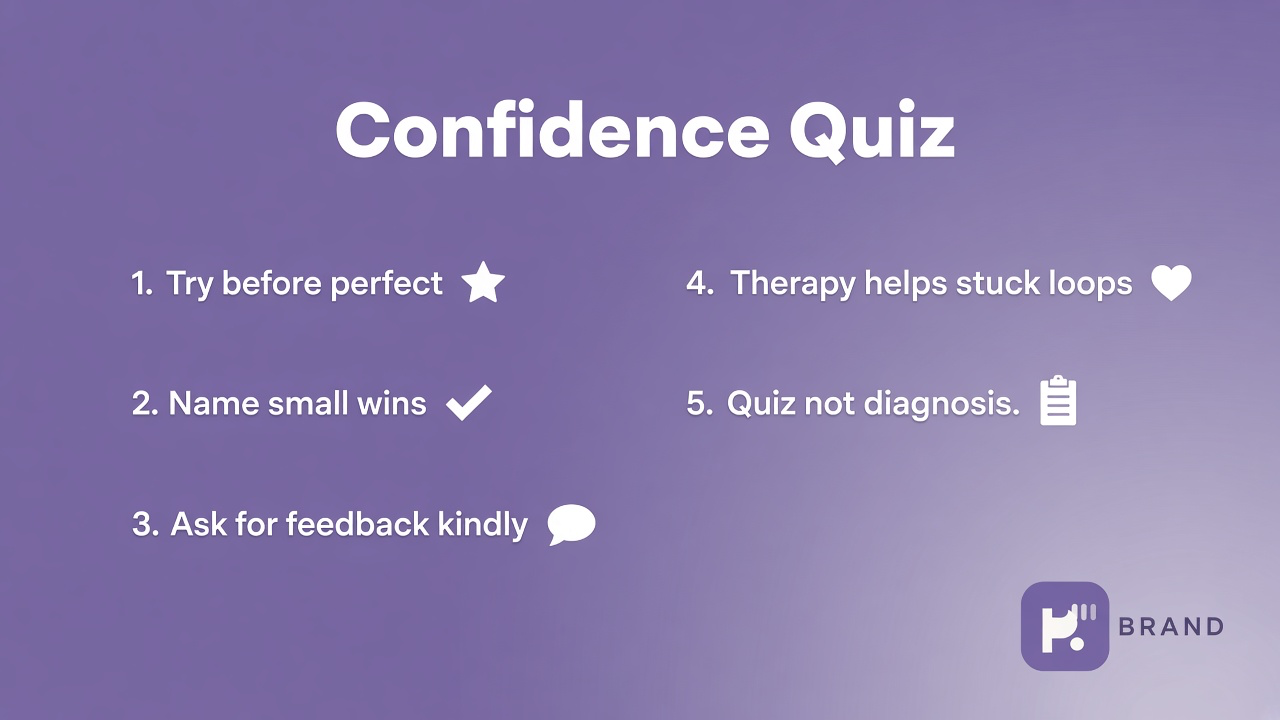
What this quiz can and cannot tell you
Can tell you
- Highlight self-talk, try-anyway, and comparison habits worth revisiting before self-help debates
- Separate reflection from therapy cosplay and hiring-certification myths
- Encourage tagged recaps without confidence-ranking spirals
- Spark better support questions without claiming diagnostic authority
Cannot tell you
- Diagnose anxiety, depression, or personality disorders from couch scores
- Replace therapy, medication decisions, or crisis care
- Prove you will get hired or promoted from bar height
- License dunking insecure friends from agree totals
Why confidence screeners need kind self-talk, try-anyway habits, comparison limits, and therapy separation
Search traffic around how confident are you in yourself often arrives from job threads and comparison scroll holes, not from clinics or permission to label friends insecure. Those goals help when readers name coach self-talk, try-anyway habits, and quiz-not-therapy caps together with original stems. They hurt when couch scores become therapy substitutes. Confidence reflection works best when it refuses diagnosis cosplay beside humble habit mirrors.
Dr. Elena Vasquez reviews personality-psychology screeners with a simple split: reward honest try-anyway energy and scroll limits while keeping therapy caps visible. Kind self-talk habits tracks patience after mistakes without toxic positivity performance. Try-anyway learning habits tracks practice while nervous without fearless cosplay. Comparison and scroll limits keeps highlight reels from becoming courts. Quiz-not-therapy-diagnosis limits keep licensed clinicians owning structured care.
Real readers mix bars. You might score high on try-anyway while keeping self-talk moderate, which often describes applicants who apply while still harsh internally. Reverse items catch overconfidence: fearless myths, stranger coaching, or skipped care should not inflate bars meant to track layered confidence manners.
Pair results with siblings instead of forcing one hustle story. Our confidence test explores situational trust reflection with its own unofficial limits. Our self-esteem test widens global self-worth themes rather than try-anyway stems here. Our how active am I quiz angles toward body-neutral movement when gym comparison stings confidence. Browse the personality and psychology hub for more reflection screeners. Caption shares as habit warm-up and skip sentencing strangers who never asked for a screener.
Seasons and rejection rotate faster than influencer confidence hacks. A comparison-limit bar might dip after one viral hiring week while try-anyway stays high until you retake calmly. When you share results, say unofficial confidence mirror. When you borrow tips, credit friends who cheered tries without ranking shy cousins.
| Test | Focus |
|---|---|
| Confidence test | Situational trust reflection rather than self-talk depth on this page |
| Self-esteem test | Global self-worth themes rather than try-anyway learning stems here |
| How active am I quiz | Movement habit reflection rather than scroll-limit caps on this screener |
How Confident Are You In Yourself FAQ
Does this measure how confident I am in every area of life?
No. It measures self-reported habits around self-talk, try-anyway energy, comparison limits, and unofficial caps on this screener. Confidence shifts by context.
Is this a therapy or mental health diagnosis?
No. Licensed clinicians own structured diagnosis and treatment. This page is informal reflection only.
Will a high score guarantee job interview success?
No. Hiring outcomes depend on many factors. High bars describe habits you endorsed here, not employment promises.
How is this different from the confidence test?
The confidence test sibling emphasizes situational trust reflection. This page frames self-confidence search intent with self-talk and try-anyway stems tuned to that query.
Who reviewed this screener?
Dr. Elena Vasquez reviewed the wellness framing, not-therapy language, and result explanations. See our editorial policy for review standards.
Reviewed by