What the Hood Quiz measures
This quiz does not certify street credibility, rank blocks for clout, or prove you belong. It measures how much you agree with unofficial literacy statements grouped four ways: neighborhood context literacy about history and policy curiosity; respectful listening habits about consent and centering residents; anti-stereotype community manners about refusing poverty tourism and slurs; and quiz-not-culture-costume limits about refusing cosplay and dunk threads from bar height. You rate 22 statements from strongly disagree to strongly agree, with reverse-worded traps so tourism myths cannot inflate every bar. Your answers also feed a second chart on closeness and trust habits. The total becomes an index from 0 to 100 where higher means more reported respectful literacy habits on this screener, not social rank over neighbors.
Neighborhood context literacy
History before hot takes.
Respectful listening habits
Residents lead the story.
Anti-stereotype community manners
No poverty tourism or slurs.
Quiz not culture costume
Learn; do not cosplay or dunk.
How it works
Answer 22 agreement items
Rate each statement from Strongly disagree to Strongly agree. Tap Next after each answer.
Answers sort into four domains
Each answer feeds one of four neighborhood literacy groups, and every item also feeds a closeness and trust layer.
See your index and charts
You get a 0 to 100 index, a band, four domain bars, and a second chart for intimacy habits.
Take the Hood Quiz
Answer 22 short statements to see your neighborhood literacy index, four domain bars, and a closeness and trust chart.
What your result means
Your index is the average of all 22 answers, scaled from 0 to 100, with reverse-worded items flipped first. Read quiz-not-culture-costume bars together with listening habits before you treat a high score as street authority. Community orgs and local leaders still own place-based safety and history work.
| Band | Index range | Typical reading |
|---|---|---|
| Building neighborhood literacy | 0 to 35 | Fewer agreed habits on core domains or unofficial limit items on this screener. |
| Mixed neighborhood literacy | 36 to 65 | Solid habits with softer slips on some domains or unofficial limits. |
| Strong neighborhood literacy | 66 to 100 | Frequent agreement with habits and limits; still unofficial reflection only. |
Tips at a glance
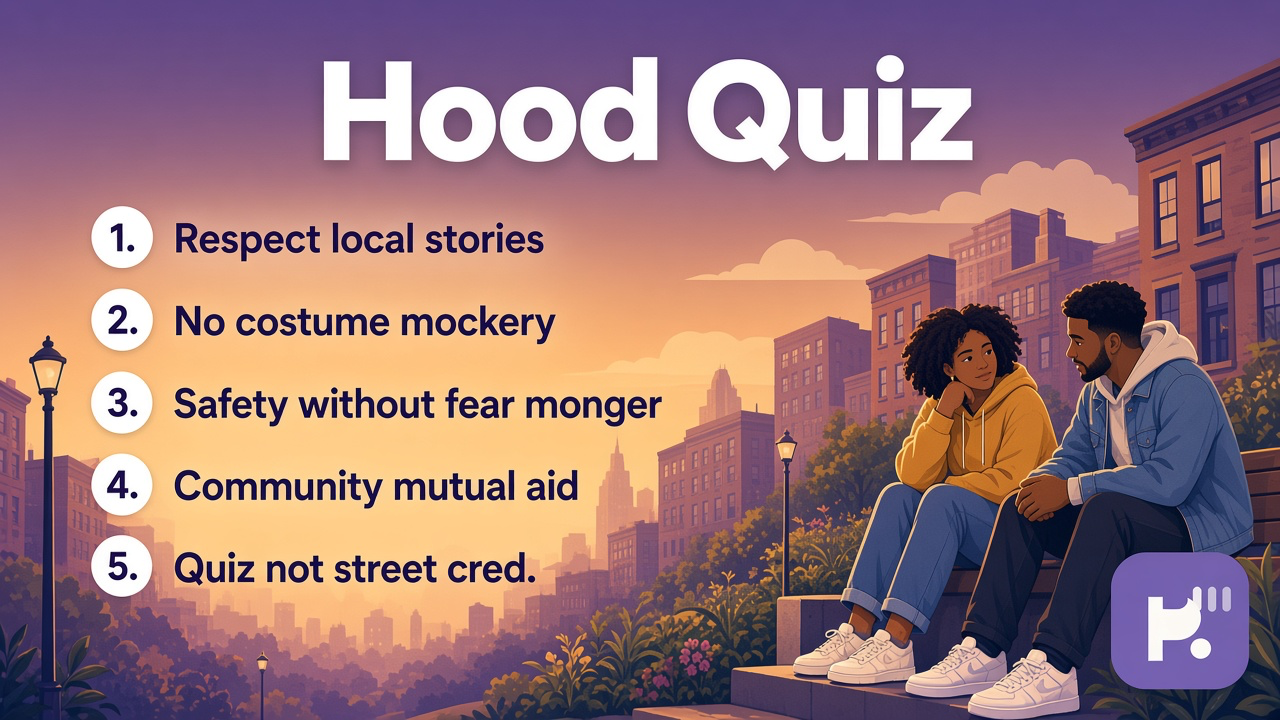
A quick takeaway graphic with topic tips (not your personal quiz scores). Start the quiz for your index, bands, and charts.
What this quiz can and cannot tell you
Can tell you
- Highlight context, listening, and manners habits worth practicing before sharing memes
- Separate literacy reflection from cosplay, slurs, and block-ranking dunk threads
- Encourage curiosity without demanding residents perform pain for outsiders
- Spark better classroom or friend conversations with cited sources
Cannot tell you
- Certify that you belong or do not belong in a neighborhood from one screener
- Replace historians, community orgs, or local safety planning
- License filming strangers, accent cosplay, or poverty tourism from bar height
- Rank real blocks as tier lists for clout from agree totals
Why hood quizzes need context, listening, and anti-costume limits
Search traffic around hood quizzes often wants language for neighborhood pride after music, film, or travel scrolls, not permission to cosplay or rank blocks. Those goals help when readers learn context, listen to residents, and refuse poverty tourism. They hurt when agree bars become credentials for slurs, filming strangers, or tier-list dunk threads.
Dr. Priya Sharma reviews fun novelty screeners with a split between curious literacy and honest limits on costume cosplay. Context literacy tracks history before memes. Listening tracks consent and resident-led stories. Anti-stereotype manners track slurs and tourism traps. Quiz-not-culture-costume keeps screeners separate from street-cred fantasy.
Real readers mix bars. You might score high on context while listening habits stay moderate when you are new to a city. Reverse items catch documentary lecture cosplay and block-ranking clout that should not inflate bars meant to track respectful manners.
Pair results with siblings on this hub. Our hip hop quiz explores music culture trivia rather than neighborhood literacy limits here. Our hipster quiz covers meme aesthetic lanes with separate stems. Our urban slang quiz stays on language play rather than block context on this page. Browse the fun and novelty hub for more light screeners. Caption shares as learning, ask consent, and skip ranking real homes.
| Test | Focus |
|---|---|
| Hip hop quiz | Music culture trivia rather than neighborhood literacy limits here |
| Hipster quiz | Meme aesthetic lanes rather than block context on this page |
| Urban slang quiz | Language play rather than neighborhood context reflection here |
Hood Quiz FAQ
What does the Hood Quiz measure?
It measures how much you agree with statements about neighborhood context, listening habits, anti-stereotype manners, and quiz-not-costume limits. You get an index from 0 to 100 plus four bars on this screener.
Does a high score mean I am from the hood?
No. Bars describe literacy habits you reported, not birthplace credentials or street rank.
Is this making fun of neighborhoods?
No. Limit items reject dunking and costume cosplay. The goal is respectful learning, not punchlines about residents.
How is this different from the hip hop quiz?
This page emphasizes neighborhood context and manners. The hip hop sibling focuses on music culture trivia with separate stems.
Who reviewed this quiz?
Dr. Priya Sharma reviewed the educational framing and ethics tone. See our editorial policy for review standards.
Reviewed by