What the HIPAA Quiz measures
This quiz does not provide legal advice, certify compliance officers, or authorize sharing protected information. It measures how much you agree with HIPAA study statements grouped four ways: PHI boundary literacy about minimum necessary habits; patient rights basics about notice and access themes; breach reporting habits about escalation in scenarios; and quiz-not-compliance-officer limits about refusing legal cosplay. You rate 22 statements from strongly disagree to strongly agree, with reverse-worded traps so gossip myths cannot inflate every bar. Your answers also feed a second chart on closeness and trust habits. The total becomes an index from 0 to 100 where higher means more reported privacy literacy on this screener, not proof you should skip training.
PHI boundary literacy
Minimum necessary and safeguards.
Patient rights basics
Notice, access, amendment themes.
Breach reporting habits
Escalate scenarios to officers.
Quiz not compliance officer
Study not legal counsel.
How it works
Answer 22 agreement items
Rate each statement from Strongly disagree to Strongly agree. Tap Next after each answer.
Answers sort into four domains
Each answer feeds one of four HIPAA literacy groups, and every item also feeds a closeness and trust layer.
See your index and charts
You get a 0 to 100 index, a band, four domain bars, and a second chart for intimacy habits.
Take the Hipaa Quiz
Answer 22 short statements to see your HIPAA privacy index, four domain bars, and a closeness and trust chart.
What your result means
Your index is the average of all 22 answers, scaled from 0 to 100, with reverse-worded items flipped first. Read compliance-limit bars together with PHI boundaries before you treat a high score as legal clearance. Privacy officers and counsel still own real decisions.
| Band | Index range | Typical reading |
|---|---|---|
| Building HIPAA privacy literacy | 0 to 35 | Fewer agreed habits on PHI boundary literacy, patient rights basics, breach reporting habits, and quiz-not-compliance-officer limits, or unofficial limit items. |
| Mixed HIPAA privacy literacy | 36 to 65 | Solid curiosity with softer bars on some domains or unofficial limits. |
| Strong HIPAA privacy literacy | 66 to 100 | Frequent agreement with habits and limits; still unofficial reflection only. |
Tips at a glance
A quick takeaway graphic with topic tips (not your personal quiz scores). Start the quiz for your index, bands, and charts.
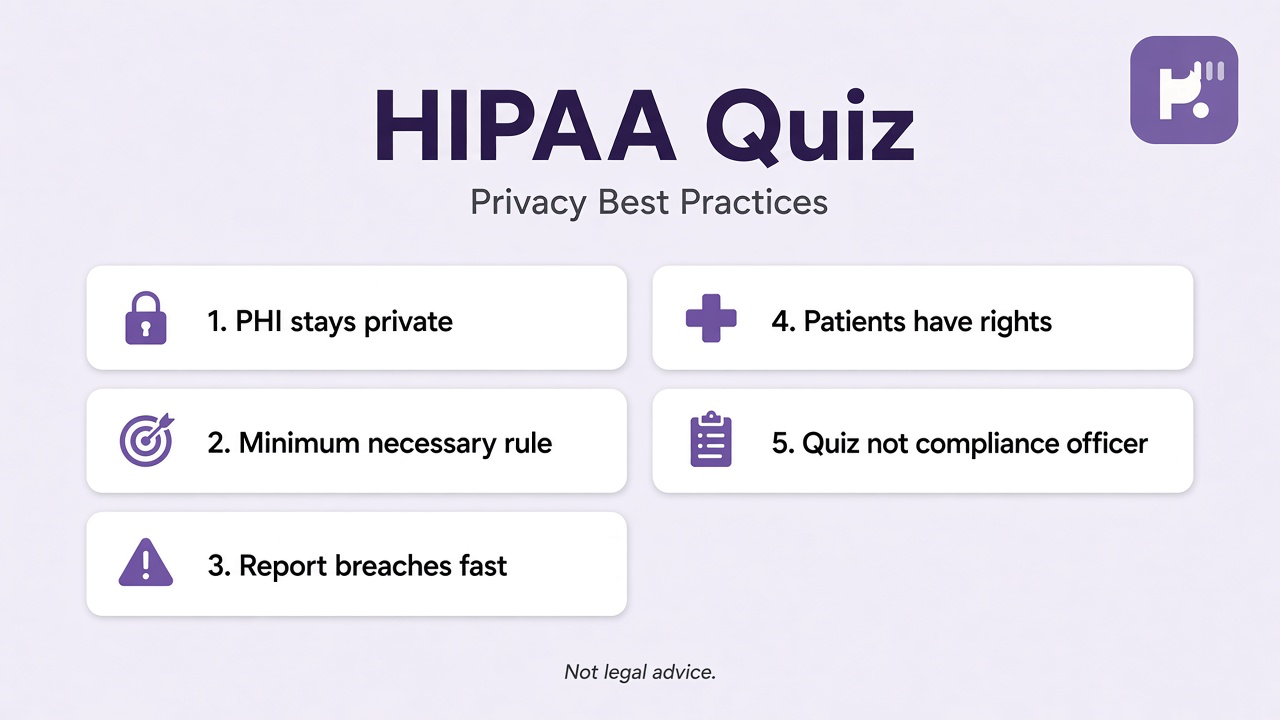
What this quiz can and cannot tell you
Can tell you
- Highlight PHI, rights, and breach habits worth revisiting before clinical placements
- Separate study reflection from gossip substitution and legal advice myths
- Encourage supervisor questions without shame spirals about first-pass privacy gaps
- Spark better study conversations about HIPAA without claiming counsel authority
Cannot tell you
- Replace legal counsel, privacy officer workflows, or accredited compliance programs
- Prove you may share identifiable patient stories or skip reporting from couch bars
- Authorize enterprise security configuration or BA negotiations from agree items alone
- Predict job offers or declare regulatory readiness from literacy bars alone
Why HIPAA quizzes need PHI boundaries, patient rights, breach habits, and compliance separation
Search traffic around HIPAA quizzes often arrives from health students seeking warm-up reflection before privacy units, not permission to gossip about patients from meme scores. Those goals help when readers rehearse minimum necessary language, protect stories, and keep agree bars away from compliance officer clearance myths. They hurt when couch scores become proof you may post hallway selfies or hide wrong-patient faxes.
Dr. Elena Vasquez reviews YMYL study screeners with a simple split: reward honest syllabus agreement and honest limits on legal substitution myths at the same time. PHI boundary literacy tracks identifiers and minimum necessary habits. Patient rights basics tracks notice and access themes. Breach reporting tracks escalation habits. Quiz-not-compliance limits keep screeners separate from counsel fantasy.
Real students mix bars. You might score high on PHI vocabulary while keeping breach reporting moderate, which often describes strong flashcard memory yet occasional escalation blur. Reverse items catch overconfidence: selfie PHI myths, officer skips, or solo EHR config fantasies should not inflate bars meant to track layered study manners.
Pair results with siblings instead of forcing one privacy hero story. Our confidentiality quiz explores broader recall habits with separate stems. Our CNA quiz stays on aide scope study rather than HIPAA-specific lanes here. Browse the mental health and clinical hub for more study screeners. Caption shares as private study notes, protect patient privacy, and escalate real concerns to officers.
| Test | Focus |
|---|---|
| Confidentiality quiz | Broader confidentiality recall rather than HIPAA-specific breach lanes here |
| CNA quiz | Nursing assistant scope study rather than privacy officer limits on this page |
| Mental health and clinical hub | More YMYL study screeners rather than HIPAA-only lanes |
Hipaa Quiz FAQ
What does the HIPAA Quiz measure?
It measures how much you agree with statements about PHI boundary literacy, patient rights basics, breach reporting habits, and quiz-not-compliance-officer limits. You get an index from 0 to 100 plus four bars reflecting self-rated study habits on this screener.
Is this legal advice?
No. This page offers informal educational literacy only. Qualified counsel and organizational privacy officers still own legal and compliance decisions.
Does this quiz certify me as a compliance officer?
No. Accredited programs and employers still own compliance credentials. Limit items reject officer clearance myths.
Can I share patient stories if my index looks high?
No. PHI boundary items reject gossip and selfie myths. Real sharing rules follow policies and law, not couch bars.
Who reviewed this quiz?
Dr. Elena Vasquez reviewed the framing, ethics tone, and result explanations. See our editorial policy for review standards.
Reviewed by