What the High School Stereotypes Quiz measures
This quiz does not rank real students, replace counselor guidance, or certify who belongs in which clique. It measures how much you agree with stereotype literacy statements grouped four ways: media trope context literacy about fiction versus real hallways; real classmate respect about individuals instead of lane costumes; kind humor and inclusion habits about jokes without weapons; and quiz-not-bullying-proof limits about playful screeners versus hallway label cosplay. You rate 22 statements from strongly disagree to strongly agree, with reverse-worded traps so one meme week cannot hide label-as-verdict items. Your answers also feed a second chart on closeness and trust habits. The total becomes an index from 0 to 100 where higher means more reported literacy habits on this screener.
Media trope context literacy
Fiction shortcuts, not real kid maps.
Real classmate respect
Individuals with hobbies and stress.
Kind humor and inclusion habits
Laugh without hallway weapons.
Quiz not bullying proof
Trope play without label licenses.
How it works
Answer 22 agreement items
Rate each statement from Strongly disagree to Strongly agree. Tap Next after each answer.
Answers sort into four domains
Each answer feeds one of four stereotype literacy groups, and every item also feeds a closeness and trust layer.
See your index and charts
You get a 0 to 100 index, a band, four domain bars, and a second chart for intimacy habits.
Take the High School Stereotypes Quiz
Answer 22 short statements to see your high school stereotype literacy index, four domain bars, and a closeness and trust chart.
What your result means
Your index is the average of all 22 answers, scaled from 0 to 100, with reverse-worded items flipped first. Read classmate respect bars together with kind humor bars before you treat a high score as hallway authority. Schools and counselors still own formal bullying response.
| Band | Index range | Typical reading |
|---|---|---|
| Building stereotype literacy | 0 to 35 | Fewer agreed habits on trope context, classmate respect, kind humor, or unofficial limit items. |
| Mixed stereotype literacy | 36 to 65 | Solid fandom joy with label slips, dunk threads, or bullying-proof corners. |
| Strong stereotype literacy | 66 to 100 | Frequent agreement with trope context, respect, humor, and limits; still unofficial reflection only. |
Tips at a glance
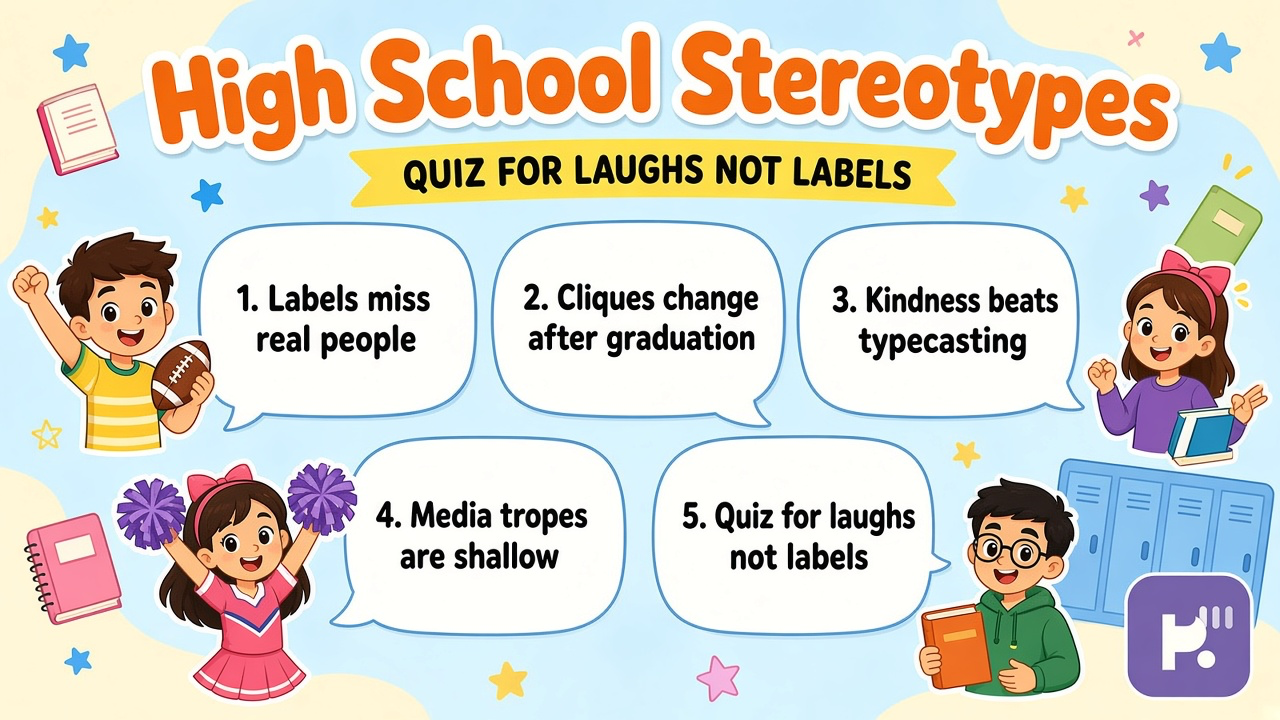
A quick takeaway graphic with topic tips (not your personal quiz scores). Start the quiz for your index, bands, and charts.
What this quiz can and cannot tell you
Can tell you
- Highlight trope, respect, and inclusion habits worth revisiting before the next meme dump
- Separate respectful fandom reflection from label dunk threads and bullying cosplay
- Encourage kind hallway invites without shame spirals about past roast jokes
- Spark better watch-party questions about fiction versus real school kindness
Cannot tell you
- Replace counselor support, anti-bullying policies, or safety planning when harassment persists
- Prove you may label or avoid real classmates from bar height
- Certify clique rank or harass quiet students from couch bars
- Declare who counts as popular from literacy bars alone
Why high school stereotype quizzes need trope context, respect, and bullying separation
Search traffic around high school stereotype quizzes often arrives from teen comedy marathons, musical singalongs, or friends joking about jock and nerd lanes without naming real kindness habits. Those goals help when readers enjoy fiction tropes, invite shy classmates, and keep agree bars away from hallway label cosplay. They hurt when couch scores become proof you may avoid or dunk real kids who never opted into your meme.
Dr. Rachel Kim reviews fandom screeners with a simple split: reward honest trope agreement and honest limits on bullying-license myths at the same time. Media trope literacy tracks fiction shortcuts without casting-call cosplay. Classmate respect tracks individuals with hobbies and stress. Kind humor tracks inclusion without weapons. Unofficial limits keep screeners separate from hall-monitor dunk threads.
Real fans mix bars. You might score high on trope quotes while keeping respect moderate, which often describes strong movie memory yet occasional label blur during meme weeks. Reverse items catch overconfidence: diagnose-shy-kid myths, roast-rights, or hall-monitor cosplay should not inflate bars meant to track layered kindness manners.
Pair results with siblings instead of forcing one forever-cool story. Our Heathers quiz explores dark satire literacy with separate spoiler lanes when your night needs more content notes. Our musical theater quiz stays on broader stage fandom habits rather than hallway kindness depth here. Our character quiz offers cross-fandom habit mirrors with separate stems. Browse the fandom and entertainment hub for more unofficial screeners. Caption shares as fiction reflection, choose kind words in real hallways, and skip labeling strangers who never asked for your trope verdict.
| Test | Focus |
|---|---|
| Heathers quiz | Dark satire and spoiler lanes rather than lighter hallway kindness stems here |
| Musical theater quiz | Broader stage fandom habits rather than real classmate respect depth on this page |
| Character quiz | Cross-fandom habit mirrors rather than school trope kindness lanes on this screener |
High School Stereotypes Quiz FAQ
What does the High School Stereotypes Quiz measure?
It measures how much you agree with statements about media tropes, classmate respect, kind humor, and quiz-not-bullying limits. You get an index from 0 to 100 plus four bars reflecting self-rated habits on this screener.
Can I use results to label real classmates?
No. Limit items reject hallway label cosplay. Bars describe habits you endorsed here, not permission to rank or avoid real teens.
Is this affiliated with my school?
No. This page offers informal trope reflection inspired by widely discussed teen media. Schools and counselors own formal conduct policies.
How is this different from the Heathers quiz?
This page emphasizes lighter trope and kindness literacy. The Heathers sibling uses separate dark satire stems with its own spoiler norms.
Who reviewed this quiz?
Dr. Rachel Kim reviewed the fandom framing, kindness language, and result explanations. See our editorial policy for review standards.
Reviewed by