What the HCL-33 Scale page measures
This quiz does not administer the extended Hypomania Checklist (HCL-33), diagnose bipolar disorder, or replace emergency care when mood feels manic or unsafe. Only a licensed clinician using interview methods, collateral history, and validated tools when needed can do that. It measures how often you noticed extended hypomania-linked patterns grouped four ways: elevated mood activation about up mood and pacing; observer contrast and feedback about how others experienced your shifts; risk and irritability edges about spending, argument heat, and impulsive communication; and HCL-33 clinical limits about honest scoring, avoiding fake labels, seeking care, and refusing couch bars as licensed HCL proof. You answer 22 how-often statements about recent high-energy stretches, with reverse-worded items so one steady day cannot hide frequent strain across other days. Your responses also feed a second chart on closeness and trust habits. The total becomes an index from 0 to 100 where higher means more frequent reported strain on this unofficial screener.
Elevated mood activation
How often up mood and pace outran ordinary good weeks.
Observer contrast and feedback
How often others named intensity or worry during highs.
Risk and irritability edges
How often spending, heat, or risk tracked activation.
HCL-33 clinical limits
How often you sought care and kept unofficial HCL limits visible.
How it works
Answer 22 frequency items
Rate each statement from Never to Very often for recent high-energy stretches. Tap Next after each answer.
Answers sort into four domains
Each answer feeds one of four extended hypomania strain groups, and every item also feeds a closeness and trust layer.
See your index and charts
You get a 0 to 100 index, a band, and two bar charts you can bring to a clinician.
Take the HCL-33 Scale
Answer 22 short statements to see your extended hypomania strain index, four domain bars, and a closeness and trust chart.
What your result means
Your index is the average of all 22 answers, scaled from 0 to 100, with reverse-worded items flipped first. Higher means more frequent reported strain on this screener. Read observer contrast with activation bars together before the total, since others may notice shifts before you do.
| Band | Index range | Typical reading |
|---|---|---|
| Lower reported extended hypomania strain | 0 to 35 | Fewer frequent activation, observer contrast, risk, or quiz-as-HCL myths on this screener. |
| Mixed reported extended hypomania strain | 36 to 65 | Some domains spike while feedback, risk control, or help-seeking look steadier on other days. |
| Higher reported extended hypomania strain | 66 to 100 | Frequent activation, observer contrast, risk, or care avoidance; consider professional evaluation. |
Tips at a glance
A quick takeaway graphic with topic tips (not your personal quiz scores). Start the quiz for your index, bands, and charts.
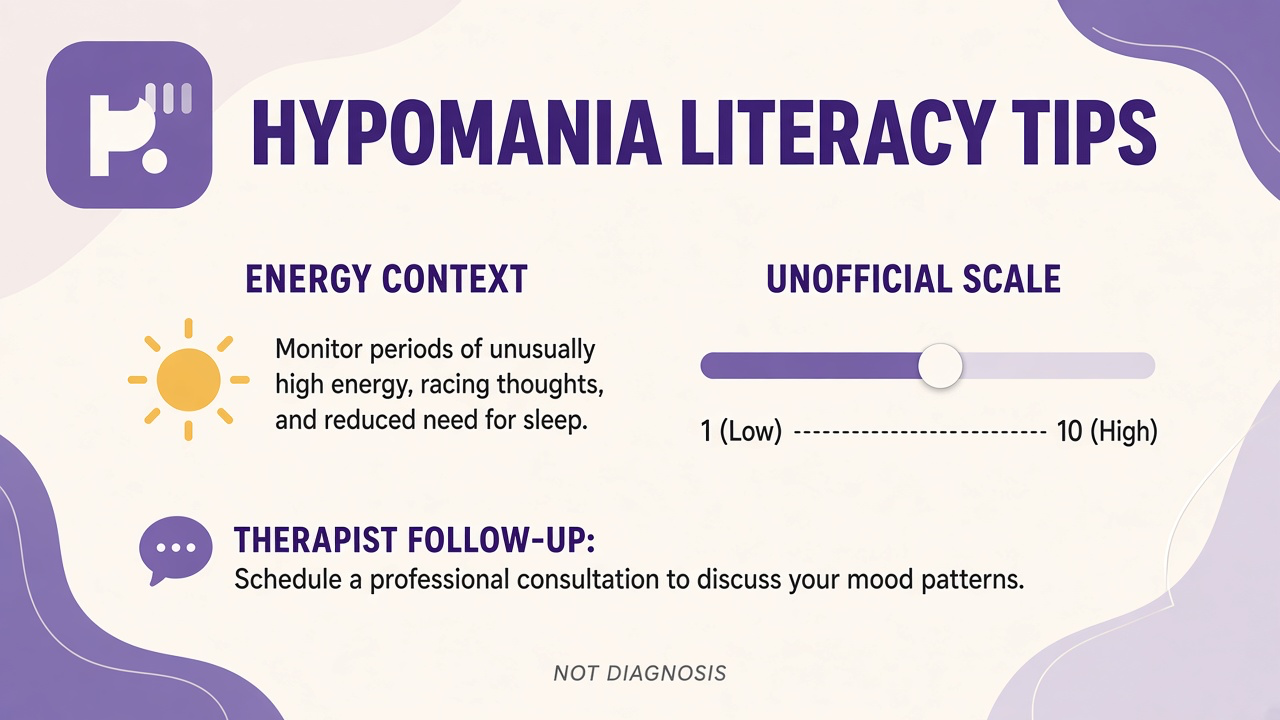
What this quiz can and cannot tell you
Can tell you
- Organize recent up moods into activation, observer feedback, risk, and help-seeking buckets
- Highlight when worried feedback pairs with delayed care on limit items
- Support early conversations with psychiatrists or therapists
- Offer a baseline if you retake after treatment or pacing changes
Cannot tell you
- Replace the extended HCL-33 or emergency mania evaluation
- Diagnose bipolar disorder or ADHD without assessment
- Prove calm baseline moods are fake because bars spiked once
- Diagnose strangers online from observer-contrast meme threads
Observer contrast, activation, and HCL-33 literacy without checklist cosplay
People search HCL-33 when clinicians mention extended hypomania checklists with observer items yet online pages skip diagnosis limits. Research extended HCL tools use structured banks; this page is not that instrument. Crisis lines exist when mood feels unsafe. Frequency scoring helps your responses suggest where strain clusters, not whether you earn a bipolar label from a bar chart.
Observer contrast and feedback is a distinct domain because loved ones sometimes notice pacing, tone, or spending shifts before the person inside the high does. Dismissing worry as jealousy is its own risk signal on this screener. Thanking someone who checks in kindly is reverse-scored as protective, not weak.
Elevated mood activation and risk edges mirror HCL-32 themes while keeping separate stems so siblings do not duplicate item banks. Pair with our HCL-32 scale sibling for activation-first language, our am I bipolar quiz for broader mood questions, and the mental health and clinical hub for more unofficial screeners.
| Test | Focus |
|---|---|
| HCL-32 scale | Activation-first hypomania lanes rather than observer-contrast emphasis on this page |
| Am I bipolar quiz | Broader bipolar-themed language rather than extended HCL observer items here |
| Mental health and clinical hub | More YMYL screeners with study-not-diagnosis framing |
HCL-33 Scale FAQ
What does this HCL-33 quiz measure?
It measures how often you noticed activation, observer contrast, risk edges, and literacy-limit patterns during recent high-energy stretches. You get an index from 0 to 100 plus four domain bars. Your responses suggest self-reported strain for reflection, not a research HCL-33 score or diagnosis.
How is HCL-33 different from HCL-32 on this site?
This page adds observer contrast and feedback as its own domain alongside activation and risk edges. The HCL-32 sibling emphasizes activation-first lanes with separate stems. Neither page pastes published checklist item banks.
Is this the official extended Hypomania Checklist (HCL-33)?
No. This is an unofficial frequency screener inspired by common search intent, not the published extended checklist with its administration rules. Treat your bars as conversation starters with licensed professionals.
Does a high score mean I have bipolar disorder?
No. High bars describe frequency on this unofficial tool only. Bipolar spectrum mood and related conditions require in-person evaluation. Only a licensed clinician can diagnose bipolar disorder.
Who reviewed this quiz?
Dr. Elena Vasquez, PhD reviewed the YMYL framing, crisis resources, HCL-33 limits, and result explanations. See our editorial policy for review standards.
Reviewed by