What the Harlbert Sexual Excitability Index measures
This quiz does not administer the published Hurlbert Sexual Excitability Inventory, supply clinical norms, or diagnose hypersexuality or dysfunction. It measures how much you agree with unofficial consent-literacy statements grouped four ways: arousal curiosity without pressure about pace and scripts; partner opt-in talk about enthusiastic consent and ongoing yes; fantasy and context boundaries about fiction, privacy, and real people; and quiz-not-Hurlbert-instrument limits about refusing SAI paste and web-diagnosis cosplay. You rate 22 statements from strongly disagree to strongly agree, with reverse-worded traps so entitlement myths cannot inflate every bar. Your answers also feed a second chart on closeness and trust habits. The total becomes an index from 0 to 100 where higher means more reported consent literacy on this screener, not clinical excitability scores.
Arousal curiosity without pressure
Wonder without scoreboards.
Partner opt-in talk
Ask, pause, accept no.
Fantasy and context boundaries
Fiction stays negotiated.
Quiz not Hurlbert instrument
Literacy not SAI paste.
How it works
Answer 22 agreement items
Rate each statement from Strongly disagree to Strongly agree. Tap Next after each answer.
Answers sort into four domains
Each answer feeds one of four consent-literacy groups, and every item also feeds a closeness and trust layer.
See your index and charts
You get a 0 to 100 index, a band, four domain bars, and a second chart for intimacy habits.
Take the Harlbert Sexual Excitability Index
Answer 22 short statements to see your excitability consent literacy index, four domain bars, and a closeness and trust chart.
What your result means
Your index is the average of all 22 answers, scaled from 0 to 100, with reverse-worded items flipped first. Read unofficial-limit bars together with opt-in habits before you treat a high score as clinical proof. Skilled clinicians still own formal assessment when symptoms worry you.
| Band | Index range | Typical reading |
|---|---|---|
| Building excitability consent literacy | 0 to 35 | Fewer agreed habits on curiosity without pressure, opt-in talk, fantasy boundaries, or anti-SAI-paste limits. |
| Mixed excitability consent literacy | 36 to 65 | Solid curiosity with pressure spikes, fantasy blur, or clinical-substitution corners. |
| Strong excitability consent literacy | 66 to 100 | Frequent agreement with curiosity, opt-in, boundaries, and limits; still unofficial reflection only. |
Tips at a glance
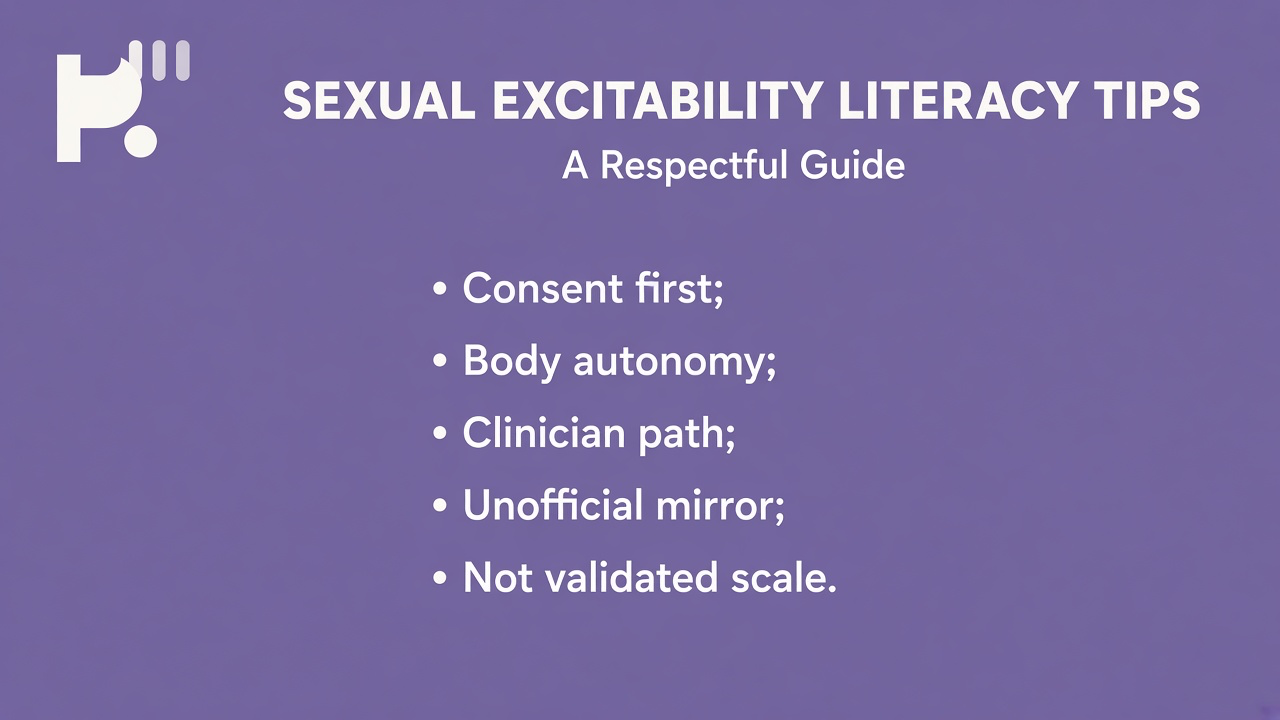
A quick takeaway graphic with topic tips (not your personal quiz scores). Start the quiz for your index, bands, and charts.
What this quiz can and cannot tell you
Can tell you
- Highlight consent and pacing habits worth revisiting before intimacy talks
- Separate playful reflection from SAI paste myths and partner grading bait
- Encourage opt-in questions without shame spirals about arousal tempo
- Spark better conversations about fantasy boundaries with privacy respect
Cannot tell you
- Replace the Hurlbert SAI, sex therapy, or trauma-informed clinical care
- Prove you may pressure partners because excitability feels high tonight
- Diagnose strangers or paste published instrument items from bar height
- Predict relationship outcomes or declare moral rank from literacy bars alone
Why excitability curiosity needs consent literacy—not pasted Hurlbert SAI items
Traffic around Harlbert or Hurlbert sexual excitability quizzes often wants language for how fast arousal rises, yet forums also host pasted clinical items, partner dunk threads, and captions that treat couch scores like Sexual Arousability Inventory results. Those goals help when readers keep curiosity private, negotiate opt-in, and refuse instrument cosplay. They hurt when excitability becomes an excuse to skip consent or shame slower partners. Consent literacy works best when it names boundaries and unofficial limits together while using original stems distinct from published SAI banks.
Dr. Elena Vasquez reviews sexuality screeners with a simple split: reward honest curiosity agreement and honest limits on clinical substitution myths at the same time. Arousal curiosity without pressure tracks pace kindness. Partner opt-in talk tracks enthusiastic consent habits. Fantasy boundaries track fiction-versus-real separation. Quiz-not-Hurlbert limits keep screeners separate from pasted batteries and web diagnosis.
Real adults mix bars. You might score high on curiosity while keeping opt-in moderate, which can describe vivid fantasy life with occasional pressure slips during stress weeks. Reverse items catch entitlement: mood-matching demands, SAI cosplay, or stranger diagnosis should not inflate bars meant to track consent manners.
Pair results with siblings instead of forcing one label arc. Our sexual health quiz explores broader intimacy literacy with separate stems. Our libido quiz angles toward desire reflection when drive language fits better than excitability consent here. Our kink archetype test stays on negotiated power-exchange curiosity with its own banks. Browse the sexuality and LGBTQ+ hub for more tools. Keep scores private unless everyone opted in.
Stress seasons move faster than retake habits. An opt-in bar might dip after one conflict week while limit bars stay high until you pause calmly. When you share results, say unofficial consent literacy habits—not clinical SAI scores.
| Test | Focus |
|---|---|
| Sexual health quiz | Broader intimacy literacy rather than excitability consent stems here |
| Libido quiz | Desire and drive reflection rather than Hurlbert-style consent lanes on this page |
| Kink archetype test | Negotiated kink curiosity hub rather than excitability consent screener items here |
Harlbert Sexual Excitability Index FAQ
Is this the official Hurlbert Sexual Excitability Inventory (SAI)?
No. This page offers original agree items about consent literacy inspired by public research themes. It does not paste published SAI items or supply clinical norms.
What does the index measure?
It measures how much you agree with statements about arousal curiosity, partner opt-in, fantasy boundaries, and unofficial limits. You get an index from 0 to 100 plus four bars reflecting self-rated habits on this screener.
Can I use results to pressure a partner?
No. Reverse items reject entitlement myths. High bars describe habits you endorsed here, not permission to demand sex.
Who is this quiz for?
Adults 18+ seeking private reflection. It is not for minors and not a substitute for clinicians when coercion, pain, or trauma dominates.
Who reviewed this quiz?
Dr. Elena Vasquez reviewed the YMYL framing, consent language, and result explanations. See our editorial policy for review standards.
Reviewed by