What the Hamilton Depression Rating Scale HDRS page measures
This quiz does not administer the clinician-rated Hamilton Depression Rating Scale, diagnose major depression, bipolar disorder, or any other condition, or replace emergency care when self-harm thoughts appear. Only a licensed clinician using interview methods, safety screening, and validated tools when needed can do that. It measures how often you noticed depression patterns clinicians discuss when HDRS-style screeners ask about recent weeks, grouped four ways: mood and interest strain about sadness, emptiness, and anhedonia; somatic sleep and appetite about rest and body shifts; guilt and function strain about self-blame, slowed thinking, and task strain; and HDRS clinical limits about honest scoring, avoiding fake labels, seeking care, and refusing to treat couch bars as licensed HDRS proof. You answer 22 how-often statements about the past two weeks, with reverse-worded items so one lighter day cannot hide frequent strain across other days. Your responses also feed a second chart on closeness and trust habits, because depression and shame about needing help often travel together. The total becomes an index from 0 to 100 where higher means more frequent reported depression strain on this unofficial screener.
Mood and interest strain
How often low mood or lost interest lasted beyond brief dips.
Somatic sleep and appetite
How often rest, appetite, or body heaviness tracked mood.
Guilt and function strain
How often self-blame or task strain made weeks harder.
HDRS clinical limits
How often you sought care and kept unofficial HDRS limits visible.
How it works
Answer 22 frequency items
Rate each statement from Never to Very often for the past two weeks. Tap Next after each answer.
Answers sort into four domains
Each answer feeds one of four depression strain groups, and every item also feeds a closeness and trust layer.
See your index and charts
You get a 0 to 100 index, a band, and two bar charts you can bring to a clinician.
Take the Hamilton Depression Rating Scale (HDRS)
Answer 22 short statements to see your depression strain index, four domain bars, and a closeness and trust chart.
What your result means
Your index is the average of all 22 answers, scaled from 0 to 100, with reverse-worded items flipped first. Higher means more frequent reported depression strain on this screener. Read mood with function bars together before the total, since sleep can look moderate while guilt still feels heavy.
| Band | Index range | Typical reading |
|---|---|---|
| Lower reported depression strain | 0 to 35 | Fewer frequent mood, somatic, guilt, function, or quiz-as-clinic myths in the past two weeks. |
| Mixed reported depression strain | 36 to 65 | Some domains spike while interest, rest, or help-seeking look steadier on better days. |
| Higher reported depression strain | 66 to 100 | Frequent low mood, somatic strain, guilt, function loss, or care avoidance; consider professional support. |
Tips at a glance
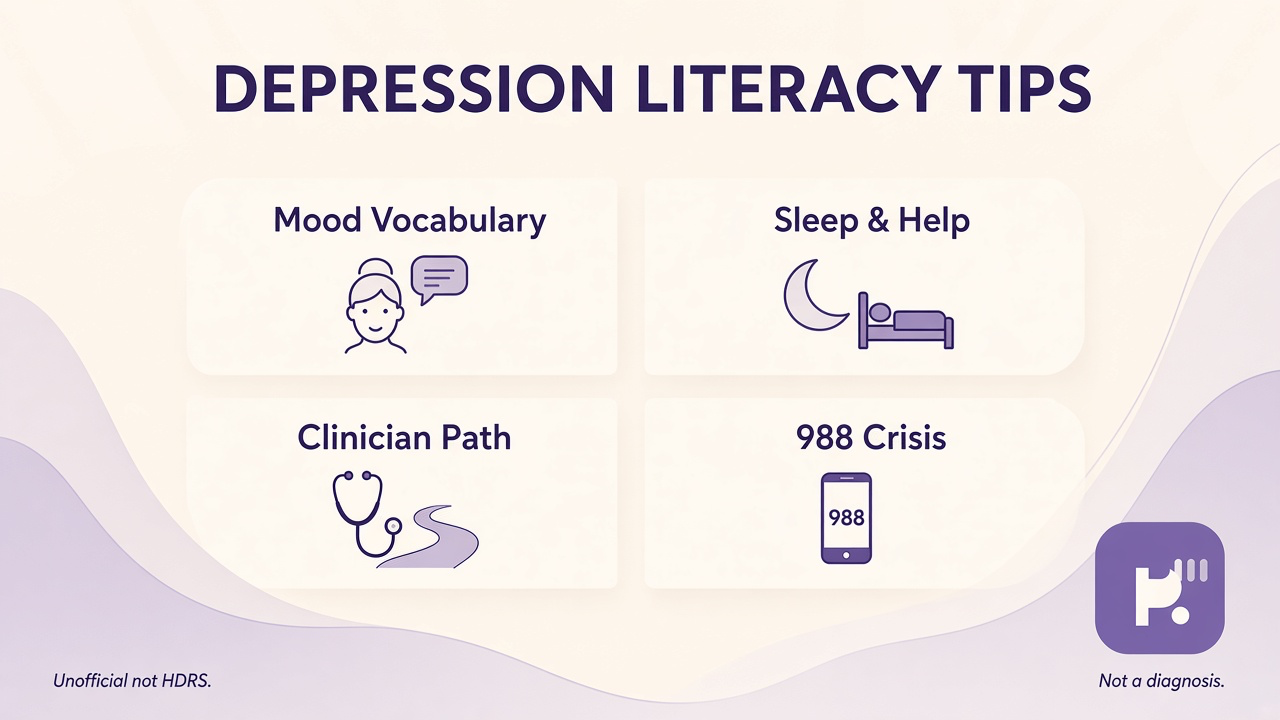
A quick takeaway graphic with topic tips (not your personal quiz scores). Start the quiz for your index, bands, and charts.
What this quiz can and cannot tell you
Can tell you
- Organize recent low mood into mood, somatic, function, and help-seeking buckets for intake
- Highlight when guilt or task strain pairs with delayed care on limit items
- Support early conversations with therapists or primary care clinicians
- Offer a baseline if you retake after one treatment or support experiment
Cannot tell you
- Replace the clinician-rated Hamilton Depression Rating Scale or emergency evaluation
- Diagnose depression, medical causes, or trauma conditions without assessment
- Prove you should skip care because you smiled in public
- Tell you that struggling means weakness instead of a treatable pattern
Mood strain, somatic shifts, and HDRS literacy without validated-instrument hype
People search Hamilton Depression Rating Scale HDRS when clinic paperwork mentions clinician-rated mood interviews yet online pages skip somatic versus mood language and study limits. Research HDRS tools are administered in structured settings with trained raters; social posts often forget that this page is not that instrument, that medical workups matter, and that crisis lines exist when hopelessness pairs with self-harm thoughts. This screener scores frequency so your responses suggest where strain clusters, not whether you earn a diagnosis from a bar chart.
Mood and interest strain is the first domain because anhedonia and persistent sadness often arrive before anyone sees withdrawal. Numbness, tearfulness, and gray future stories are patterns clinicians note when depression disrupts weeks. An activity that still feels a little engaging is reverse-scored so one lighter day cannot hide frequent strain on other days; that is data, not proof you will never feel low again.
Somatic sleep and appetite is the second domain because rest and food shifts deserve medical attention when they repeat. Early waking, appetite swings, and body heaviness can track depression, thyroid issues, sleep disorders, or other conditions primary care should evaluate. Ignoring repeated exhaustion to self-blame is its own trap; noting patterns for clinicians is support, not drama.
Guilt and function strain is the third domain because depression shows up in harsh self-talk, slowed thinking, postponed tasks, and isolation. Finishing one planned task without a guilt spiral is a healthy counter-signal scored reverse so the index reflects real load across the fortnight.
HDRS clinical limits are the fourth domain. Mistaking this page for licensed HDRS proof, delaying visits while patterns stick, or treating high bars as faking should not inflate strain meant to track lived weeks. Contacting clinicians or crisis lines when safety fears spike is reverse-scored as appropriate help. Pair with our PHQ-9 depression screening sibling for shorter symptom language, our PHQ-4 screening when anxiety overlap matters, and the mental health and clinical hub for more unofficial screeners. Retake after two weeks of one concrete experiment and compare domain bars with a clinician when strain stays high.
| Test | Focus |
|---|---|
| PHQ-9 depression screening | Shorter PHQ symptom frequency stems rather than broad HDRS mood-somatic lanes here |
| PHQ-4 screening | Combined mood and anxiety snapshot when both domains need separate bars beside HDRS themes |
| Mental health and clinical hub | More YMYL screeners with study-not-diagnosis framing |
Hamilton Depression Rating Scale (HDRS) FAQ
What does this HDRS quiz measure?
It measures how often you noticed mood, somatic, guilt, function, and literacy-limit patterns in four areas during the past two weeks. You get an index from 0 to 100 plus four domain bars. Your responses suggest self-reported strain for reflection, not a clinician HDRS score or diagnosis.
Is this the official Hamilton Depression Rating Scale?
No. This is an unofficial frequency screener inspired by common HDRS search intent, not the copyrighted clinician interview with published administration rules. Treat your bars as conversation starters with licensed professionals, not clinic verdicts.
How is this different from the PHQ-9?
This page groups mood, somatic, guilt-function, and HDRS-limit lanes with HDRS-themed language. The PHQ-9 sibling uses shorter patient-report symptom stems with its own unofficial limits.
What should I do if my score is high or I feel in crisis?
Contact a licensed clinician or your primary care provider with domain examples from your results. Call or text 988 (US) if you feel hopeless, unsafe, or in emotional crisis. Seek urgent help if self-harm thoughts feel immediate.
Who reviewed this quiz?
Dr. Elena Vasquez, PhD reviewed the YMYL framing, crisis resources, HDRS limits, and result explanations. See our editorial policy for review standards.
Reviewed by