What the Generalized Trust Scale GTS Inspired measures
This quiz does not administer the published Generalized Trust Scale, diagnose attachment disorders, or prove who should date whom. It measures how much you agree with GTS literacy statements grouped four ways: trust construct literacy about generalized expectations with context; caution without cynicism about skepticism without dunk threads; repair and boundary literacy about harm, apologies, and safety plans; and unofficial GTS limits about refusing pasted inventory myths and stranger character trials. You rate 22 statements with reverse-worded traps. Your answers also feed a second chart on closeness and trust habits. The total becomes an index from 0 to 100.
Trust construct literacy
Generalized trust with context.
Caution without cynicism
Boundaries without dunk threads.
Repair and boundary literacy
Harm, apology, and safety plans.
Unofficial GTS limits
Literacy mirror; mailed GTS lives elsewhere.
How it works
Answer 22 agreement items
Rate each statement from Strongly disagree to Strongly agree. Tap Next after each answer.
Answers sort into four domains
Each answer feeds one of four GTS literacy groups, and every item also feeds a closeness and trust layer.
See your index and charts
You get a 0 to 100 index, a band, four domain bars, and a second chart for intimacy habits.
Take the Generalized Trust Scale (GTS Inspired)
Answer 22 short statements to see your GTS construct literacy index, four domain bars, and a closeness and trust chart.
What your result means
Your index is the average of all 22 answers, scaled from 0 to 100, with reverse-worded items flipped first. Read unofficial GTS limit bars together with repair literacy before you treat a high score as proof you must trust everyone.
| Band | Index range | Typical reading |
|---|---|---|
| Quieter GTS literacy | 0 to 35 | Less agreement with construct, caution, repair, and limit items on this screener. |
| Mixed GTS literacy | 36 to 65 | Solid vocabulary with pasted-item traps, cynicism myths, or bar-height verdict slips. |
| Strong GTS literacy | 66 to 100 | Frequent agreement with construct, caution, repair, and unofficial limits; still reflection only. |
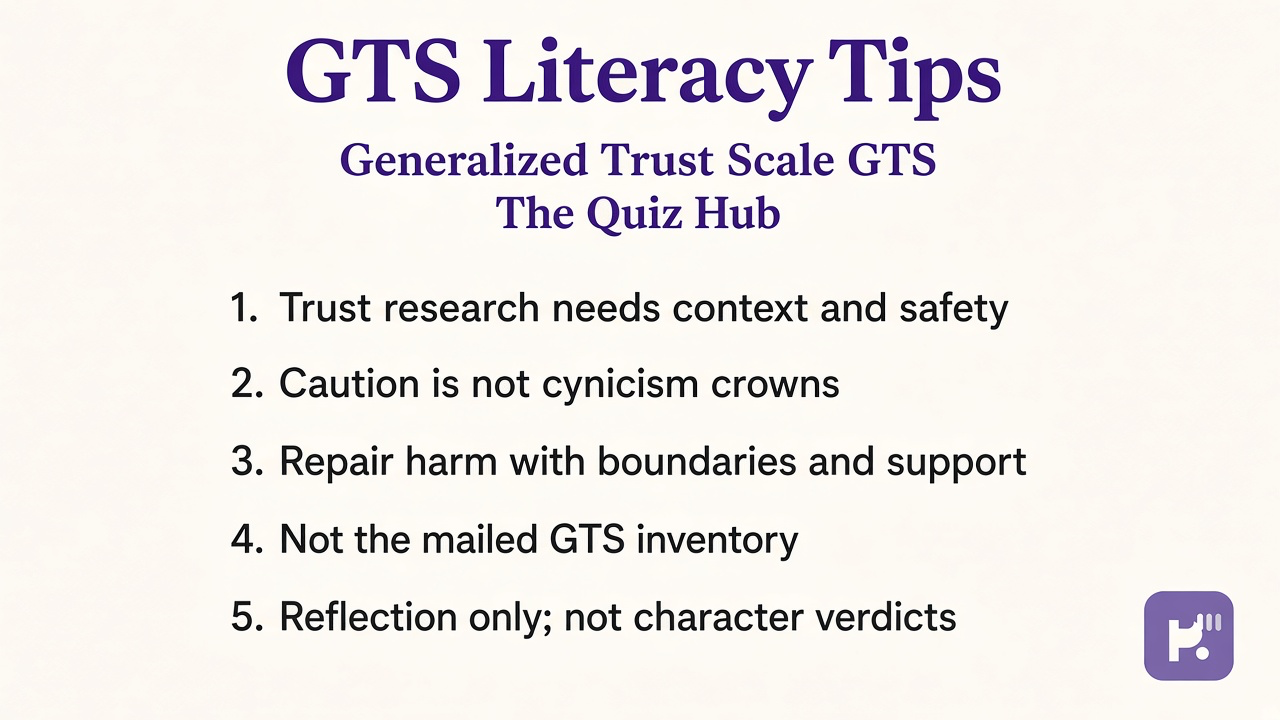
Tips at a glance
A quick takeaway graphic with topic tips (not your personal quiz scores). Start the quiz for your index, bands, and charts.
What this quiz can and cannot tell you
Can tell you
- Highlight construct vocabulary and boundary habits worth revisiting before the next trust conversation
- Separate playful literacy from pasted GTS inventory and cynicism substitution myths
- Encourage kinder repair talk without public shame spirals
Cannot tell you
- Replace licensed therapy, safety planning, or published GTS scoring ledgers
- Prove permanent naive or cynical rank or diagnose partners from one couch screener
- Give permission to ignore red flags or mock cautious friends from bar height
Why GTS literacy needs construct clarity, caution humility, and inventory separation
Search traffic around the Generalized Trust Scale usually wants vocabulary after a social psych unit, scam awareness thread, or late-night can I trust anyone spiral, not a mailed inventory or coworker character sticker.
Dr. Elena Vasquez reviews personality screeners with a simple split: reward honest construct reading and honest limits on clinical substitution myths while keeping safety language visible.
Real learners mix bars. Reverse items catch overconfidence: blind trust myths, cynicism dunk licenses, or automatic therapy replacement fantasies should not inflate literacy bars.
Pair results with siblings instead of forcing one hero story. Our coach athlete scale CA-1 sibling explores sport-trust stems separate from generalized social trust framing here. Our fear of intimacy quiz angles toward closeness layers when attachment language fits better than GTS construct stems on this page. Our GSE inspired quiz stays on self-efficacy literacy rather than trust inventory wording here. Browse the personality and psychology hub for more reflection screeners.
Community drama rotates faster than planner stickers. When you share results, say unofficial GTS literacy habits. Retake after one honest month and watch whether limit bars stay high even if optimism rises.
| Test | Focus |
|---|---|
| Coach athlete scale CA-1 | Sport trust rather than generalized social trust stems on this page |
| Fear of intimacy quiz | Closeness layers rather than GTS construct vocabulary here |
| General self efficacy scale GSE inspired | Self-efficacy literacy rather than trust inventory framing here |
Generalized Trust Scale (GTS Inspired) FAQ
What does the Generalized Trust Scale GTS Inspired measure?
It measures how much you agree with statements about trust construct literacy, caution without cynicism, repair and boundary literacy, and unofficial GTS limits. You get an index from 0 to 100 plus four bars. It reflects self-rated literacy on this screener, not published GTS totals.
Does a high score mean I must trust everyone?
No. Caution and repair items reject blind trust myths. High bars describe literacy habits you endorsed here, not safety advice to ignore red flags.
How is this different from the coach athlete trust scale?
This quiz centers generalized social trust construct literacy. The CA-1 sibling uses separate sport-trust stems rather than copying these sentences.
Can I label friends naive from their bar height?
No. Limit items reject stranger verdict licenses. Share results only with consenting friends as conversation starters.
Who reviewed this quiz?
Dr. Elena Vasquez reviewed the reflection framing, GTS separation, safety and repair norms, and result explanations. See our editorial policy for review standards.
Reviewed by