What the gambling addiction quiz measures
This quiz estimates self-reported problem gambling frequency patterns across four domains: urge and chasing about loss-chase loops; hidden play about secrecy and apps; money harm about bills and panic; and help delays about postponed helplines or clinician talks. Each item also maps to a fear-of-intimacy stack layer. Your gambling concern index averages endorsed frequency into 0 to 100 where higher means more reported concern on this screener, not a clinical diagnosis.
Urge and chasing
Loss-chase loops without willpower lectures.
Hidden play
Secrecy patterns worth honest support.
Money harm
Bill stress and panic signals.
Help delays
Helpline and clinician hesitation.
How it works
Answer 22 frequency items
Rate each item from Never to Very often for the past month. Tap Next after each answer.
Answers sort into four domains
Each answer feeds one of four concern domains, and every item also feeds a closeness and trust layer.
See your index and charts
You get a 0 to 100 index, a band, four domain bars, and a second chart for intimacy habits.
Take the Gambling Addiction Quiz
Answer 22 frequency items to see your gambling concern index, four domain bars, and a closeness and trust chart.
What your result means
Your index averages 22 frequency answers on a 0 to 100 scale with reverse items flipped first. Read urge and money bars together with help delay scores before you treat a high total as proof you must suffer alone. Helplines and clinicians own assessment when harm feels urgent.
| Band | Index range | Typical reading |
|---|---|---|
| Lower reported concern | 0 to 35 | Fewer frequent urge, hidden play, money harm, or help delay patterns in the past month. |
| Mixed reported concern | 36 to 65 | Some domains spike while help seeking or budget boundaries look healthier on other days. |
| Higher reported concern | 66 to 100 | Frequent urge, hidden play, money harm, or help delays; confidential professional review may help. |
Tips at a glance
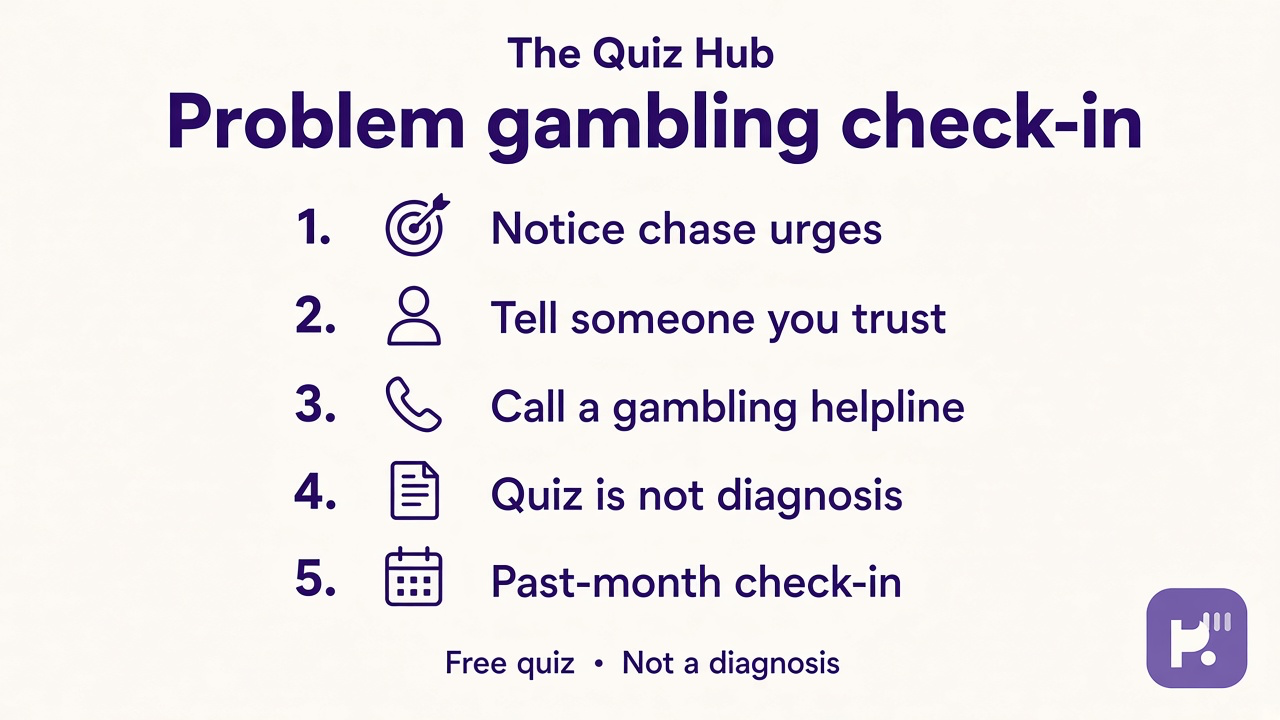
A quick takeaway graphic with topic tips (not your personal quiz scores). Start the quiz for your index, bands, and charts.
What this quiz can and cannot tell you
Can tell you
- Notice past-month patterns you might discuss with a helpline or clinician
- Separate frequency stems from questionnaire literacy sibling on this hub
- Track whether secrecy or money harm bars shift after one boundary experiment
- Bring domain bars to support conversations with consent
Cannot tell you
- Diagnose gambling disorder or replace licensed assessment
- Publish official SOGS or CPGI scores from this unofficial screener
- Prove someone is addicted from one online frequency quiz
- Label friends permanently from bar height without their consent
Why past-month gambling frequency checks need helplines without shame dunk threads
Problem gambling often grows in secret: chase sessions after losses, hidden apps, and bill panic that shame keeps off group chats. Frequency screeners help when people name patterns and call helplines early. They hurt when totals become roast material or substitute for professional assessment.
This quiz groups urge chasing, hidden play, money harm, and help delays so you can see which loop is loudest this month. It stays unofficial and distinct from CPGI domain mixes and from questionnaire literacy agree stems.
Mixed bars are common. High secrecy with moderate money harm may mean fear more than income. High help delays with high urges may mean shame blocks the very support that would help.
Pair results with siblings. Our gambling addiction questionnaire explores harm literacy agree stems rather than past-month frequency here. Our canadian problem gambling index CPGI uses CPGI-inspired domain frequency rather than this general concern mix. Our problem gambling quiz offers another frequency sibling with separate wording. Browse the mental health and clinical hub for more screeners.
Retake after one boundary experiment or helpline call and watch whether help delay bars move first. That shift often predicts safer months more than debating willpower online.
| Test | Focus |
|---|---|
| Gambling addiction questionnaire | Harm literacy agree stems rather than past-month frequency on this page |
| Canadian problem gambling index CPGI | CPGI-inspired domain frequency rather than this general concern mix |
| Problem gambling quiz | Alternate frequency sibling with separate stems from this quiz |
Gambling Addiction Quiz FAQ
What does the gambling addiction quiz measure?
It measures past-month frequency of urge chasing, hidden play, money harm, and help delays. You get an index from 0 to 100 plus four bars. It describes self-report patterns, not clinical inventory totals.
How is this different from the gambling addiction questionnaire?
The questionnaire sibling uses agree-style harm literacy stems. This quiz uses past-month frequency items about behavior patterns.
Does a high score diagnose gambling disorder?
No. Only licensed clinicians evaluate gambling disorder after a full assessment. High scores suggest talking with a helpline or clinician soon.
What should I do if money loss feels overwhelming?
Contact a gambling helpline, financial counselor, or crisis line. In the US, call or text 988 for mental health emergencies.
Who reviewed this quiz?
Dr. Elena Vasquez reviewed unofficial framing, harm not diagnosis separation, and crisis tone. See our editorial policy for review standards.
Reviewed by