What the Gallup Q12 engagement questionnaire measures
This quiz does not administer the proprietary twelve-item Gallup employee engagement survey, certify Gallup partners, or declare which coworker is disengaged from bar height. It measures unofficial Q12-literacy statements about pillar themes, manager listening habits, survey ethics humility, and questionnaire-page limits distinct from the engagement-survey slug. You rate 22 agree items with reverse traps, plus a parallel fear-of-intimacy stack chart. Higher index means more reported literacy habits here, not proof your workplace is fixed.
Q12 pillar literacy
Public themes without proprietary paste cosplay.
Manager listening literacy
Coaching habits without score-shame boards.
Survey ethics humility
Anonymity respect without dunk threads.
Unofficial Q12 limits
Questionnaire literacy; not Gallup mailers.
How it works
Answer 22 agreement items
Rate each statement from Strongly disagree to Strongly agree. Tap Next after each answer.
Answers sort into four domains
Each answer feeds one of four Q12 literacy groups, and every item also feeds a closeness and trust layer.
See your index and charts
You get a 0 to 100 index, a band, four domain bars, and a second chart for intimacy habits.
Take the Gallup Q12 Engagement Questionnaire
Answer 22 short statements to see your Q12 engagement literacy index, four domain bars, and a closeness and trust chart.
What your result means
Your index averages 22 agree answers on a 0 to 100 scale with reverse items flipped first. Read pillar and manager bars together with ethics and limit scores before you treat a high total as proof you should run official surveys without training.
| Band | Index range | Typical reading |
|---|---|---|
| Building Q12 literacy | 0 to 35 | Fewer agreed habits on pillar vocabulary, manager listening, survey ethics, or unofficial limits. |
| Mixed Q12 literacy | 36 to 65 | Solid themes in some domains with score-shaming traps, anonymity slips, or vendor cosplay corners. |
| Strong Q12 literacy | 66 to 100 | Frequent agreement with pillar, manager, and ethics literacy plus unofficial limits; still not Gallup scores. |
Tips at a glance
A quick takeaway graphic with topic tips (not your personal quiz scores). Start the quiz for your index, bands, and charts.
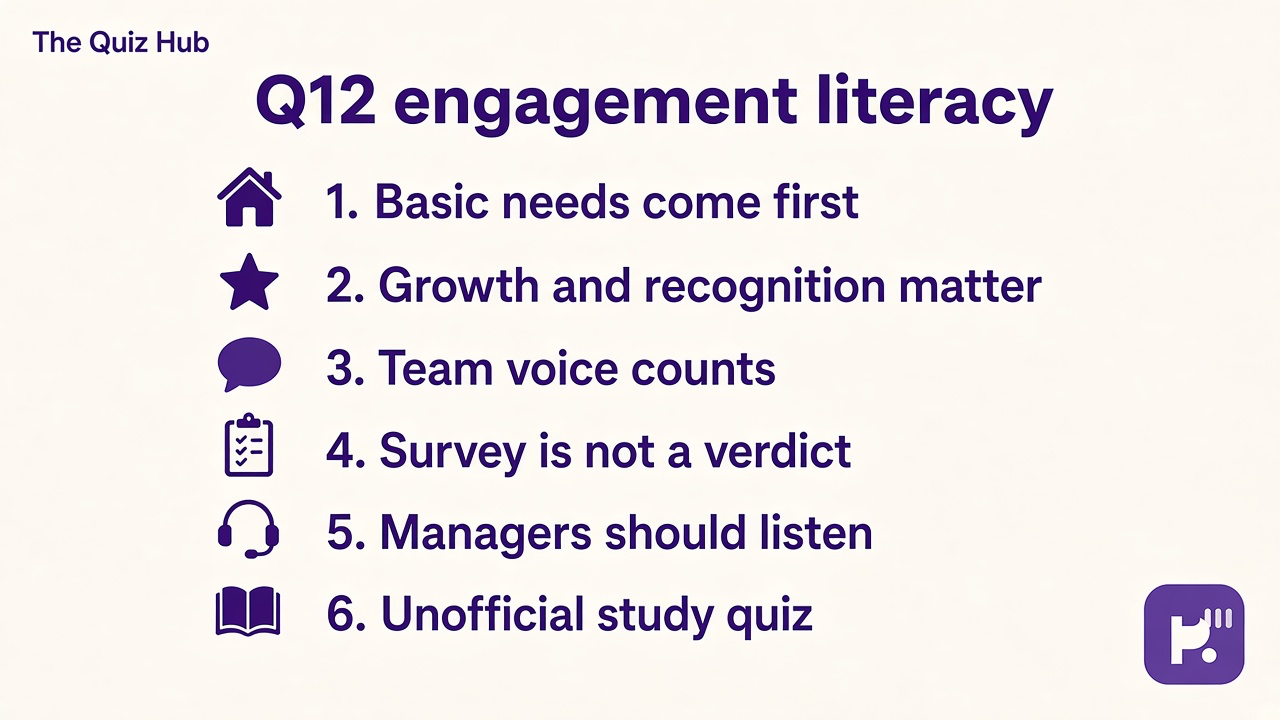
What this quiz can and cannot tell you
Can tell you
- Translate Q12 theme language into one honest team retrospective conversation starter
- Separate questionnaire literacy from engagement-survey sibling stems on this hub
- Notice score-shaming traps without public coworker ranking polls
- Spark better questions about listening habits without claiming Gallup certification
Cannot tell you
- Replace licensed Gallup Q12 deployments, union processes, or HR investigations
- Publish official company engagement scores or trademark Gallup products
- Prove someone is disengaged or toxic from one literacy quiz
- Give permission to retaliate against teammates based on guessed survey answers
Why Q12 literacy needs manager listening without score-shame dunk threads
Search traffic around Gallup Q12 often spikes before annual surveys while social threads treat engagement percentages like moral report cards on who deserves promotions. Literacy helps when teams name themes, protect anonymity, and ask managers to remove blockers. It hurts when hobby quiz bars become excuses to mock quiet contributors or paste proprietary item guesses online.
Dr. James Whitfield reviews organizational reflection tools with a split: reward honest theme vocabulary and honest refusal of vendor cosplay at the same time. Pillar literacy tracks public Q12 summaries without item-bank paste. Manager listening literacy tracks coaching without shame boards. Survey ethics humility tracks confidentiality without guessed writers. Unofficial questionnaire limits keep this slug distinct from the engagement-survey sibling.
Real teams mix bars. You might score high on pillars while ethics stays moderate during reorg fear. Reverse items catch score police, trademark cosplay, and retaliation bait that should not inflate literacy meant to track habits.
Pair results with siblings instead of forcing one engagement story. Our Gallup Q12 engagement survey uses separate survey-context agree stems rather than questionnaire literacy framing here. Our burnout assessment test BAT-16 explores exhaustion frequency rather than Q12 theme limits. Browse the personality and psychology hub for more workplace reflection screeners. Share scores as private study notes with consent, not as orders about who lacks loyalty.
Survey seasons end but listening habits persist. Retake after one retrospective and watch whether ethics bars rise when managers actually act on themes. Credit teammates who deserve privacy off-screen when you borrow literacy tips.
| Test | Focus |
|---|---|
| Gallup Q12 engagement survey | Survey-context literacy stems rather than questionnaire slug framing on this page |
| Burnout assessment test BAT-16 | Exhaustion frequency rather than Q12 pillar literacy here |
| Financial health quiz | Money wellness literacy rather than workplace engagement themes |
Gallup Q12 Engagement Questionnaire FAQ
What does the Gallup Q12 engagement questionnaire measure?
It measures agreement with statements about Q12 pillar literacy, manager listening literacy, survey ethics humility, and unofficial questionnaire limits. You get an index from 0 to 100 plus four bars. It reflects literacy habits, not licensed Gallup survey totals.
Is this the official Gallup Q12 employee engagement survey?
No. It is an unofficial literacy screener inspired by public Q12 theme summaries. Licensed deployments use separate vendor processes and items.
How is this different from the engagement survey page?
The engagement survey sibling uses distinct agree stems focused on survey rollout context. This questionnaire slug emphasizes pillar and manager literacy framing.
Can I use results to rank coworkers?
No. Literacy quizzes are for your study habits. Ranking or shaming teammates from bar height violates the ethics items this screener teaches.
Who reviewed this quiz?
Dr. James Whitfield reviewed unofficial framing, workplace ethics tone, and result explanations. See our editorial policy for review standards.
Reviewed by