What the From Author Albert Mehrabian quiz measures
This quiz does not replicate Mehrabian's lab studies, certify body-language expertise, or prove whether someone lied from one session. It measures how much you agree with unofficial communication-literacy statements grouped four ways: study context literacy about feelings-and-attitudes message tasks versus all speech myths; 55-38-7 myth literacy about narrow channel breakdowns versus viral 93-percent rules; channel context literacy about weighing words, tone, and face by stakes and medium without consent-overriding traps; and research misuse limits about Mehrabian-inspired unofficial framing, refusal to treat hobby bars as persuasion authority, consented sharing, and zero manipulation or stranger-diagnosis license. You rate 22 statements from strongly disagree to strongly agree, with reverse-worded traps so agreeable mood cannot hide meme-sharing habits. Your answers also feed a second chart on closeness and trust habits, because misread tone sometimes blocks repair talks. The total becomes an index from 0 to 100 where higher means more reported literacy habits on this screener, not proof you never misquote research under debate pressure.
Study context literacy
Narrow feelings-and-attitude findings.
55-38-7 myth literacy
Resist universal misquotes.
Channel context literacy
Weigh channels by stakes and medium.
Research misuse limits
Unofficial reflection; no manipulation.
How it works
Answer 22 agreement items
Rate each statement from Strongly disagree to Strongly agree. Tap Next after each answer.
Answers sort into four domains
Each answer feeds one of four communication literacy groups, and every item also feeds a closeness and trust layer.
See your index and charts
You get a 0 to 100 index, a band, four domain bars, and a second chart for intimacy habits.
Take the From Author Albert Mehrabian
Answer 22 short statements to see your communication literacy index, four domain bars, and a closeness and trust chart.
What your result means
Your index is the average of all 22 answers, scaled from 0 to 100, with reverse-worded items flipped first. Read myth and channel bars together with misuse-limit scores before you treat a high total as proof you read minds. Educational reflection supports clearer talks; licensed clinicians and mediators still own care when coercion or fear appears.
| Band | Index range | Typical reading |
|---|---|---|
| Building communication literacy | 0 to 35 | Fewer agreed habits on study context, 55-38-7 myth awareness, channel weighting, or research misuse limits on this screener. |
| Mixed communication literacy | 36 to 65 | Solid awareness in some domains with word-dismissal slips, clip diagnosis, contract myths, or persuasion cosplay traps. |
| Strong communication literacy | 66 to 100 | Frequent agreement with study context, myth debunk, channel habits, and misuse limits; still not mind-reading license. |
Tips at a glance
A quick takeaway graphic with topic tips (not your personal quiz scores). Start the quiz for your index, bands, and charts.
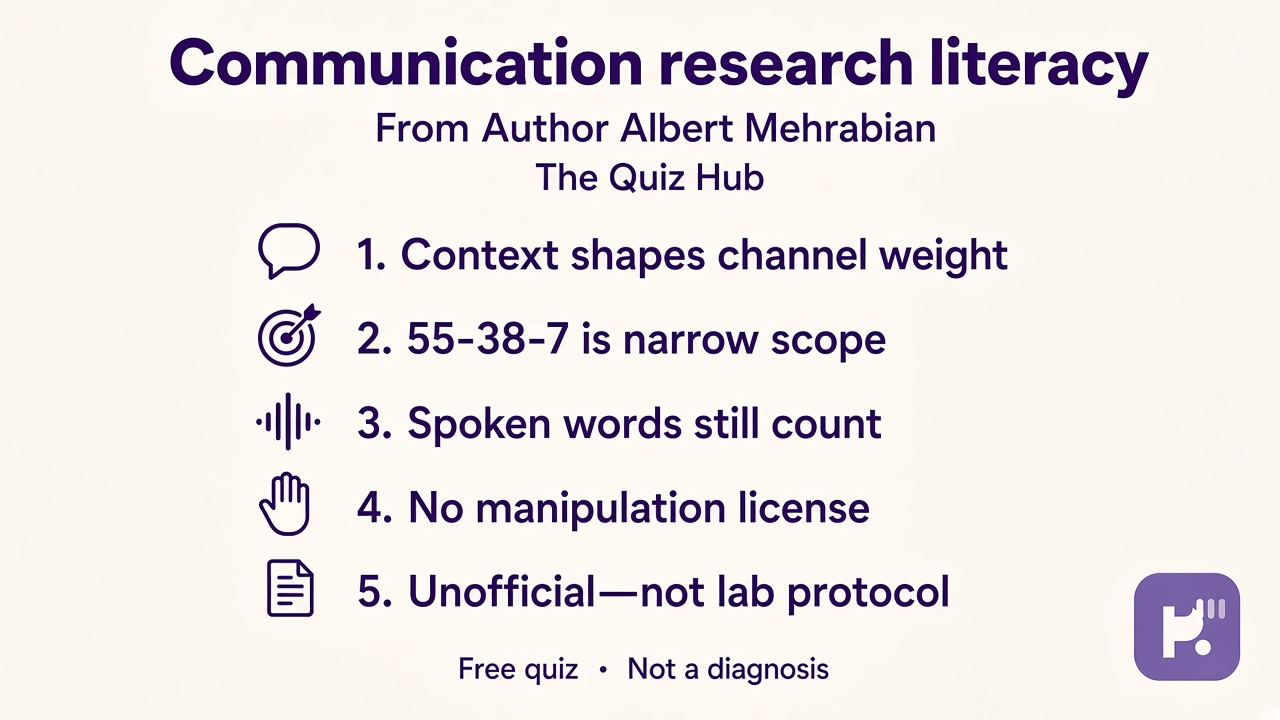
What this quiz can and cannot tell you
Can tell you
- Highlight study-context and myth-debunk vocabulary worth practicing before the next stat debate
- Separate unofficial Mehrabian-inspired literacy from manipulation tactics or public honesty diagnosis
- Encourage channel-aware listening without word-dismissal theater
- Spark better questions about communication research without claiming lab authority
Cannot tell you
- Replace couples therapy, mediation, or forensic lie detection
- Prove someone lied or told the truth from one agree screener
- License ignoring explicit consent because tone looked confident
- Duplicate body-language test stems meant for sibling quizzes on this hub
Why Mehrabian-inspired quizzes need context literacy and misuse refusal
Search traffic around Albert Mehrabian often follows communication classes that mention inconsistent messages about feelings while social feeds turn 55-38-7 into proof that words barely count. Those goals help when readers ask study context, resist 93-percent memes, and weigh channels by stakes. They hurt when literacy bars become persuasion license, or when hobby totals replace honoring explicit no statements. Communication literacy works best when it pairs research vocabulary with misuse limits and stays distinct from body-language sibling screeners on this hub.
Dr. Priya Sharma reviews personality screeners with a simple split: reward honest context and myth correction and honest refusal of manipulation and mind-reading at the same time. Study context literacy tracks feelings-about-speaker tasks without every-email myths. Myth debunk literacy tracks narrow channel findings without viral universal rules. Channel context literacy tracks tone and face when words blur without consent-overriding traps. Research misuse limits track unofficial framing, boundary prompts, and help when coercion appears.
Real people mix bars. You might score high on myth correction while keeping channel habits moderate, which often describes partners who debunk slides yet still guess attitudes from clips. You might score high literacy with softer limit items, which can mean you avoid public diagnosis yet still treat quiz totals like debate weapons. Reverse items catch overconfidence: contract dismissal, tone-over-words consent overrides, eyebrow lie labels, or bar-height override licenses should not inflate scores meant to track layered habits.
Pair results with siblings on this hub instead of forcing one Mehrabian story. Our body language test stays on nonverbal habit reflection with stems separate from research-literacy framing here. Our communication styles in relationships quiz explores pairing habits rather than 55-38-7 myth debunk on this page. Our feedback sensitivity scale measures critique reactivity rather than channel-context literacy here. Browse the personality and psychology hub for more reflection screeners. Share scores as conversation starters with consent, not as orders about who is lying.
Debate season and sleep debt move faster than one context footnote on a slide. A myth bar might dip after one viral share week while study recall stays high until you retake gently. When you share results, say unofficial literacy habits. When you borrow tips, credit researchers who taught you context vocabulary and people who deserve privacy off-screen. Retake after one argument-heavy month and watch whether misuse-limit bars stay high even if channel awareness rises, which often means you separated curious study from persuasion pressure.
| Test | Focus |
|---|---|
| Body language test | Nonverbal habit reflection rather than Mehrabian research-literacy framing on this page |
| Communication styles in relationships quiz | Relationship pairing habits rather than 55-38-7 myth debunk here |
| Feedback sensitivity scale | Critique reactivity rather than channel-context literacy on this screener |
From Author Albert Mehrabian FAQ
What does the From Author Albert Mehrabian quiz measure?
It measures how much you agree with statements about study context literacy, 55-38-7 myth literacy, channel context literacy, and research misuse limits. You get an index from 0 to 100 plus four bars. It reflects self-reported awareness habits on this screener, not lab replication scores.
Does Mehrabian's research mean only 7 percent of communication is words?
No. The often-cited breakdown applied to specific feelings-and-attitude judgments in particular studies, not all meaning in every medium. Words still carry primary weight in many factual and legal contexts.
Can a high score prove I can read minds?
No. Strong bars describe habits you endorsed here, such as questioning viral stats and weighing channels by context. They do not replace reading methods sections, mediation, or honoring explicit boundaries.
Should I use these stats to win arguments?
No. Misuse-limit items reject persuasion cosplay and overriding someone's words based on tone alone. Literacy means clearer context talk, not debate license.
Who reviewed this quiz?
Dr. Priya Sharma reviewed the unofficial framing, literacy not manipulation separation, boundary tone, and result explanations. See our editorial policy for review standards.
Reviewed by