What the Fretboard Quiz measures
This quiz does not admit you to music school, book session work, or replace teachers, ear training, or audition panels. It measures how much you agree with fretboard study habit statements grouped four ways: note name recall habits about random fret naming, daily drills, saying notes aloud, pattern maps, automatic-genius myths, and tab-only traps; practice patience and routine about short sessions, slow tempos, metronome humility, restart after missed days, week-one mastery myths, and warm-up skips; beginner welcome not gatekeeping about inviting slow learners, sharing tips without entry fees, blocking mockery, encouraging acoustics and electrics alike, humiliation traps, and praise entitlement; and quiz not pro audition about unofficial framing, playful captions, fan-level debates, and refusing to treat bar height as hire proof. You rate 22 statements from strongly disagree to strongly agree, with reverse-worded traps so one lucky guess cannot inflate every bar. Your answers also feed a second chart on closeness and trust habits, because gear forum arguments sometimes spill into friendship stress when comparison hype spikes. The total becomes an index from 0 to 100 where higher means more reported fretboard study literacy on this screener, not proof you should skip real auditions.
Note name recall habits
Daily drills, say names aloud, map octaves.
Practice patience and routine
Slow tempos, forgive missed days, restart small.
Beginner welcome not gatekeeping
Invite learners; block speed-shame comments.
Quiz not pro audition
Fun mirror only; hiring lives with real panels.
How it works
Answer 22 agreement items
Rate each statement from Strongly disagree to Strongly agree. Tap Next after each answer.
Answers sort into four domains
Each answer feeds one of four fretboard study groups, and every item also feeds a closeness and trust layer.
See your index and charts
You get a 0 to 100 index, a band, four domain bars, and a second chart for intimacy habits.
Take the Fretboard Quiz
Answer 22 short statements to see your fretboard study habit index, four domain bars, and a closeness and trust chart.
What your result means
Your index is the average of all 22 answers, scaled from 0 to 100, with reverse-worded items flipped first. Read quiz-not-pro-audition bars together with beginner welcome before you treat a high score as hiring proof. Cozy reflection supports kinder practice talk; teachers, schools, and bands still own real skill gates.
| Band | Index range | Typical reading |
|---|---|---|
| Building fretboard habits | 0 to 35 | Fewer agreed habits on note recall, practice patience, beginner welcome, or audition framing on this screener. |
| Mixed fretboard habits | 36 to 65 | Solid recall joy with speed myths, shame spirals, gatekeeping comments, or audition substitution fantasies. |
| Strong fretboard habits | 66 to 100 | Frequent agreement with recall drills, patience, beginner welcome, and audition framing; still study reflection only. |
Tips at a glance
A quick takeaway graphic with topic tips (not your personal quiz scores). Start the quiz for your index, bands, and charts.
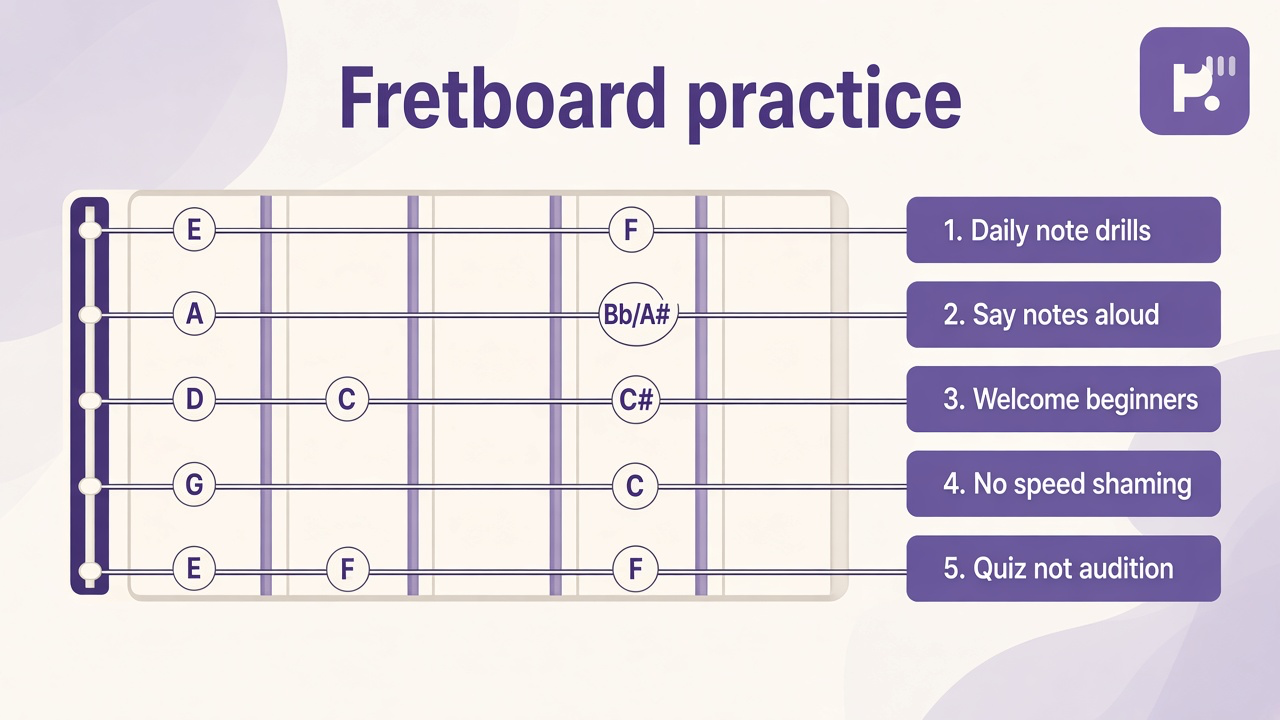
What this quiz can and cannot tell you
Can tell you
- Highlight note recall, patience, and welcome habits worth revisiting before the next gear forum post
- Separate unofficial study reflection from conservatory admission or session hiring fantasies
- Encourage slow drills and beginner kindness without shame spirals
- Spark better questions about practice culture without claiming hiring authority
Cannot tell you
- Replace lessons, ear training, sight-reading courses, or audition feedback
- Prove conservatory readiness, union membership, or touring hire from one couch screener
- Give permission to mock slow learners or gatekeep jam circles
- Diagnose musical talent or declare who must quit guitar from habit bars alone
Why fretboard quizzes need note drills, patience, welcome, and audition separation
Search traffic around fretboard quizzes usually wants a playful mirror after a practice block, a lesson video, or a comment thread that shamed note lookup, not a conservatory admission letter or session hiring proof. Those goals help when readers name letter habits, keep slow metronome nights, and keep habit bars away from audition substitution fantasies. They hurt when couch scores become gatekeeping licenses, or when clip culture gets treated as proof beginners should stay silent. Guitar study literacy works best when it names practice habits and unofficial limits together while staying distinct from music theory trivia siblings.
Dr. Priya Sharma reviews fandom entertainment screeners with a simple split: reward honest recall joy and honest limits on hiring and gatekeeping substitution myths at the same time. Note name recall habits track drills, aloud naming, and maps without automatic-genius myths. Practice patience and routine track short sessions, slow tempos, and restarts without week-one perfection demands. Beginner welcome not gatekeeping tracks invitations, tip sharing, and blocking mockery without praise entitlement. Quiz not pro audition keeps screeners separate from admission fantasies, session hire myths, and résumé cosplay.
Real players mix bars. You might score high on recall maps while keeping patience moderate, which often describes curious learners who still rush clips before drills finish. You might score high study habits with softer audition-limit items, which can mean you avoid hiring boasts yet still treat quiz totals like union cards. Reverse items catch overconfidence: automatic note genius, tab-only forever, humiliating slow learners, praise demands, skipped warm-ups, or session-booking myths should not inflate bars meant to track layered practice manners.
Pair results with siblings on this hub instead of forcing one neck lecture. Our music theory quiz sibling stays on broader literacy habits with stems separate from daily fretboard drills here. Our what guitar am I quiz explores playful gear personality rather than note-name study limits on this page. Our emo music quiz covers genre fandom reflection rather than practice gatekeeping on this screener. Browse the fandom and entertainment hub for more light screeners. Caption shares as fun reflection, welcome beginners, and skip grading strangers who never asked for a quiz.
Gear drops and algorithm clips rotate faster than bookmarked drill charts in group chats. A patience bar might dip after one hype week while welcome habits stay high until you retake calmly. When you share results, say unofficial study habits. When you borrow tips, credit teachers who kept metronomes boring and moderators who removed gatekeeping posts. Retake after one busy month and watch whether audition-limit bars stay high even if recall enthusiasm rises, which often means you separated cozy practice joy from hiring substitution pressure.
| Test | Focus |
|---|---|
| Music theory quiz | Broader theory literacy rather than daily fretboard note drills on this page |
| What guitar am I quiz | Playful gear personality rather than note-name study habits here |
| Emo music quiz | Genre fandom reflection rather than fretboard gatekeeping limits on this screener |
Fretboard Quiz FAQ
What does the Fretboard Quiz measure?
It measures how much you agree with statements about note name recall, practice patience, beginner welcome, and quiz-not-pro-audition limits. You get an index from 0 to 100 plus four bars. It reflects self-reported study habits on this screener, not hiring or admission outcomes.
Is this a pro audition or music school entrance exam?
No. This page focuses on playful study reflection and community manners. Conservatories and hiring panels use separate processes.
How is this different from a fretboard trivia quiz?
This screener tracks study and welcome habits, not timed note flashcards or sight-reading speed tests. Trivia siblings would use different stems if added later.
Does a high score mean I am ready for paid session work?
No. Quiz not pro audition items reject hiring substitution myths. High bars describe habits you endorsed here, not union clearance.
Who reviewed this quiz?
Dr. Priya Sharma reviewed the fun-only framing, beginner welcome ethics, and refusal to imply audition credentials. See our editorial policy for review standards.
Reviewed by