What the Forgiveness Scale measures
This scale does not provide psychotherapy, certify trauma recovery, or grade your moral worth from one couch session. It measures how much you agree with forgiveness habit statements grouped four ways: self-forgiveness humility about accountability without cruel self-attack; other-forgiveness release about reducing grudge replay without demanding friendship; boundaries without forced reunion about no contact, slow trust, and refusing instant reconcile myths; and forgiveness scale not therapy limits about playful reflection separate from licensed batteries, trauma treatment substitution, and skipping clinicians when betrayal disrupts life. You rate 22 statements from strongly disagree to strongly agree, with reverse worded traps so one lucky guess cannot inflate every bar. Your answers also feed a second chart on closeness and trust habits, because hurt sometimes blocks vulnerability with new people. The total becomes an index from 0 to 100 where higher means more reported forgiveness literacy on this screener, not proof you must reunite with anyone.
Self-forgiveness humility
Accountability without permanent self-attack labels.
Other-forgiveness release
Less grudge rent without forced warm contact.
Boundaries without forced reunion
No contact and slow trust as valid options.
Forgiveness scale not therapy
Reflection only; licensed care lives elsewhere.
How it works
Answer 22 agreement items
Rate each statement from Strongly disagree to Strongly agree. Tap Next after each answer.
Answers sort into four domains
Each answer feeds one of four forgiveness habit groups, and every item also feeds a closeness and trust layer.
See your index and charts
You get a 0 to 100 index, a band, four domain bars, and a second chart for intimacy habits.
Take the Forgiveness Scale
Answer 22 short statements to see your forgiveness habits index, four domain bars, and a closeness and trust chart.
What your result means
Your index is the average of all 22 answers, scaled from 0 to 100, with reverse worded items flipped first. Read scale-not-therapy bars together with boundary habits before you treat a high score as reunion orders or a low score as proof you are evil. Cozy reflection supports kinder conversations; therapists still own trauma care when abuse or coercion was present.
| Band | Index range | Typical reading |
|---|---|---|
| Building forgiveness habits | 0 to 35 | Fewer agreed habits on self-forgiveness, release, boundaries, or unofficial limits on this screener. |
| Mixed forgiveness habits | 36 to 65 | Solid boundary recall with revenge fantasy slips, forced-reunion myths, or therapy-substitution corners. |
| Strong forgiveness habits | 66 to 100 | Frequent agreement with humble self-forgiveness, release, boundaries, and unofficial limits; still reflection only. |
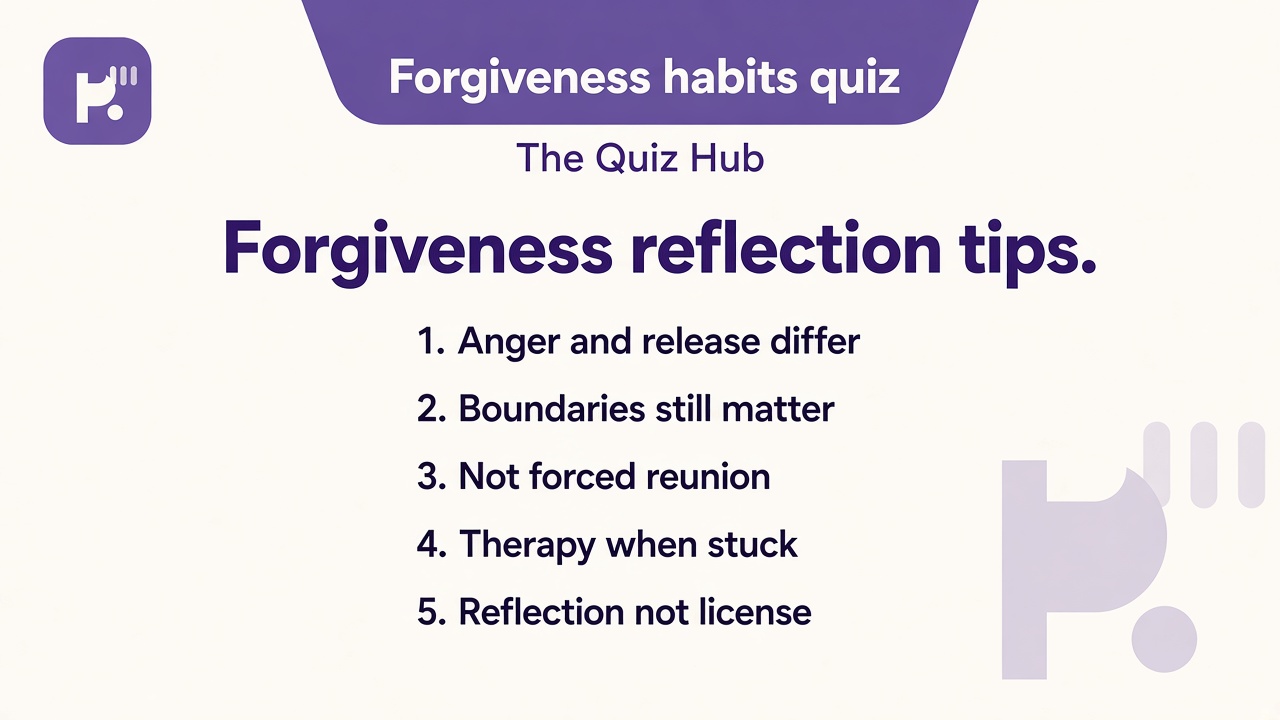
Tips at a glance
A quick takeaway graphic with topic tips (not your personal quiz scores). Start the quiz for your index, bands, and charts.
What this quiz can and cannot tell you
Can tell you
- Highlight self-forgiveness, release, and boundary habits worth revisiting with a counselor or mentor
- Separate unofficial reflection from licensed forgiveness inventories or therapy substitution myths
- Encourage honest language about hurt without public shame spirals
- Spark better questions about contact decisions without claiming therapeutic authority
Cannot tell you
- Replace psychotherapy, EMDR, or other trauma treatments for betrayal or abuse
- Prove you must reconcile with unsafe people from one couch screener
- Give permission to harass someone into accepting your apology because bars look high
- Predict relationship outcomes or declare who owes contact from trivia bars alone
Why forgiveness reflection needs boundaries and therapy separation
Search traffic around forgiveness scales usually wants language after hurt, not a therapist’s case note or a family member’s deadline. Those goals help when readers separate release from reunion, honor safety, and keep couch scores away from trauma care fantasies. They hurt when trivia bars become proof someone must answer the phone, or when survivors get shamed for no contact. Forgiveness literacy works best when it names humble self-forgiveness and honest limits together while staying distinct from licensed batteries.
Dr. Elena Vasquez reviews mental-health-clinical screeners with a simple split: reward honest boundary language and honest scale limits at the same time. Self-forgiveness humility tracks accountability without self-erasure. Other-forgiveness release tracks less grudge rent without revenge cosplay. Boundaries without forced reunion tracks no contact, slow trust, and refusing instant reconcile myths. Forgiveness scale not therapy keeps screeners separate from psychotherapy, published inventories, and badge fantasies.
Real readers mix bars. You might score high release while keeping boundaries moderate, which often describes someone who stopped fantasizing harm yet still needs distance. You might score high humility with softer therapy-limit items, which can mean you avoid smug captions yet still treat quiz totals like counseling graduation. Reverse items catch overconfidence: instant reunion myths, revenge rent, self-erasure, or therapy substitution should not inflate bars meant to track layered forgiveness manners.
Pair results with siblings on this hub instead of forcing one moral story. Our brief resilience scale BRS sibling tracks bounce-back agree habits with stems separate from forgiveness wording here. Our emotion regulation quiz explores frequency humility on daily regulation rather than betrayal release language on this page. Our fear of compassion scale sibling angles toward warmth avoidance when self-forgiveness feels threatening rather than boundary clarity here. Browse the mental health and clinical test hub for more reflection screeners with study-not-therapy framing.
Healing seasons move slower than group-chat forgiveness memes. A boundary bar might dip after one holiday ambush while release bars stay high until you retake calmly. When you share results, say unofficial forgiveness habits. When you borrow tips, credit therapists who taught you safety first. Retake after one counseling month and watch whether scale-not-therapy bars stay high even if release rises, which often means you separated cozy reflection from licensed care pressure.
| Test | Focus |
|---|---|
| Brief resilience scale BRS | Bounce-back agree habits rather than betrayal release and boundary stems on this page |
| Emotion regulation quiz | Daily regulation frequency rather than forgiveness and reunion boundary language here |
| Fear of compassion scale | Warmth avoidance habits rather than other-forgiveness release wording on this screener |
Forgiveness Scale FAQ
What does the Forgiveness Scale measure?
It measures how much you agree with statements about self-forgiveness humility, other-forgiveness release, boundaries without forced reunion, and scale-not-therapy limits. You get an index from 0 to 100 plus four bars. It reflects self-reported habits on this screener, not a therapist’s treatment plan or proof you must reconcile.
Does forgiveness mean I have to contact the person who hurt me?
No. Forgiveness can include release, boundaries, no contact, or slow trust rebuild. Safety and coercion context matter more than any bar height.
Is this a substitute for therapy after betrayal or abuse?
No. Scale-not-therapy items reject substitution myths. Licensed clinicians handle trauma, safety planning, and structured treatment; this page supports habit reflection only.
Can a low score mean I am a bad person?
No. Low agreement can mean fresh hurt, firm boundaries, or caution about instant forgive scripts. Bars describe habits you endorsed here, not moral grades.
Who reviewed this scale?
Dr. Elena Vasquez reviewed the relationship reflection framing, boundary and safety language, unofficial inventory limits, and result explanations. See our editorial policy for review standards.
Reviewed by