What the Fitness Quiz measures
This quiz does not clear you for surgery, score clinical fitness batteries, or assign macro plans. It measures how much you agree with unofficial fitness habit reflection grouped four ways: movement habits joy about playful activity, strength you enjoy, and skipping food-punishment math; recovery and energy kindness about sleep, hydration, rest days, and listening when pain says slow down; body-neutral limits about refusing gym hot-or-not games, stranger filming, and perfection gates before showing up; and not medical diagnosis about clinicians owning chest pain, eating distress, injury, and refusing to treat bar height like waived physicals. You rate 22 statements from strongly disagree to strongly agree, with reverse-worded traps so one punishment mindset cannot inflate every bar. Your answers also feed a second chart on closeness and trust habits, because fitness talk sometimes chases debate instead of honest reflection. The total becomes an index from 0 to 100 where higher means more reported fitness habit alignment on this screener, not proof you belong on a medical clearance form.
Movement habits joy
Playful activity, strength you enjoy, no food penance math.
Recovery and energy kindness
Rest, hydration, sleep guilt resets, pain listening.
Body neutral limits
No stranger ranking, kind gym talk, show up in comfort.
Not medical diagnosis
Clinicians own symptoms, no marathon clearance from bars.
How it works
Answer 22 agreement items
Rate each statement from Strongly disagree to Strongly agree. Tap Next after each answer.
Answers sort into four domains
Each answer feeds one of four fitness reflection groups, and every item also feeds a closeness and trust layer.
See your index and charts
You get a 0 to 100 index, a band, four domain bars, and a second chart for intimacy habits.
Take the Fitness Quiz
Answer 22 short statements to see your fitness habit reflection index, four domain bars, and a closeness and trust chart.
What your result means
Your index is the average of all 22 answers, scaled from 0 to 100, with reverse-worded items flipped first. Higher means more reported movement joy, recovery kindness, body-neutral, and limit agreement on this screener. Read not-medical-diagnosis bars with movement items before you treat the total as health clearance.
| Band | Index range | Typical reading |
|---|---|---|
| Quieter fitness habit endorsement | 0 to 35 | Less agreement with movement joy, recovery kindness, body-neutral, and limit items on this screener. |
| Mixed fitness habit endorsement | 36 to 65 | Some domains show strong joy or recovery; others show punishment traps or strong limit awareness. |
| Stronger fitness habit endorsement | 66 to 100 | Frequent agreement with movement joy and recovery items; pair with body-neutral and medical limit bars. |
Tips at a glance
A quick takeaway graphic with topic tips (not your personal quiz scores). Start the quiz for your index, bands, and charts.
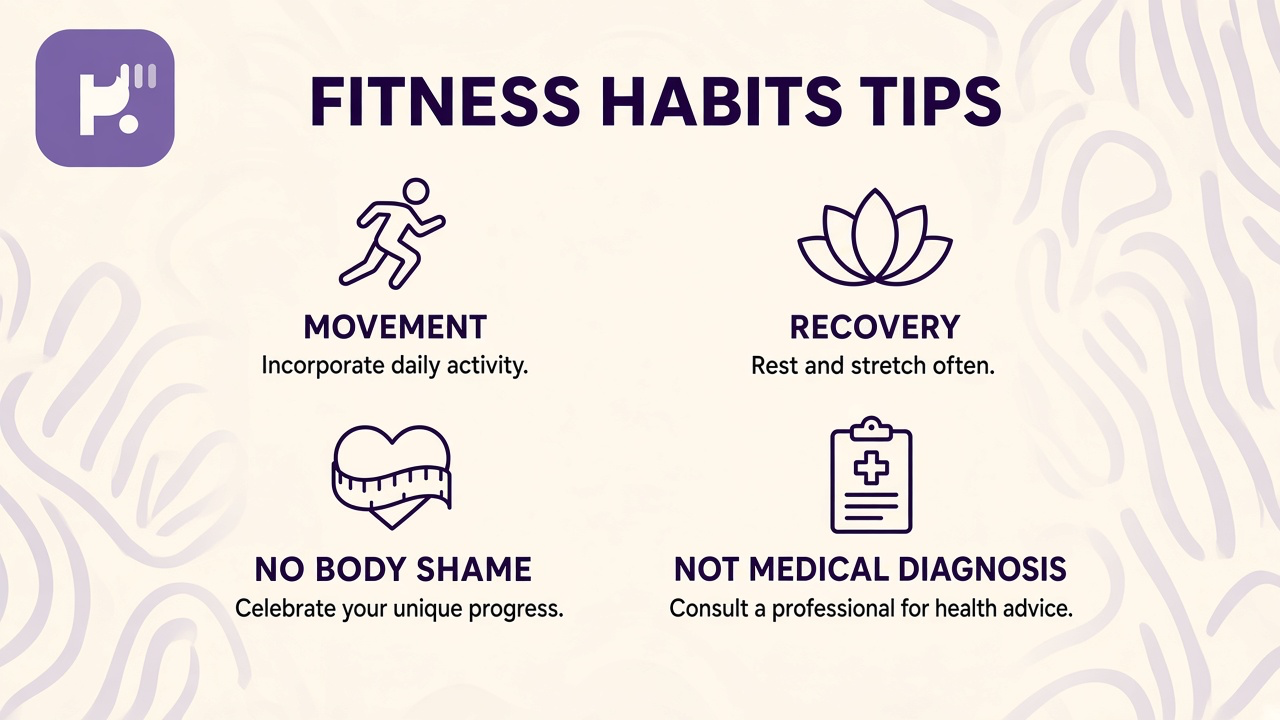
What this quiz can and cannot tell you
Can tell you
- Name movement and recovery habits in plain language without body grades
- Highlight punishment workouts, rest shame, and gym ranking myths worth unlearning
- Encourage kind gym culture without turning reflection into diet lectures
- Give playful baselines to retake after one restful week or one new class
Cannot tell you
- Diagnose eating disorders, heart disease, or injury severity from one online screener
- Replace physical exams, cardiac stress tests, or physical therapy plans
- Prescribe macros, supplements, or medication changes with authority
- Turn reflection scores into harassment of bodies online or in locker rooms
Fitness reflection before diagnosis shortcuts
Readers search fitness quizzes when new gym memberships, influencer challenges, and old diet culture blur together. Public health posters explain movement for heart and mood without demanding visible abs by Friday. Recovery science articles describe sleep and rest as training partners, not moral failures. Reflection should sharpen kindness, not replace clinicians when bodies hurt.
Dr. Elena Vasquez reviews self-image screeners with a simple split: reward honest agreement with movement joy and recovery kindness at the same time you keep medical limits visible. Movement habits joy tracks playful activity and strength you enjoy without food-punishment math. Recovery and energy kindness tracks hydration, rest days, and listening when pain says slow down. Body-neutral limits keeps gym hot-or-not games, stranger filming, and perfection gates visible beside leaner-equals-better myths. Not medical diagnosis keeps physical exams, cardiac symptoms, eating distress, and injury care with professionals beside automatic marathon clearance fantasies.
Real readers mix bars. You might score high on movement joy while keeping body-neutral limits moderate, which often describes people who love classes yet still compare mirrors harshly. You might score high on recovery with softer limit items, which can mean strong rest language yet little humility about commenting on strangers. Reverse items catch sloppy answers: punishment workouts, rest denial applause, perfection gates, or high indices like waived doctor visits should not inflate bars meant to track layered habit reflection.
Pair results with siblings on this hub instead of forcing one gym story. Our 5 components of fitness quiz sibling covers cardio, strength, flexibility, and related study vocabulary with separate wording, not these body-kindness sentences. Our developing muscular strength and endurance quiz sibling focuses on training principles rather than recovery shame habits here. Browse the self image and appearance hub for more reflection tools. Caption shares as personal notes, not orders to punish or praise bodies in group chat.
Bodies evolve faster than one challenge month. Injury, hormones, caregiving, and shift work change what realistic movement looks like each season. When you share results, say reflection beat ranking threads in locker rooms. When you borrow recovery beats, credit trainers and therapists who model rest without shame. Retake after one honest rest week and watch whether not-medical-diagnosis bars stay high even if movement joy spikes, which often means you separated performative scoring from actual care for your body.
| Test | Focus |
|---|---|
| 5 components of fitness quiz | Fitness component vocabulary study rather than body-neutral workout habit reflection |
| Developing muscular strength and endurance quiz | Training principles recall rather than recovery kindness and diagnosis limits here |
Fitness Quiz FAQ
What does the Fitness Quiz measure?
It measures how much you agree with statements about movement habits joy, recovery kindness, body-neutral limits, and not-medical-diagnosis guardrails. You get an index from 0 to 100 plus four bars. It describes self-rated habit reflection on this screener, not clinical fitness scores, body attractiveness, or medical clearance.
Can a high score clear me for intense exercise?
No. Doctors and licensed clinicians use exams and history this screener cannot replace. Seek professional advice before starting intense programs if you have symptoms or risk factors.
Is this quiz diagnosing an eating disorder?
No. Eating concerns need skilled clinicians and validated tools beyond lifestyle reflection pages. Use this quiz for habit naming only, and reach out for help if meals or exercise feel unsafe.
Why mix gym joy with medical limit items?
Fitness search intent blends playful movement and risky punishment culture. Split bars keep joy wins separate from doctor cosplay and body ranking so results stay honest about which lanes you endorse.
Who reviewed this quiz?
Dr. Elena Vasquez, PhD reviewed the self-reflection framing, anti-shame language, and medical limits. See our editorial policy for review standards.
Reviewed by