What Fathers in the Bible Quiz measures
This quiz does not grade your salvation, ordain ministers, or speak for any denomination. It measures how much you agree with unofficial story statements grouped four ways: patriarch story recall about Abraham through Joseph arcs, basic narrative links, and refusing public mockery when names get fuzzy; father mercy and flaws about guidance, human limits, and not weaponizing plot beats against living families; traditions and kindness about Jewish and Christian reading differences, skipping stereotype memes, and gentle hints instead of dunk threads; and unofficial not salvation about playful captions, clergy and publisher humility, and refusing to treat bar height as soul proof. You rate 22 statements from strongly disagree to strongly agree, with reverse-worded traps so one lucky patriarch guess cannot inflate every bar. Your answers also feed a second chart on closeness and trust habits, because faith trivia nights sometimes turn into argument spirals when scores spike. The total becomes an index from 0 to 100 where higher means more reported father-story literacy habits on this screener, not proof you should lecture strangers about Genesis.
Patriarch story recall
Abraham through Joseph arcs, timeline notes, and no playground name shaming.
Father mercy and flaws
Grace, guidance, and human limits without weaponizing stories.
Traditions and kindness
Respect across reading traditions and kind mixed-chat habits.
Unofficial not salvation
Couch trivia only; salvation tests and pastoral exams live elsewhere.
How it works
Answer 22 agreement items
Rate each statement from Strongly disagree to Strongly agree. Tap Next after each answer.
Answers sort into four domains
Each answer feeds one of four father-story groups, and every item also feeds a closeness and trust layer.
See your index and charts
You get a 0 to 100 index, a band, four domain bars, and a second chart for intimacy habits.
Take the Fathers in the Bible Quiz
Answer 22 short statements to see your Bible father-story literacy index, four domain bars, and a closeness and trust chart.
What your result means
Your index is the average of all 22 answers, scaled from 0 to 100, with reverse-worded items flipped first. Read unofficial not salvation bars together with traditions and kindness before you treat a high patriarch score as expertise. Cozy trivia supports kinder chats; pastors and teachers still own hard teaching calls.
| Band | Index range | Typical reading |
|---|---|---|
| Building Bible father-story literacy | 0 to 35 | Fewer agreed habits on patriarch recall, mercy themes, tradition kindness, or unofficial not salvation limits on this screener. |
| Mixed Bible father-story literacy | 36 to 65 | Solid recall in some domains with cartoon-only context, dunk threads, salvation fantasy, or tradition stereotype slips in others. |
| Strong Bible father-story literacy | 66 to 100 | Frequent agreement with patriarch recall, mercy themes, tradition respect, and unofficial limits; still fun only. |
Tips at a glance
A quick takeaway graphic with topic tips (not your personal quiz scores). Start the quiz for your index, bands, and charts.
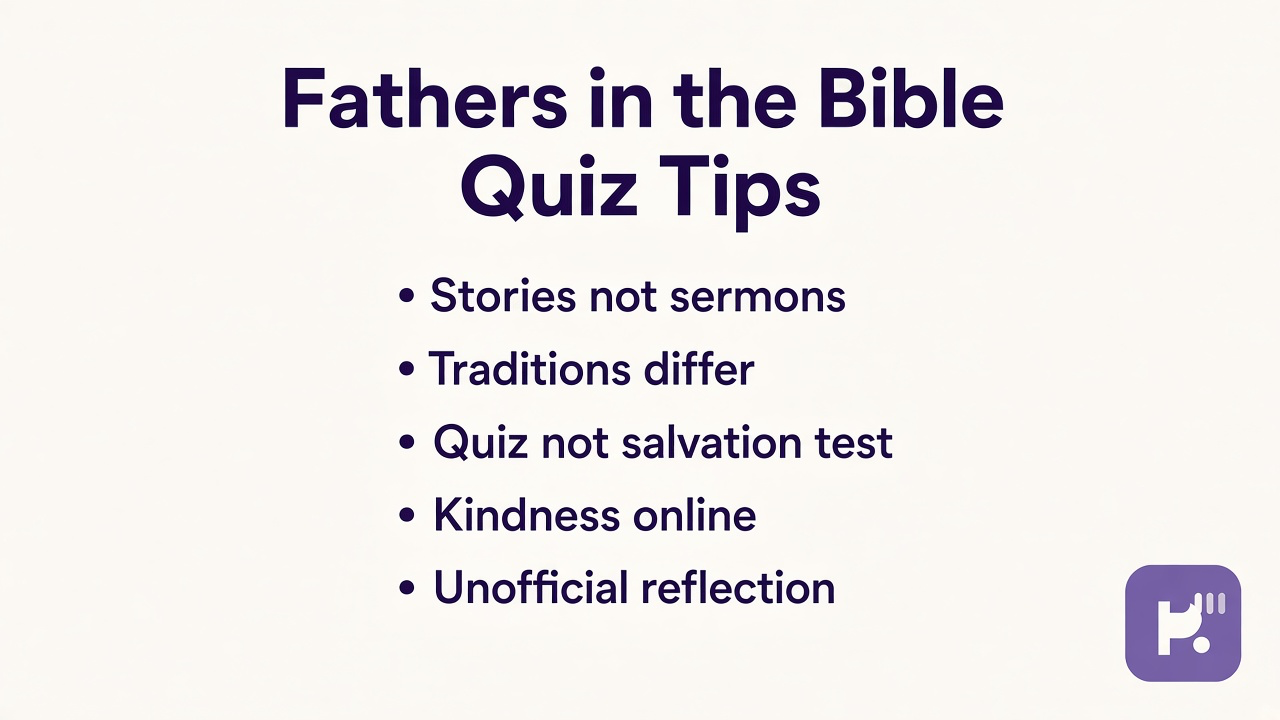
What this quiz can and cannot tell you
Can tell you
- Highlight patriarch recall and mercy themes worth revisiting before study group or family trivia
- Separate unofficial story trivia from salvation scoreboards or ordination fantasies
- Encourage tradition respect and gentle hints when someone guesses wrong
- Spark better questions about father stories without claiming pastoral authority
Cannot tell you
- Judge salvation, church membership, or parenting worth from one couch screener
- Replace scripture study, pastoral care, or instructor feedback on sacred text
- Give permission to mock kids, strangers, or believers after one missed patriarch fact
- Prove seminary readiness or publisher endorsement from trivia bars alone
Why Bible father trivia needs unofficial framing
Search traffic around fathers in the Bible quizzes usually wants two things: cozy patriarch facts for family night, and shareable scores for group chats. Those goals help when readers reread stories, honor tradition differences, and keep guesses playful. They hurt when trivia bars become salvation scoreboards, or when one Joseph clip replaces chapter context. Story literacy works best when it names kindness and unofficial limits together.
Dr. Rachel Kim reviews fun novelty faith-adjacent quizzes with a simple split: reward honest patriarch recall and honest limits on unofficial trivia at the same time. Patriarch story recall tracks Abraham through Joseph narrative links without cartoon-only context or public name mockery. Father mercy and flaws tracks guidance and human limits without turning plot beats into weapons against living parents. Traditions and kindness tracks respect across Jewish and Christian reading habits without stereotype memes. Unofficial not salvation keeps screeners separate from soul exams, pastoral authority fantasies, and dunk threads.
Real players mix bars. You might score high on Joseph recall while keeping tradition kindness moderate, which often describes strong musical memory before slow Genesis rereads. You might score high mercy themes with softer unofficial limits, which can mean you love grace language yet still post sharp captions online. Reverse items catch overconfidence: cartoon-only context, mandatory laugh policies, perfect father myths, soul grading from bar height, or harassment passes tied to high scores should not inflate bars meant to track layered story knowledge.
Pair results with siblings on this hub instead of forcing one faith story. Our bible verse quiz leans straight citation recall when you want text trivia without patriarch arc framing. Our books of the bible quiz stays on canon order when you want shelf-map memory separate from father narratives. Our exodus quiz covers Moses deliverance literacy when your chat shifts from Genesis patriarchs to Exodus plot. Browse the fun and novelty hub for more light screeners. Caption shares as unofficial trivia and skip dunk threads on friends who never asked for a quiz.
Holiday tables and sermon clips rotate faster than memory. A patriarch bar might spike after one musical while tradition kindness sleeps until you notice a sharp comment. When you share results, say stories not salvation tests. When you borrow tips, credit study partners who read whole chapters and clergy who welcome questions. Retake after one calm month and watch whether unofficial not salvation bars stay high even if recall rises, which often means you separated cozy facts from actual kindness online.
| Test | Focus |
|---|---|
| Bible verse quiz | Straight scripture citation trivia rather than patriarch narrative and mercy stems on this page |
| Books of the bible quiz | Canon order and shelf-map memory rather than father-story recall and tradition kindness here |
| Exodus quiz | Moses arc and deliverance literacy rather than Genesis patriarch father themes on this page |
Fathers in the Bible Quiz FAQ
What does Fathers in the Bible Quiz measure?
It measures how much you agree with statements about patriarch story recall, father mercy and flaws, traditions and kindness, and unofficial not salvation limits. You get an index from 0 to 100 plus four bars. It describes self-reported story habits on this screener, not salvation status or church endorsement.
Is this a salvation test or seminary exam?
No. Unofficial not salvation items keep the page playful. Clergy, counselors, and licensed study tools own soul and ordination questions; this screener is couch trivia only.
Does a high score mean I should grade friends on patriarch facts?
No. Traditions and kindness items reject public mockery. High bars mean you related to story statements here, not that you hold a pastoral badge.
Why include mercy and flaw themes with trivia items?
Father stories mix guidance and human limits. Mercy items keep plot reflection separate from shaming living parents or kids so results stay honest about how you discuss scripture.
Who reviewed this quiz?
Dr. Rachel Kim reviewed the fun only framing, unofficial not salvation limits, and tradition kindness tone. See our editorial policy for review standards.
Reviewed by