What Fantasy Race Quiz measures
This quiz does not measure real human ancestry, certify folklore scholars, or endorse game studios or film rights holders. It measures how much you agree with fiction archetype statements grouped four ways: fiction race archetypes about elf, dwarf, halfling, and orc story peoples with canon per work; tabletop rule lanes about separate RPG stat blocks and edition checks without one global biology law; fiction not human groups about refusing to map tags onto ethnicity, nationality, or appearance and pushing back on pile-ons; and unofficial archetype play about playful captions, lookup prompts, and refusing substitute dungeon master cosplay from bar height. You rate 22 statements from strongly disagree to strongly agree, with reverse-worded traps so one binge cannot inflate every bar. Your answers also feed a second chart on closeness and trust habits, because intense fandom sometimes chases certainty over kindness when lore scores spike. The total becomes an index from 0 to 100 where higher means more reported fiction archetype literacy on this screener, not proof you should sort strangers into lore boxes.
Fiction race archetypes
Elf, dwarf, halfling, and orc as invented story peoples per canon.
Tabletop rule lanes
Separate RPG stat blocks and edition checks, not global biology.
Fiction not human groups
Keep tags off real ethnicity; push back on harmful mapping.
Unofficial archetype play
Fun captions only; estates and anthropology class live elsewhere.
How it works
Answer 22 agreement items
Rate each statement from Strongly disagree to Strongly agree. Tap Next after each answer.
Answers sort into four domains
Each answer feeds one of four fiction archetype groups, and every item also feeds a closeness and trust layer.
See your index and charts
You get a 0 to 100 index, a band, four domain bars, and a second chart for intimacy habits.
Take the Fantasy Race Quiz
Answer 22 short statements to see your fiction archetype index, four domain bars, and a closeness and trust chart.
What your result means
Your index is the average of all 22 answers, scaled from 0 to 100, with reverse-worded items flipped first. Read fiction not human groups bars together with unofficial archetype play before you treat a high score as lore authority. Playful fiction mirrors support kinder cons; rights holders and teachers still own licensed canon and graded work.
| Band | Index range | Typical reading |
|---|---|---|
| Building fiction archetype literacy | 0 to 35 | Fewer agreed habits on fiction archetypes, tabletop lanes, fiction-not-human-groups limits, or unofficial play on this screener. |
| Mixed fiction archetype literacy | 36 to 65 | Solid lore recall with real-people orc name slips, cosplay ancestry myths, single-franchise ownership traps, or dungeon-master cosplay in others. |
| Strong fiction archetype literacy | 66 to 100 | Frequent agreement with fiction tags, tabletop lanes, fiction-not-human-groups limits, and unofficial play; still fun only. |
Tips at a glance
A quick takeaway graphic with topic tips (not your personal quiz scores). Start the quiz for your index, bands, and charts.
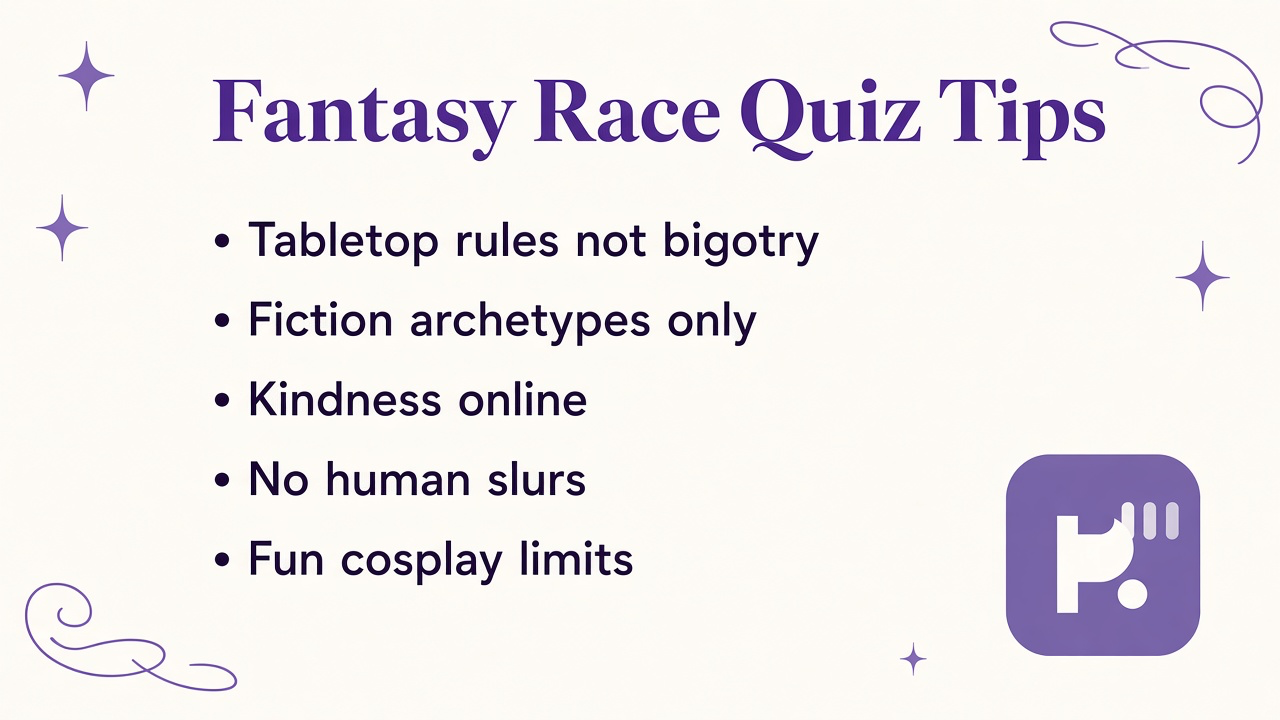
What this quiz can and cannot tell you
Can tell you
- Highlight fiction archetype, tabletop lane, and kindness habits worth revisiting before the next lore debate
- Separate story tags from real human groups in self-reported fan habits
- Encourage edition checks and spoiler labels without con harassment
- Spark better tabletop questions without claiming estate authority
Cannot tell you
- Describe real human ancestry, ethnicity, or biology from fiction metaphor bars
- Replace anthropology instruction, licensed canon committees, or safety training at venues
- Give permission to insult, sort, or harass people using dwarf, elf, or orc labels
- Predict cosplay safety or community health from trivia bars alone without venue rules
Why fiction race quizzes must stay fiction-only
Search traffic around fantasy race quizzes usually wants two things: playful elf versus dwarf mirror scores, and shareable bars for group chats. Those goals help when readers keep tags on story pages, check RPG editions, and welcome cosplayers. They hurt when memes slide into real human insults, or when lore confidence becomes permission to sort strangers. Archetype literacy works best when it names fiction boundaries and unofficial limits together.
Dr. James Whitfield reviews fandom entertainment screeners with a simple split: reward honest lore habits and honest refusal to map fiction onto real people at the same time. Fiction race archetypes tracks elf, dwarf, halfling, and orc as invented peoples with canon per work without flattening every studio into one template. Tabletop rule lanes tracks stat blocks and edition labels without body-type insults from character sheets. Fiction not human groups tracks pushback when chats cross from story tags into ethnicity or nationality slurs. Unofficial archetype play keeps screeners separate from estate press releases and substitute dungeon master grading.
Real fans mix bars. You might score high on archetype recall while keeping fiction-not-human-groups moderate, which often describes lore lovers who still need stricter chat rules. You might score high tabletop lanes with softer unofficial play items, which can mean you know stat blocks yet still spoil cousins online. Reverse items catch overconfidence: real people orc names, cosplay ancestry proofs, single-franchise ownership myths, insults from character sheets, ancestry sorting memes, pseudoscience with map backgrounds, spoiler rights from high bars, or perfect scores licensing cosplay mockery should not inflate bars meant to track fiction-only literacy.
Pair results with siblings on this hub instead of forcing one canon story everywhere. Our elf quiz stays on folklore and fiction elf lanes with stems separate from broad multi-race archetype habits on this page. Our elf personality quiz maps woodland and festival persona habits when you want reflection beside lore trivia here. Our cowboy fairy angel knight quiz covers viral archetype mashups when meme lanes beat tabletop stat talk. Browse the fandom and entertainment hub for more unofficial screeners. Caption shares as fiction only and skip sorting friends who never asked for a quiz.
Patch notes and adaptation drops rotate faster than Discord pins. A tabletop bar might spike after one new RPG read while fiction-not-human-groups dips until you retake calmly. When you share results, say fiction tags only. When you borrow tips, credit friends who labeled spoilers and mods who deleted real-world slurs without mockery. Retake after one con month and watch whether kindness bars stay high even if lore recall rises, which often means you separated story joy from human sorting.
| Test | Focus |
|---|---|
| Elf quiz | Elf folklore and fiction lanes rather than multi-race archetype and fiction-only boundary stems here |
| Elf personality quiz | Woodland and festival persona habits rather than dwarf, halfling, and orc tag literacy on this page |
| Cowboy fairy angel knight quiz | Viral archetype mashup play rather than tabletop rule lane and fiction-not-human-groups items here |
Fantasy Race Quiz FAQ
What does Fantasy Race Quiz measure?
It measures how much you agree with statements about fiction race archetypes, tabletop rule lanes, fiction not human groups, and unofficial archetype play. You get an index from 0 to 100 plus four bars. It describes self-reported fiction fan habits on this screener, not real human ancestry or biology.
Does this quiz sort real people into elf or dwarf boxes?
No. Fiction not human groups items keep tags on story peoples in books, games, and films. Real ethnicity and nationality belong outside this screener.
Is this connected to Tolkien or game studios?
No. Unofficial archetype play items keep the page fan reflection only. Rights holders own licensed canon; this quiz does not speak for them.
Why include tabletop rules with archetype items?
Many fans meet elf and dwarf tags through RPG stat blocks first. Tabletop rule lanes keep edition checks and separate canon visible beside fiction archetype recall.
Who reviewed this quiz?
Dr. James Whitfield reviewed the fiction-only framing, boundary tone, and unofficial play limits. See our editorial policy for review standards.
Reviewed by