What Family Quiz measures
This quiz does not run genetic tests, certify genealogists, or rank your worth as a relative. It measures how much you agree with family trivia statements grouped four ways: cousin chart humor about meme math, gentle explanations, and refusing chart-as-court traps; tradition variety about different holiday scripts, blended families, and asking hosts instead of enforcing one viral template; share light limits about playful captions, opt-in tags, and skipping public relative roast boards tied to bar height; and unofficial family trivia about screeners versus ancestry subscriptions, DNA proof myths, and serious talks when inheritance or identity questions matter. You rate 22 statements from strongly disagree to strongly agree, with reverse-worded traps so one lucky reunion cannot inflate every bar. Your answers also feed a second chart on closeness and trust habits, because family banter sometimes chases winning jokes over honest listening. The total becomes an index from 0 to 100 where higher means more reported playful family trivia habits on this screener, not proof you should exclude cousins from photos.
Cousin chart humor
Meme math jokes, gentle explanations, and no chart-as-court cosplay.
Tradition variety
Many household shapes, host questions, and no one true holiday script.
Share light limits
Playful captions, opt-in tags, and no roast threads from bar height.
Unofficial family trivia
Party warm-up only; genealogy labs and therapists own serious lanes.
How it works
Answer 22 agreement items
Rate each statement from Strongly disagree to Strongly agree. Tap Next after each answer.
Answers sort into four domains
Each answer feeds one of four family trivia groups, and every item also feeds a closeness and trust layer.
See your index and charts
You get a 0 to 100 index, a band, four domain bars, and a second chart for intimacy habits.
Take the Family Quiz
Answer 22 short statements to see your family trivia index, four domain bars, and a closeness and trust chart.
What your result means
Your index is the average of all 22 answers, scaled from 0 to 100, with reverse-worded items flipped first. Read unofficial trivia bars together with share-light habits before you treat a high score as permission to rank relatives online. Fun supports kinder reunion talk; serious questions still deserve real support.
| Band | Index range | Typical reading |
|---|---|---|
| Lighter family trivia vibes | 0 to 35 | Fewer agreed habits on cousin-chart humor, tradition variety, share-light limits, or unofficial trivia framing on this screener. |
| Mixed family trivia vibes | 36 to 65 | Solid cousin humor or tradition respect in some domains with DNA-from-bars myths, roast threads, or uniform-tradition traps in others. |
| Stronger family trivia vibes | 66 to 100 | Frequent agreement with cousin humor, tradition variety, share-light habits, and unofficial limits; still fun only. |
Tips at a glance
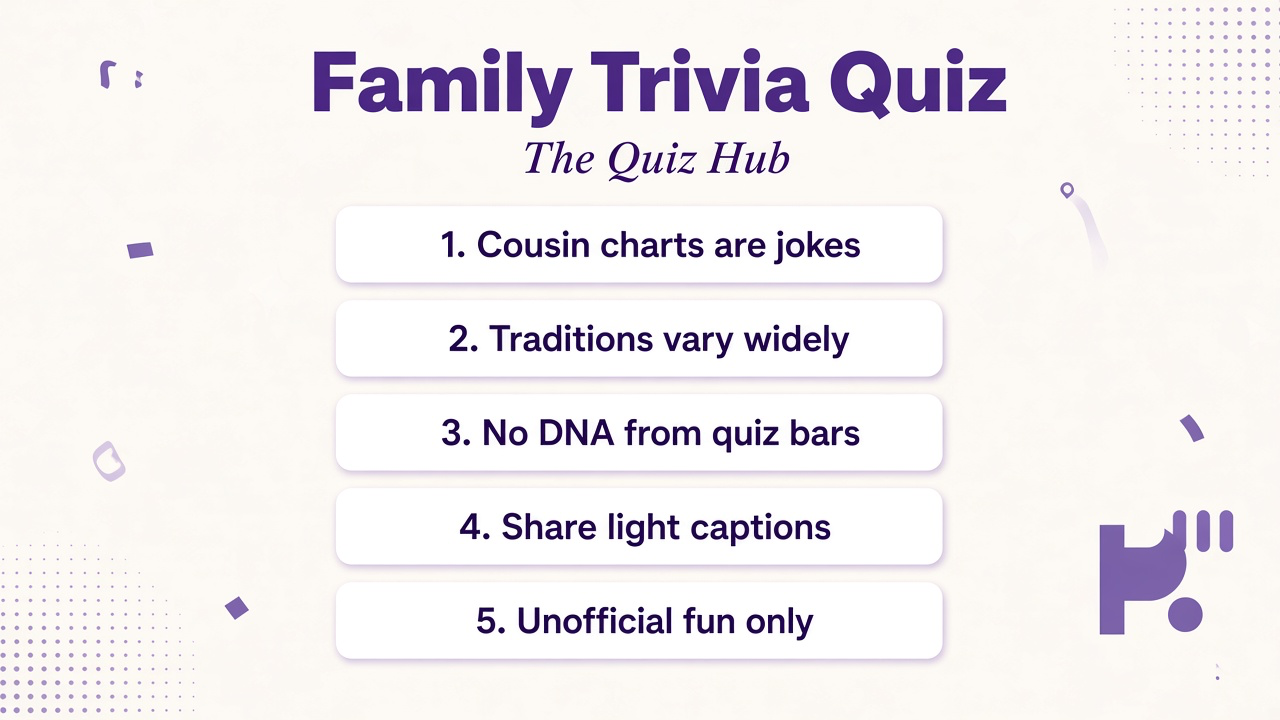
A quick takeaway graphic with topic tips (not your personal quiz scores). Start the quiz for your index, bands, and charts.
What this quiz can and cannot tell you
Can tell you
- Highlight cousin-chart humor, tradition respect, and share-light habits worth revisiting before the next reunion
- Separate unofficial trivia from DNA proof or genealogy credential fantasies
- Encourage opt-in tags and playful captions before family group chat posts
- Spark honest talk with cousins about warm-up trivia versus heritage gatekeeping
Cannot tell you
- Prove blood relation, heritage percent, or ancestry subscription accuracy from one online screener
- Replace genealogy research, genetic counseling, or family therapy for serious disputes
- Certify you as a family historian or reunion planner from trivia bars
- Turn high scores into public roast boards or reunion exclusion lists
Cousin charts, tradition variety, and trivia that stays unofficial
Family trivia searches usually blend two moods: laughing at cousin-chart memes, and wanting permission to feel legitimate when your holidays look different from viral templates. Those goals help when readers treat charts as jokes, ask hosts about food and dress codes, and share results lightly. They hurt when trivia bars become DNA proof, roast fuel, or reunion gatekeeping. Family fun language works best when it names playful habits and kindness limits together.
Dr. Rachel Kim reviews fun-novelty family screeners with a simple split: reward honest reunion humor and honest unofficial framing on the same scorecard. Cousin chart humor tracks meme math without courtroom cosplay. Tradition variety tracks blended households, cultural differences, and host questions without one-script supremacy. Share light limits tracks opt-in tags and unofficial captions without relative ranking threads. Unofficial family trivia keeps screeners, genealogy professionals, and therapists separate from bar height.
Real players mix bars. You might score high on tradition variety while keeping cousin-chart humor moderate, which often describes respectful hosts who still skip meme threads. You might score high trivia with softer share limits, which can mean great reunion games plus occasional public dunking slips. Reverse items catch sloppy answers: charts as certified genealogy, bars as DNA proof, identical Thanksgiving scripts, roast boards from high scores, or excluding people over low bars should not inflate charts meant to track layered trivia habits.
Pair results with siblings on this hub instead of forcing one family story. Our cousin quiz stays on cousin bond and reunion nickname vibes with stems separate from whole-family tradition lanes on this page. Our sibling quiz covers brother-sister bond habits when sibling drama beats cousin-chart memes. Our genealogy quiz angles toward study literacy when you want tree skills beyond party trivia. Browse the fun and novelty test hub for more low-stakes playful screeners. Caption shares as warm-up trivia, ask before you tag, and skip bait threads on relatives who never opted in.
Reunion seasons refresh faster than group chat arguments. When you share results, say kindness and unofficial captions beat scoreboard heritage claims. When you borrow tips, credit cousins who explain chart math patiently and hosts who welcome different traditions. Retake after one holiday and watch whether share-light bars stay high even if cousin-chart recall rises, which often means you separated party rules from actual table manners online.
| Test | Focus |
|---|---|
| Cousin quiz | Cousin bond and reunion nickname trivia rather than whole-family tradition and chart humor on this page |
| Sibling quiz | Brother-sister bond habits rather than extended-family meme math and potluck variety here |
| Genealogy quiz | Genealogy study literacy rather than unofficial party trivia and share-light limits here |
Family Quiz FAQ
What does Family Quiz measure?
It measures how much you agree with statements about cousin-chart humor, tradition variety, share-light limits, and unofficial family trivia framing. You get an index from 0 to 100 plus four bars. It describes self-reported playful family trivia habits on this screener, not genetic relation proof or genealogy credentials.
Can this quiz tell me who my real cousins are?
No. Cousin charts here are framed as meme math and party jokes. Blood relation and legal kinship need accurate family records, respectful conversation, and when appropriate professional genealogy or genetic services, not agree bars from a fun screener.
Why include tradition variety items with cousin humor?
Family search intent mixes reunion games with anxiety about doing holidays the right way. Split bars keep meme literacy separate from respect for different households so results stay honest about how you actually engage family culture.
Does a high score mean I should roast relatives who scored lower?
No. Share-light and unofficial trivia items reject public ranking threads and reunion exclusion. High bars mean you related to kind trivia habits here, not that you won a heritage debate.
Who reviewed this quiz?
Dr. Rachel Kim reviewed the unofficial fan framing, anti-roast limits, and separation from DNA and genealogy credential claims. See our editorial policy for review standards.
Reviewed by