
What this Fabbing Addiction Questionnaire GSP measures
This page does not administer a validated Fabbing Addiction Questionnaire GSP from research clinics, and it cannot diagnose smartphone addiction, depression, or anxiety from one score. It measures how often you noticed habits counselors and sleep clinicians often discuss when phone use strains daily life, organized four ways: phone compulsion and fabbing when blank-screen busy, phantom buzz checks, or open-phone loops replaced pauses or small talk you could have tried; sleep and scroll when reels, pillow alerts, or just-one-more loops cut rest you already planned; scroll loops when reopening apps, short-form marathons, or feed refreshes dodged offline tasks; and quiz not addiction cert limits when unofficial screeners replaced therapy, skipped clinicians when loops stuck, or ignored 988 when hopelessness peaked. You answer 22 how-often statements about the past month, with reverse-worded items so one charge-outside-bed night, app timer, face-down block, or crisis lookup cannot hide frequent fabbing or bedtime scroll on other days. Your responses also feed a second chart on closeness and trust habits, because shame about phone use sometimes blocks asking for help. The total becomes an index from 0 to 100 where higher means more frequent reported phone compulsion strain on this screener. Your responses suggest intensity to discuss with support; they do not prove you failed at balance.
Phone compulsion and fabbing
How often fake-busy scroll, phantom buzz, or open-phone-without-goal habits showed up in social or quiet moments.
Sleep and scroll
How often bedtime reels, night waking feeds, or pillow alerts cut sleep you meant to protect.
Scroll loops
How often reopen loops, short-form marathons, or feed refreshes replaced named offline tasks.
Quiz not addiction cert limits
How often quiz humility, clinician planning, and 988 awareness showed up versus licensed-form myths.
How it works
Answer 22 frequency items
Rate each statement from Never to Very often for the past month. Tap Next after each answer.
Answers sort into four domains
Each answer feeds one of four phone strain groups, and every item also feeds a closeness and trust layer.
See your index and charts
You get a 0 to 100 index, a band, and two bar charts you can bring to a therapist or sleep clinician.
Take the Fabbing Addiction Questionnaire (GSP)
Answer 22 short statements to see your phone compulsion and fabbing strain index, four domain bars, and a closeness and trust chart.
What your result means
Your index is the average of all 22 answers, scaled from 0 to 100, with reverse-worded items flipped first. Higher means more frequent reported fabbing, bedtime scroll, or loop strain on this screener. Read quiz-not-addiction-cert limits with sleep bars before you treat any total as diagnostic proof. Persistent hopelessness or safety worries deserve crisis support, not only timer tips.
| Band | Index range | Typical reading |
|---|---|---|
| Lower reported phone compulsion strain | 0 to 35 | Fewer frequent fabbing, bedtime scroll, open-phone loops, or quiz-as-addiction-cert habits in the past month. |
| Mixed reported phone compulsion strain | 36 to 65 | Some steadier stretches alongside fabbing, bedtime scroll, loop marathons, or limit myths on other days. |
| Higher reported phone compulsion strain | 66 to 100 | Frequent fabbing, bedtime scroll, or loop strain; professional support and crisis lines may help more than another solo retake. |
Tips at a glance
A quick takeaway graphic with topic tips (not your personal quiz scores). Start the quiz for your index, bands, and charts.
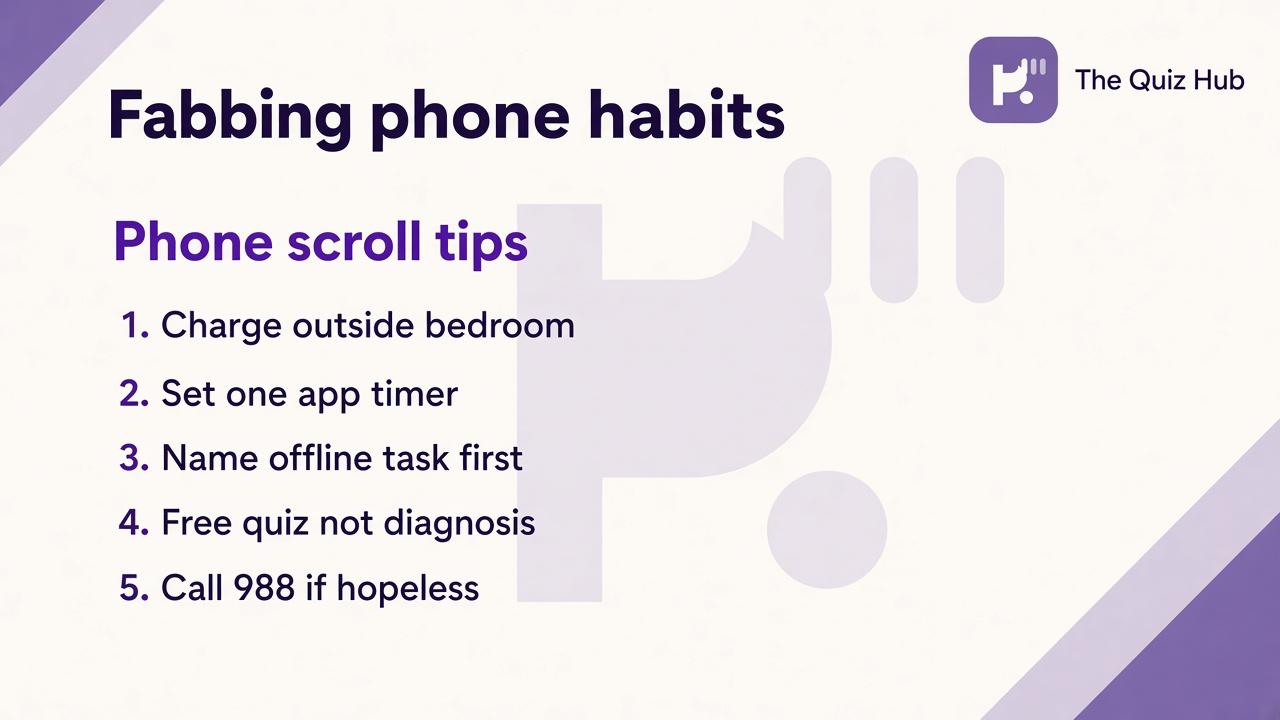
What this quiz can and cannot tell you
Can tell you
- Name fabbing, bedtime scroll, and loop habits in plain language for therapy or sleep intake
- Highlight when charge-outside-bed, app timers, or help-seeking limit habits are missing
- Support honest overlap conversations with clinicians without forcing one online label
- Offer a baseline if you retake after one week of timers and bedroom phone boundaries
Cannot tell you
- Diagnose smartphone addiction, depression, or anxiety from one score
- Replace sleep studies, digital detox programs, or medication decisions
- Prove you must quit all social apps forever from bar height
- Substitute for crisis care when hopelessness or safety fears feel urgent
Fabbing, bedtime scroll, and quiz-not-addiction-cert limits
People search fabbing addiction questionnaire pages when elevator silence triggers fake-busy scrolling, when bedtime reels outrun sleep, or when feeds make everyone else look effortlessly offline. Clinicians and sleep teams discuss problematic smartphone use as habits that persist despite rest loss, mood harm, or shrinking offline life, often alongside anxiety, ADHD, loneliness, or job stress. This online screener uses that reflection lens unofficially; it cannot replace interview-based assessment or tell you which single cause fits without your history.
Phone compulsion and fabbing covers blank-screen busy, phantom buzz checks, and open-phone loops without a message sent, not whether you ever text family. Leaving the phone in another room, tolerating brief silence, or trying one small-talk line are protective signals worth naming in therapy even when bars run high. Sleep and scroll covers in-bed reels, night waking feeds, pillow alerts, and honoring charge-outside-bed plans. Scroll loops covers reopening apps, short-form marathons, and refresh habits that dodge tasks you already named.
Real readers mix bars. You might score high on fabbing while moderate on sleep scroll, which often describes social nerves without nightly reel marathons. You might score high on scroll loops with low limit outreach, which can mean feeds sting yet you still treat web totals as addiction proof. Reverse items catch overconfidence: hour away from the phone, bedroom charging, honored timers, face-down blocks, finishing offline tasks first, refusing licensed GSP myths, looking up 988, and planning clinician visits should not inflate a strain index meant to track frequency of harm-linked habits.
Pair results with siblings on this hub instead of forcing one label story. Our smartphone addiction scale SAS sibling tracks past-month phone strain with its own stem bank, not fabbing wording here. Our social media addiction questionnaire SMAQ sibling emphasizes platform compulsion with separate limits. Our partner fabbing scale page frames relationship-side fabbing with distinct sentences. Browse the mental health and clinical test hub for more YMYL screeners with study-not-diagnosis framing.
Higher scores mean more frequent self-reported phone strain on this tool, not proof you must live without technology forever. Bring domain bars to intake so sessions start with examples, not shame. If hopelessness spikes, skip online debate and prioritize 988 or a clinician. Retake after one week of charge-outside-bed and one app timer when safe and compare bars, not only the total.
| Test | Focus |
|---|---|
| Smartphone addiction scale SAS | General smartphone compulsion frequency with a separate stem bank; zero shared sentences with this GSP fabbing page |
| Social media addiction questionnaire SMAQ | Platform compulsion themes with its own wording, not fabbing and sleep scroll items here |
| Partner fabbing scale | Relationship-side fabbing habits rather than solo phone compulsion and bedtime scroll frequency here |
Fabbing Addiction Questionnaire (GSP) FAQ
What does this fabbing addiction questionnaire measure?
It measures how often you noticed phone compulsion and fabbing, sleep and scroll strain, scroll loop habits, and quiz-not-addiction-cert limit habits during the past month. You get an index from 0 to 100 plus four domain bars. Your responses suggest self-reported frequency for reflection, not a clinical diagnosis.
Is this a validated Fabbing Addiction Questionnaire GSP from research?
No. This is an unofficial, inspired screener for self-reflection. It is not a validated clinic form, not a smartphone addiction certificate, and cannot replace a licensed clinician assessment.
What is fabbing in this context?
Fabbing here means pretending to be busy on your phone, such as blank-screen scrolling, to avoid eye contact or conversation, plus compulsive open-phone loops without a clear goal. Items also cover bedtime scroll and feed marathons that strain sleep.
Why mention charging outside bed and app timers?
Intent brief readers asked for practical sleep and scroll habits. Reverse items keep charge-outside-bed, timers, and offline-first choices visible so strain bars track harm-linked frequency, not shame for owning a smartphone.
What should I do if my score is high or I feel hopeless?
Call or text 988 (US) if crisis feels immediate, or contact a licensed clinician or counselor with domain examples from your results. Prioritize support over retakes when hopelessness or safety fears spike.
Who reviewed this questionnaire?
Dr. Sarah Chen, PhD reviewed the YMYL framing, crisis resources, quiz-not-addiction-cert limits, SAS and SMAQ sibling separation, and result explanations. See our editorial policy for review standards.
Reviewed by
