
What this social exclusion PSI page measures
This page does not administer a published validated Experiencing Social Exclusion PSI battery from a research clinic, and it cannot diagnose social anxiety disorder, depression, or any other condition from one score. It measures how often you noticed habits clinicians and school counselors discuss when exclusion and rejection sensitivity strain daily life, organized four ways: loneliness literacy when group silence, tense room entry, or all-or-nothing alone stories showed up versus naming loneliness apart from chosen solitude; rejection sensitivity when dry replies, canceled plans, or neutral faces felt like proof of rejection before context checks; ally and rumination habits when one trusted ally, counselor visits, feed muting, fact-versus-feeling notes, or quiz-before-human-support delays appeared; and quiz not bully excuse when unofficial bars replaced accountability, justified mean behavior, or skipped clinician planning. You answer 22 how-often statements about the past month, with reverse-worded items so one ally text, context pause, mute button, accountability reminder, or clinician plan cannot hide frequent scanning or rumination on other days. Your responses also feed a second chart on closeness and trust habits, because shame about exclusion sometimes blocks reaching out. The total becomes an index from 0 to 100 where higher means more frequent reported exclusion strain or limit gaps on this screener. Your responses suggest intensity to discuss with support; they do not prove you must bully back or stay silent forever.
Loneliness literacy
How often you noticed left-out cues and named loneliness apart from chosen solitude.
Rejection sensitivity
How often ambiguous social signals felt like rejection before context checks.
Ally and rumination habits
How often one ally, feed limits, capped spirals, or clinician outreach showed up.
Quiz not bully excuse
How often unofficial bars stayed humble and accountability stayed visible.
How it works
Answer 22 frequency items
Rate each statement from Never to Very often for the past month. Tap Next after each answer.
Answers sort into four domains
Each answer feeds one of four social exclusion literacy groups, and every item also feeds a closeness and trust layer.
See your index and charts
You get a 0 to 100 index, a band, and two bar charts you can bring to a counselor after immediate safety feels stable.
Take the Experiencing Social Exclusion (PSI)
Answer 22 short statements to see your social exclusion PSI literacy index, four domain bars, and a closeness and trust chart.
What your result means
Your index is the average of all 22 answers, scaled from 0 to 100, with reverse-worded items flipped first. Higher means more frequent reported loneliness strain, rejection scanning, rumination, or bully-excuse gaps on this screener. Read ally and rumination habits with quiz-not-bully bars before you treat any total as proof you may hurt others. Persistent hopelessness deserves 988 or a clinician, not only reflection tips.
| Band | Index range | Typical reading |
|---|---|---|
| Lower reported exclusion strain | 0 to 35 | Fewer frequent loneliness spirals, rejection scanning, rumination marathons, or bully-excuse habits in the past month. |
| Mixed reported exclusion strain | 36 to 65 | Some connected stretches alongside loneliness spikes, rejection scanning, rumination loops, or limit myths on other weeks. |
| Higher reported exclusion strain | 66 to 100 | Frequent loneliness strain, rejection scanning, rumination, or bully-excuse myths; clinicians and crisis lines may help more than another solo retake. |
Tips at a glance
A quick takeaway graphic with topic tips (not your personal quiz scores). Start the quiz for your index, bands, and charts.
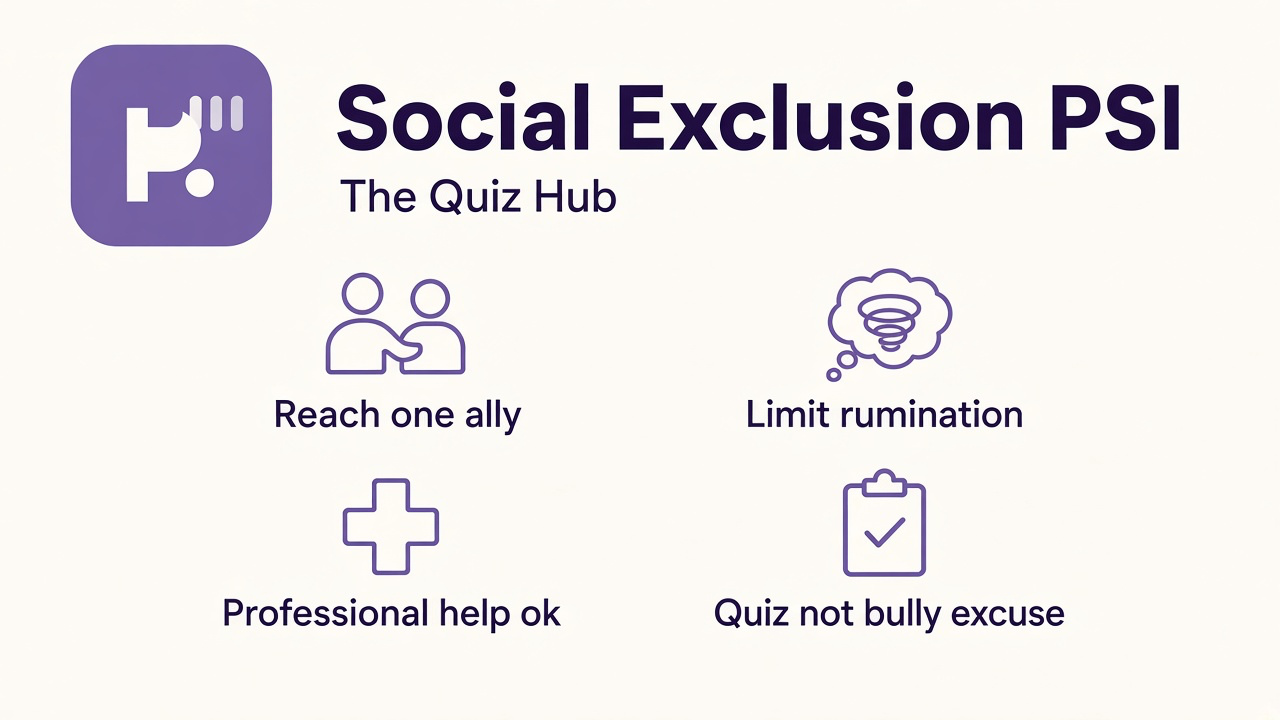
What this quiz can and cannot tell you
Can tell you
- Name loneliness, rejection scanning, and rumination habits in plain language for intake
- Highlight when ally outreach, feed limits, or accountability habits are missing
- Support honest conversations with counselors or trusted adults without forcing one online label
- Offer a baseline if you retake after one ally-reach and rumination-cap week when safe
Cannot tell you
- Diagnose social anxiety, depression, or rejection sensitivity disorder from one score
- Excuse bullying, retaliation, or deliberate exclusion because sensitivity bars run high
- Replace therapy, school counseling, or safety planning when harassment is ongoing
- Prove whether peers secretly hate you without live context this page cannot see
Loneliness literacy, rejection sensitivity, and quiz-not-bully-excuse limits
People search experiencing social exclusion PSI pages when group chats go quiet, when one dry reply hijacks a whole weekend, or when feeds turn every friend photo into proof you are behind. Clinicians discuss rejection sensitivity and loneliness as patterns that grief, moves, bullying aftermath, neurodiversity, and mood conditions can amplify, not as character verdicts or bully licenses. This unofficial page uses that literacy lens; it cannot replace interview-based assessment or tell you what peers secretly think without context.
Loneliness literacy covers noticing deliberate left-out cues, body tension in unwelcoming rooms, and shame stories that equate needing connection with being pathetic. Naming loneliness apart from chosen solitude is a protective signal worth practicing in therapy even when bars run high. Rejection sensitivity covers replaying tone, avoiding inclusion asks, phone checking after vulnerable texts, and treating one canceled plan as proof an entire bond was fake. Pausing for alternative explanations is a skill many counselors coach without demanding you ignore real harm.
Ally and rumination habits cover texting one trusted person when stacks build, capping spiral time, muting scoreboard feeds, journaling fact versus feeling, and bringing sticky dread to clinicians instead of hoping retakes replace humans. Quiz not bully excuse covers refusing to weaponize sensitivity scores against others, refusing retaliation myths, remembering accountability when you were unkind, and planning professional support rather than weekly bar chasing. Reverse items catch honesty: naming loneliness types, asking context before verdicts, reaching allies, muting feeds, journaling, remembering accountability, and planning clinicians should not inflate a strain index meant to track frequency of exclusion pain and limit gaps.
Pair results with siblings on this hub instead of forcing one label story. Our loneliness experience questionnaire sibling emphasizes loneliness habit frequency with its own stem bank, not duplicate PSI wording here. Our on-topic social anxiety sibling frames anxiety habits separately from exclusion literacy items on this page. Our bullying structure assessment questionnaire sibling tracks victim exposure frequency rather than rejection sensitivity literacy and bully-excuse limits here. Browse the mental health and clinical test hub for more YMYL screeners with study-not-diagnosis framing.
Higher scores mean more frequent self-reported exclusion strain or limit gaps on this tool, not proof you must isolate or harm others. Bring domain bars to intake so sessions start with examples, not shame. If hopelessness spikes, prioritize 988 or a clinician. Retake after one week of ally outreach and rumination caps when safe and compare bars, not only the total.
| Test | Focus |
|---|---|
| Loneliness experience questionnaire | Loneliness habit frequency with a separate stem bank; not duplicate PSI exclusion literacy wording here |
| On-topic social anxiety | Social anxiety habit framing rather than rejection sensitivity and bully-excuse limit stems on this page |
| Bullying structure assessment questionnaire | Victim exposure frequency items rather than PSI literacy and accountability limits here |
Experiencing Social Exclusion (PSI) FAQ
What does this social exclusion PSI screener measure?
It measures how often you noticed loneliness literacy gaps, rejection sensitivity scanning, ally and rumination habits, and quiz-not-bully-excuse patterns during the past month. You get an index from 0 to 100 plus four domain bars. Your responses suggest self-reported frequency for reflection, not a clinical diagnosis.
Is this the official validated PSI instrument from a clinic?
No. This page is an unofficial inspired screener for education and self-reflection. Published PSI batteries use specific items, samples, and scoring rules this site does not replicate. Use results to name habits, not to claim validated clinic scores.
Can a high rejection sensitivity score excuse bullying or mean behavior?
No. Quiz-not-bully-excuse items state that explicitly. Hurt feelings and sensitivity patterns deserve compassion and support; they do not erase accountability when you were unkind or justify excluding others.
How is this different from the bullying structure assessment questionnaire?
The bullying structure sibling tracks how often victim exposure items such as deliberate exclusion or harassment showed up. This PSI page tracks loneliness literacy, rejection scanning, ally habits, and limit myths with a separate stem bank focused on reflection, not documenting bullies.
What should I do if I feel left out every week?
Reach one trusted ally with a concrete example, cap rumination with a timer or walk, and consider a licensed counselor if dread disrupts sleep, school, or work for weeks. Crisis support: call or text 988 (US) when hopelessness feels urgent.
Who reviewed this quiz?
Dr. Sarah Chen, PhD reviewed the YMYL framing, bully-excuse limits, unofficial assessment boundaries, and result explanations. See our editorial policy for review standards.
Reviewed by
