What this ethnic affiliation questionnaire measures
This page does not verify ancestry, assign census categories, or measure biological race. It measures how often you reported affiliation-related habits in four groups: heritage stories and pride about sharing or learning migration and tradition stories, food and language practice, and exploring heritage without perfect performance for strangers; community connection about events, kin ties, mutual aid, welcoming newcomers, and balancing online identity talk with offline safety; respectful curiosity about asking with permission, refusing stereotype jokes and race science ranking memes, gentle correction, and accepting mixed heritage; and affiliation quiz limits about reflection-only framing, rejecting DNA and census proof myths, private journal use instead of gatekeeping weapons, and seeking therapists or genealogists when stress disrupts safety. You rate 22 statements from never to very often, with reverse-worded items so stereotype sharing and race science myths cannot inflate every bar. Your answers also feed a second chart on closeness and trust habits, because identity stress sometimes overlaps with isolation toward partners. The total becomes an index from 0 to 100 where higher means more reported affiliation reflection frequency on this screener, not verified ethnicity percentages or moral rank between groups.
Heritage stories and pride
Stories, food, language, and holidays without perfect performance for strangers.
Community connection
Events, kin ties, and welcome without credential tests or scoreboard belonging.
Respectful curiosity
Learn across differences, refuse ranking stereotypes, and accept mixed heritage.
Affiliation quiz limits
Not DNA, census, or race science; genealogy and clinicians stay primary when needed.
How it works
Answer 22 frequency items
Rate each statement from Never to Very often. Tap Next after each answer.
Answers sort into four domains
Each answer feeds one of four affiliation groups, and every item also feeds a closeness and trust layer.
See your index and charts
You get a 0 to 100 index, a band, and two bar charts you can compare after one community or rest experiment.
Take the Ethnic Affiliation Questionnaire
Answer 22 short statements to see your ethnic affiliation reflection index, four domain bars, and a closeness and trust chart.
What your result means
Your index is the average of all 22 answers, scaled from 0 to 100, with reverse-worded myth items flipped first. Read affiliation quiz limits with heritage and curiosity bars before you treat any total as DNA proof, census labels, or rank between groups. Persistent identity stress deserves skilled support, not only meme pride.
| Band | Index range | Typical reading |
|---|---|---|
| Quieter reported affiliation habits | 0 to 35 | Fewer frequent heritage, community, curiosity, or limit habits in the past few months. |
| Mixed reported affiliation habits | 36 to 65 | Some pride and community days alongside quieter curiosity or limit slips on others. |
| Frequent reported affiliation habits | 66 to 100 | Frequent heritage, community, and curiosity habits with strong quiz-limit humility in the past few months. |
Tips at a glance
A quick takeaway graphic with topic tips (not your personal quiz scores). Start the quiz for your index, bands, and charts.
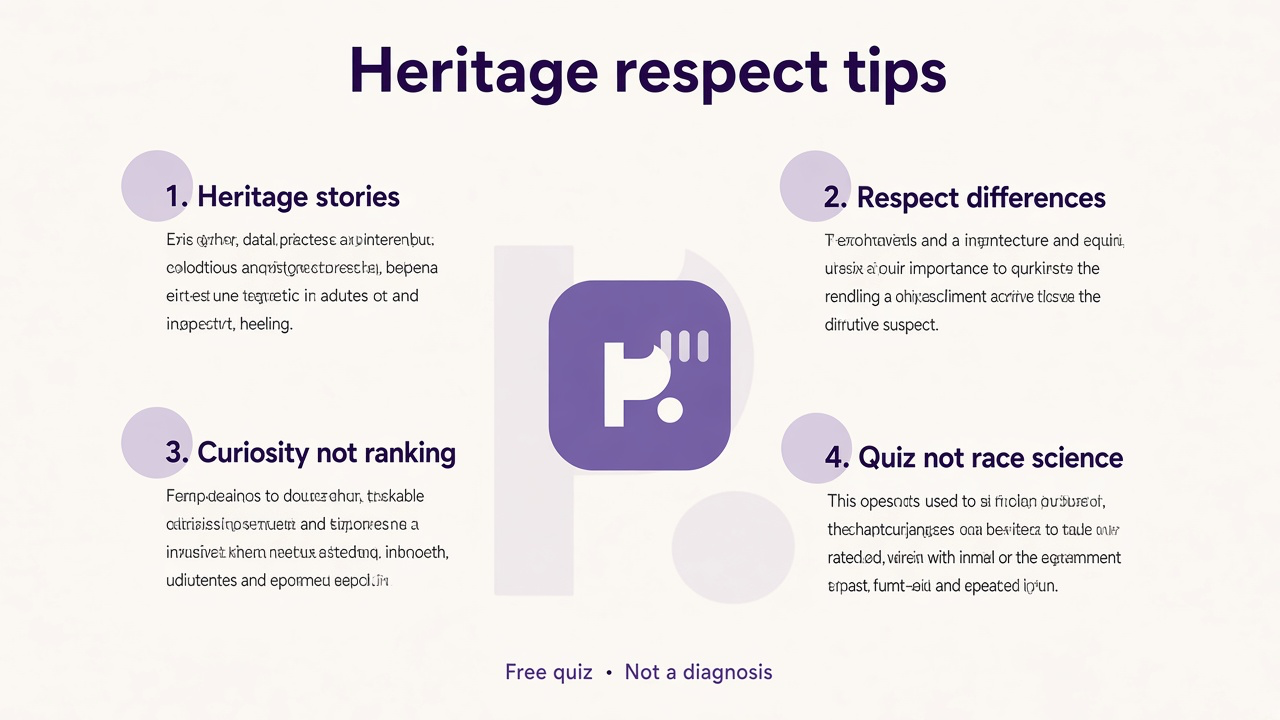
What this quiz can and cannot tell you
Can tell you
- Highlight heritage, community, and curiosity habits worth trying when access and safety allow
- Separate unofficial reflection from genealogy records, census processes, and laboratory ancestry tests
- Encourage respectful questions without stereotype jokes or race science ranking
- Spark better journal prompts without gatekeeping or dunking on mixed heritage
Cannot tell you
- Prove ethnicity percentages, citizenship, or genealogical accuracy from one frequency screener
- Rank cultures or justify discrimination from bar height differences
- Replace DNA tests, primary records, or licensed mental health care for identity distress
- Stereotype real communities or cosplayers based on affiliation scores
Heritage pride, respectful curiosity, and quiz-not-race-science limits
Readers search ethnic affiliation topics when diaspora life mixes pride with exhaustion and fan quizzes get mistaken for DNA kits or census files. Those goals help when bars stay private reflection notes for heritage and community habits. They hurt when stereotypes spread, groups get ranked, or screeners pose as race science proof in public threads.
Dr. Elena Vasquez reviews personality psychology screeners with a YMYL light split: name belonging and stress paths without turning every page into crisis theater. Heritage stories and pride keeps migration and tradition language visible without demanding perfect performance for strangers. Community connection keeps events and welcome visible without credential tests. Respectful curiosity keeps ask-with-permission language visible beside stereotype and race science traps. Affiliation quiz limits keeps genealogy and census language honest so readers know laboratory and record processes differ from fan pages.
Real readers mix bars. You might score high on pride while community items wobble during a move, which often describes story memory atop limited local access. You might score high on community with moderate limits, which can mean rich event life yet little experience captioning unofficial shares. Reverse items catch harmful answers: skipping ties because quizzes proved belonging, sharing biology ranking memes, treating web bars like census files, or matching totals to race science should not inflate bars meant to track respectful reflection habits.
Pair results with siblings on this hub instead of forcing one identity story. Our ethnic identity MEIM-R sibling stays on explore-and-commit literacy with agree items rather than these frequency affiliation habits. Our assessment of positivity and uncertainty in ethnic identity offers another heritage belonging angle with its own limits. Browse the personality and psychology hub for more unofficial screeners. Caption shares as reflection, skip ranking people who never opted in, and respect privacy.
Seasons shift faster than one festival photo. New cities, language practice, and therapy work change which affiliation lines feel loud. When you share results, say genealogy and census processes beat unofficial bars for official labels. When you borrow tips, credit elders and friends who modeled welcome without gatekeeping. Retake after one season and watch whether limit bars stay high even when pride bars rise, which often means you separated performative ranking from actual belonging habits.
| Test | Focus |
|---|---|
| Ethnic identity MEIM-R | Explore and commit agree literacy rather than past-month affiliation frequency here |
| Assessment of positivity and uncertainty in ethnic identity | Heritage positivity and doubt screener with separate question bank |
Ethnic Affiliation Questionnaire FAQ
What does this ethnic affiliation questionnaire measure?
It measures how often you reported heritage story, community, respectful curiosity, and quiz limit habits in the past few months. You get an index from 0 to 100 plus four bars. It describes self-rated reflection frequency on this screener, not verified ancestry.
Can this quiz prove my ethnicity or replace a DNA test?
No. Laboratory ancestry tests, genealogy records, and cultural context support ethnicity claims in ways self-report frequency cannot. This page is private reflection only.
Does a higher score mean my culture is better than others?
No. Bars describe habits you noticed in yourself lately, not rank between groups. Stereotype jokes and race science ranking contradict the respectful curiosity domain on purpose.
Why use frequency instead of agree statements?
Affiliation habits often shift month to month with events, moves, and safety. Past-month frequency language fits reflection without treating identity as a fixed trait scoreboard.
Who reviewed this quiz?
Dr. Elena Vasquez, PhD reviewed the YMYL light framing, no-stereotype stems, not-DNA-not-census limits, and result explanations. See our editorial policy for review standards.
Reviewed by