What the Estrogen Dominance Quiz measures
This quiz does not diagnose estrogen dominance, PCOS, endometriosis, thyroid disorders, perimenopause, infertility, or any other condition. It does not prescribe hormones, recommend supplement stacks, or tell you which progesterone cream or DIM product to buy. Only a licensed clinician using history, examination, and appropriate testing can evaluate hormone-related concerns safely. It measures how often you noticed hormone-literacy-linked habits grouped four ways: symptom and cycle tracking when logs, timing, and clinician-ready examples mattered versus influencer before-and-after comparisons or podcast verdicts; sleep and stress when recovery habits, stress naming, or extreme wellness traps appeared before blaming hormones alone; labs with clinician when DIY panel PDFs, reference-range panic, planned visits, or quiz-as-diagnosis myths showed up; and no supplement or self-Rx when influencer stacks, borrowed doses, interaction skips, or web permission fantasies appeared. You answer 22 how-often statements about the past three months, with reverse-worded items so one calmer week cannot hide frequent strain across other days. Your answers also feed a second chart on closeness and trust habits, because some people avoid medical visits or partner talks when vulnerability feels risky. The total becomes an index from 0 to 100 where higher means more frequent reported hormone-hype or help-avoidance patterns on this screener. Your responses suggest intensity and habits to discuss with support; they do not mean your body is broken or unworthy of care as a formal label.
Symptom and cycle tracking
How often logs and timing preceded verdicts versus influencer comparisons.
Sleep and stress
How often recovery and stress context appeared before hormone-only stories.
Labs with clinician
How often qualified interpretation beat DIY lab panic or visit avoidance.
No supplement or self-Rx
How often stacks, borrowed hormones, or quiz myths replaced medical guidance.
How it works
Answer 22 frequency items
Rate each statement from Never to Very often for the past three months. Tap Next after each answer.
Answers sort into four domains
Each answer feeds one of four hormone literacy groups, and every item also feeds a closeness and trust layer.
See your index and charts
You get a 0 to 100 index, a band, and two bar charts you can bring to a clinician.
Take the Estrogen Dominance Quiz
Answer 22 short statements to see your hormone literacy pattern index, four domain bars, and a closeness and trust chart.
What your result means
Your index is the average of all 22 answers, scaled from 0 to 100, with reverse-worded items flipped first. Higher means more frequent reported hormone-hype or help-avoidance patterns on this screener. Read symptom tracking together with sleep and clinician limit bars before the total, because stress and untreated cycle red flags often rise as a pair.
| Band | Index range | Typical reading |
|---|---|---|
| Lower reported hormone literacy strain | 0 to 35 | Fewer frequent hype, supplement, DIY lab, or help-avoidance spikes in the past three months. |
| Mixed reported hormone literacy strain | 36 to 65 | Some grounded stretches alongside symptom worry, supplement noise, or lab confusion on others. |
| Higher reported hormone literacy strain | 66 to 100 | Frequent hype, supplement, self-Rx, or help-avoidance strain; compassionate professional review may help. |
Tips at a glance
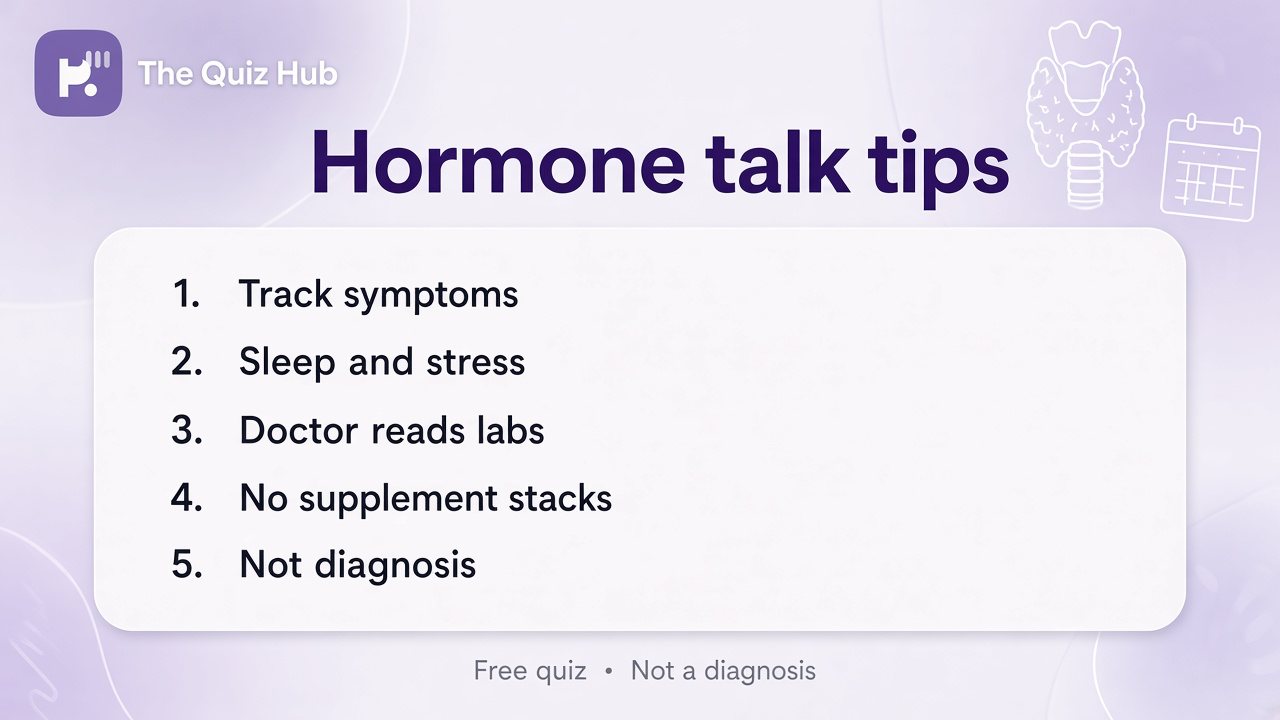
A quick takeaway graphic with topic tips (not your personal quiz scores). Start the quiz for your index, bands, and charts.
What this quiz can and cannot tell you
Can tell you
- Name symptom, sleep, lab-literacy, and supplement confusion patterns in plain language for intake
- Highlight when hormone worry bars run high enough to deserve compassion or medical conversation
- Support early talks with gynecologists, endocrinologists, or primary care clinicians
- Offer a baseline if you retake after one sleep routine or one outreach step
Cannot tell you
- Diagnose estrogen dominance, PCOS, thyroid disease, or perimenopause without evaluation
- Prescribe or dose hormones, progesterone creams, or supplement stacks from quiz totals
- Replace urgent care when severe pain, heavy bleeding, fainting, or chest pain appears
- Prove labs are normal or abnormal from one online total without clinician interpretation
Beyond the hashtag: symptoms, labs, and care limits for hormone worry
People search estrogen dominance quizzes when bloating, mood swings, fatigue, or cycle changes collide with wellness branding that promises a single villain hormone and a shopping-cart cure. Clinicians hear thyroid disease, PCOS, perimenopause, medication effects, sleep debt, and stress in the same stories as occasional rough cycles, yet online tools often skip compassion and jump to supplement stacks. This page scores frequency so your responses suggest where habits cluster, not whether you earn a diagnosis from a bar chart or a dose from a reel comment.
Symptom and cycle tracking is the first domain because patterns need dates before verdicts. Logging cycle day, sleep, stress, and symptom clusters helps intake conversations stay concrete. One difficult week rarely proves a lifetime label; comparing your body to influencer photos trains shame more than literacy. Bringing examples to clinicians beats posting quiz totals alone when YMYL pages stay honest: symptoms are real even when a catchy hormone name oversimplifies them.
Sleep and stress is the second domain because nervous systems and recovery shape how bodies feel before labs even arrive. Poor sleep and chronic stress can amplify irritability, cravings, and ache stories that hormone threads repackage as estrogen plots. Naming grief, caregiving, or workload alongside hormone questions is literacy, not denial, when qualified care still matters for persistent cycle changes.
Labs with clinician is the third domain because reference ranges without context mislead fast. Estradiol, progesterone, and related tests shift with cycle timing, age, medications, and lab methods. Clinicians interpret trends, repeat testing, and red flags; DIY panel PDFs from marketing sites are poor substitutes. Treating this screener as reflection instead of endocrine diagnosis keeps quizzes from skipping limits that protect people from guessing diseases from one number.
No supplement or self-Rx is the fourth domain because natural labels still carry interaction and dose risk. Progesterone creams, DIM stacks, and detox bundles promoted online rarely replace history, exam, and monitoring. Borrowing or adjusting prescription hormones without supervision can harm fertility plans, clot risk, mood, and thyroid balance. This quiz never tells you which product to take; it tracks whether hype or secrecy outran professional guidance. Our hormone quiz sibling emphasizes broader hormone literacy with its own unofficial limits. Our perimenopause quiz emphasizes transition reflection when label familiarity helps intake talks. Browse the mental health and clinical test hub for more non-diagnostic screeners.
Retake after three months of one concrete experiment, such as a symptom log, one sleep wind-down, or one clinician question about labs, and compare domain bars. Your responses suggest whether patterns are easing, not whether you deserve care. Licensed professionals turn examples into treatment plans this page cannot deliver. If distress feels unbearable tonight, call or text 988 in the US or use your local crisis line before debating results alone.
| Test | Focus |
|---|---|
| Hormone quiz | Broader hormone literacy rather than estrogen-dominance hype frequency domains |
| Perimenopause quiz | Transition reflection rather than supplement and DIY lab habits here |
| Mental health and clinical hub | More YMYL screeners with separate unofficial question banks |
Estrogen Dominance Quiz FAQ
What does this quiz measure?
It measures how often you noticed hormone-literacy-linked habits in four areas during the past three months: symptom and cycle tracking, sleep and stress, labs with a clinician, and no supplement or self-Rx limits. You get an index from 0 to 100 plus four domain bars. Your responses suggest self-reported frequency for reflection, not a clinical diagnosis.
Can this quiz tell me if I have estrogen dominance?
No. Estrogen dominance is not a standard standalone diagnosis clinicians use the way social media often presents it. This page does not interpret your labs or hormones. Only a licensed clinician who knows your history can evaluate cycle symptoms, order appropriate testing, and explain results in context.
Should I buy supplements based on my score?
No. This quiz does not recommend DIM, progesterone creams, detox bundles, or any other product. Supplements can interact with medications and conditions. Ask a clinician or pharmacist before starting new hormone-related products.
Why are some statements worded as logs, sleep, or clinician visits?
Reverse-worded items catch overconfidence. Agreeing that you tracked symptoms with dates, noticed sleep helping somewhat, asked clinicians about labs, brought labs to visits, named stress contributors, or kept screeners separate from diagnoses should not inflate an index meant to track hype and help-avoidance strain.
When should I seek urgent care or call 988?
Seek urgent medical care for severe pelvic pain, heavy bleeding, fainting, pregnancy complications, or chest pain, not quiz scores alone. Call or text 988 (US) if hopelessness, self-harm thoughts, or emotional crisis feels immediate. Schedule routine care with a clinician when cycle or hormone symptoms persist or worry you.
Who reviewed this quiz?
Dr. Elena Vasquez, PhD reviewed the YMYL framing, crisis resources, clinician-not-diagnosis limits, and result explanations. See our editorial policy for review standards.
Reviewed by