What the Erectile Dysfunction Quiz measures
This quiz does not diagnose erectile dysfunction, heart disease, diabetes, low testosterone, depression, or any other condition. It does not prescribe medications, recommend specific ED drug brands or doses, or tell you to mix heart medicines with online pills. Only a licensed clinician using history, examination, and appropriate testing can diagnose and treat sexual dysfunction safely. It measures how often you noticed erectile-difficulty-linked habits grouped four ways: stress and sleep when anxiety, fatigue, performance worry, alcohol, or calm routines mattered; cardio and heart link when chest or breath red flags, blood pressure or diabetes follow-ups, blood-flow literacy, smoking, and forum workout traps appeared; meds literacy without Rx when borrowed pills, supplement hype, skipped pharmacist questions, clinician checks before mixing drugs, influencer testosterone traps, or quiz-as-diagnosis myths showed up; and clinician and partner limits when partner talks without blame, planned clinician visits, rejection of web prescription verdicts, or shame-driven care avoidance appeared. You answer 22 how-often statements about the past month, with reverse-worded items so one calmer week cannot hide frequent strain across other days. Your answers also feed a second chart on closeness and trust habits, because some people avoid intimacy talks or medical visits when vulnerability feels risky. The total becomes an index from 0 to 100 where higher means more frequent reported erectile-difficulty-linked patterns on this screener. Your responses suggest intensity and habits to discuss with support; they do not mean you are broken or unworthy of care as a formal label.
Stress and sleep
How often stress, sleep loss, performance spirals, or alcohol steered difficulty versus calm routines.
Cardio and heart link
How often cardiovascular literacy, red flags, follow-ups, or smoking overlapped with concern.
Meds literacy, no Rx
How often side-effect questions, borrowed pills, or supplement hype appeared without clinician guidance.
Clinician and partner limits
How often you kept screeners separate from diagnoses, partners, and qualified medical care.
How it works
Answer 22 frequency items
Rate each statement from Never to Very often for the past month. Tap Next after each answer.
Answers sort into four domains
Each answer feeds one of four erectile difficulty groups, and every item also feeds a closeness and trust layer.
See your index and charts
You get a 0 to 100 index, a band, and two bar charts you can bring to a clinician or couples counselor.
Take the Erectile Dysfunction Quiz
Answer 22 short statements to see your erectile difficulty pattern index, four domain bars, and a closeness and trust chart.
What your result means
Your index is the average of all 22 answers, scaled from 0 to 100, with reverse-worded items flipped first. Higher means more frequent reported erectile-difficulty-linked patterns on this screener. Read stress and sleep together with cardio and clinician limit bars before the total, because shame and untreated cardiovascular risk often rise as a pair.
| Band | Index range | Typical reading |
|---|---|---|
| Lower reported erectile difficulty strain | 0 to 35 | Fewer frequent stress, cardiovascular worry, medication, or help-avoidance spikes in the past month. |
| Mixed reported erectile difficulty strain | 36 to 65 | Some manageable stretches alongside stress, sleep, cardio worry, or medication confusion on others. |
| Higher reported erectile difficulty strain | 66 to 100 | Frequent stress, cardiovascular worry, medication risk, or help-avoidance strain; compassionate professional review may help. |
Tips at a glance
A quick takeaway graphic with topic tips (not your personal quiz scores). Start the quiz for your index, bands, and charts.
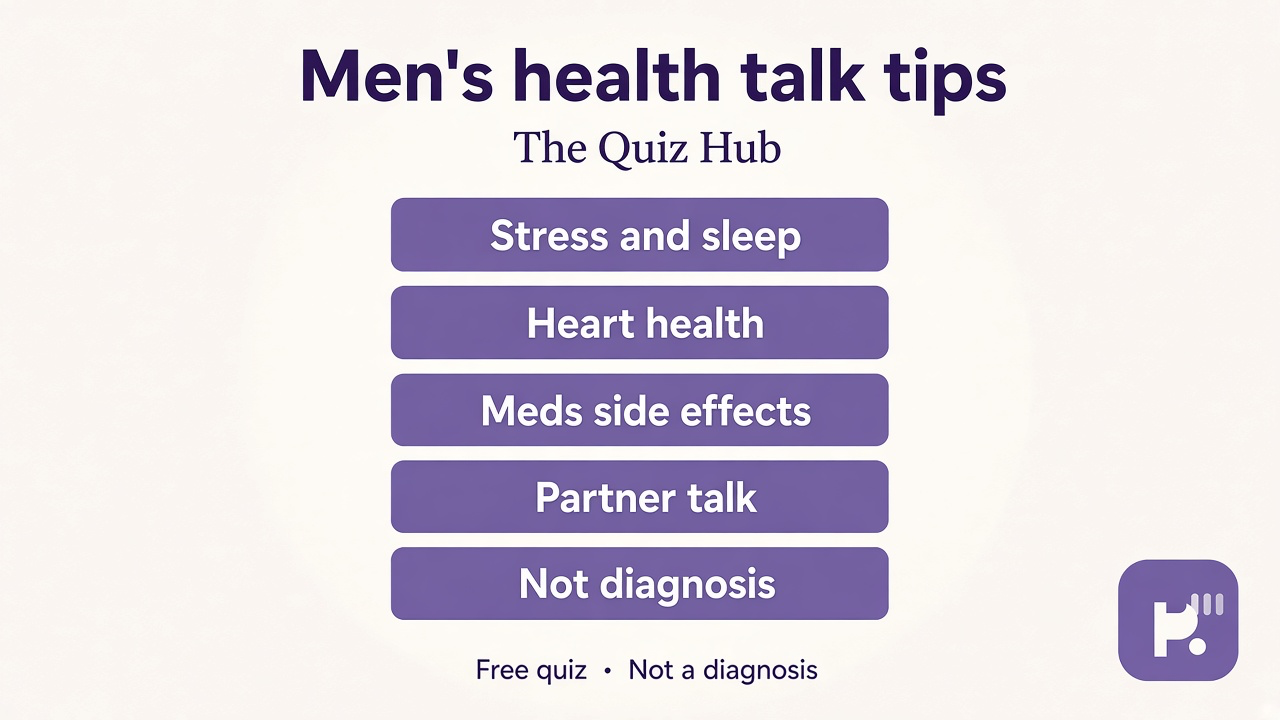
What this quiz can and cannot tell you
Can tell you
- Name stress, sleep, cardiovascular, and medication confusion patterns in plain language for intake
- Highlight when erectile difficulty bars run high enough to deserve compassion or medical conversation
- Support early talks with partners, urologists, primary care clinicians, or cardiologists
- Offer a baseline if you retake after one sleep routine or one outreach step
Cannot tell you
- Diagnose erectile dysfunction, heart disease, or hormone disorders without evaluation
- Prescribe or dose ED medications, testosterone, or heart drugs from quiz totals
- Replace urgent care when chest pain, fainting, or severe breathlessness appears
- Prove you lack masculinity from one score when trauma, sleep, and medicines matter
Beyond shame: stress, heart health, and care limits for erection difficulty
People search erectile dysfunction quizzes when bedrooms feel like exam rooms and shame says you should fix it alone with a pill ad. Clinicians hear stress, sleep debt, blood pressure, diabetes, antidepressants, alcohol, and relationship pressure in the same stories as occasional difficult nights, yet online tools often skip compassion and jump to checkout pages. This page scores frequency so your responses suggest where habits cluster, not whether you earn a diagnosis from a bar chart or a dose from a blog comment.
Stress and sleep is the first domain because nervous systems matter before branding. Fight-or-flight from deadlines, grief, or conflict can narrow arousal even when desire is real. Performance spirals teach your body to brace for the next attempt. Heavy alcohol may relax mood briefly while blood flow suffers. Pausing for sleep, breath, or a honest partner check-in is literacy, not weakness, when YMYL pages stay honest: not every difficult night is heart disease, and not every difficult night is only in your head.
Cardio and heart link is the second domain because shared blood flow connects erection health and cardiovascular risk in ways primary care and urology visits often discuss together. Chest pain, jaw pain, or severe breathlessness during exertion deserve urgent evaluation, not forum reassurance alone. Ignoring blood pressure or diabetes follow-ups because embarrassment feels louder than data can delay care. Young age does not grant invincibility; clinicians still ask about meds, sleep, and habits. Smoking and unproven extreme workouts are poor substitutes for qualified heart advice.
Meds literacy without Rx is the third domain because prescription and over-the-counter stacks carry real interaction risk. Borrowed ED pills from friends skip allergy, heart medicine, and dose checks pharmacists and clinicians provide. Influencer supplement funnels rarely replace history and exam. Asking whether a new antidepressant, blood pressure drug, or hormone therapy affects erections is a normal clinician question, not a confession of failure. This quiz never tells you which drug to take; it tracks whether hype or secrecy outran professional guidance.
Clinician and partner limits is the fourth domain, patterned after teaching screeners that separate literacy from credentials. Talking with a partner about pace and shame without blame often lowers pressure faster than silent guessing. Planning a visit when weeks of difficulty worry you is care, not defeat. Equating high bars with prescription doses from this website, or avoiding clinicians because shame feels louder than cardiovascular risk, should not inflate a habit index meant to track real strain. Treating screeners as mirrors, and reaching qualified care when red flags appear, keeps sexual health quizzes from skipping limits. Our sexual health quiz sibling emphasizes broader intimacy literacy with its own unofficial limits. Our libido quiz emphasizes desire and drive reflection when label familiarity helps intake talks. Browse the sexuality and LGBTQ+ test hub for more non-diagnostic screeners.
Retake after one month of one concrete experiment, such as one sleep wind-down, one clinician question about meds, or one honest partner conversation, and compare domain bars. Your responses suggest whether patterns are easing, not whether you deserve care. Licensed professionals turn examples into treatment plans this page cannot deliver. If distress feels unbearable tonight, call or text 988 in the US or use your local crisis line before debating results alone.
| Test | Focus |
|---|---|
| Sexual health quiz | Broader sexual health literacy rather than erectile difficulty frequency domains |
| Libido quiz | Desire and drive reflection rather than erection maintenance and cardio links |
| Sexuality and LGBTQ+ hub | More identity and intimacy screeners with separate unofficial question banks |
Erectile Dysfunction Quiz FAQ
What does this quiz measure?
It measures how often you noticed erectile-difficulty-linked habits in four areas during the past month: stress and sleep, cardio and heart link, meds literacy without prescription advice, and clinician and partner limits. You get an index from 0 to 100 plus four domain bars. Your responses suggest self-reported frequency for reflection, not a clinical diagnosis.
Can this quiz tell me which ED medication to take?
No. This page does not prescribe medications, recommend brands or doses, or tell you to mix heart drugs with online pills. Only a licensed clinician who knows your history can decide whether medication, therapy, lifestyle changes, or further testing fit safely.
Is erection difficulty always related to heart disease?
Not always. Stress, sleep, medications, mood, and relationship factors matter too. Shared blood flow links erection health and cardiovascular risk often enough that clinicians may ask about both. Your responses suggest habits to discuss; they do not diagnose heart disease from one online total.
Why are some statements worded as clinician visits or partner talks?
Reverse-worded items catch overconfidence. Agreeing that you slept enough on some days, asked clinicians before mixing drugs, talked with partners without blame, planned visits when worried, or kept screeners separate from diagnoses should not inflate an index meant to track strain.
When should I seek urgent care or call 988?
Seek urgent medical care for chest pain, fainting, severe breathlessness, or stroke symptoms during exertion, not quiz scores alone. Call or text 988 (US) if hopelessness, self-harm thoughts, or emotional crisis feels immediate. Schedule routine care with a clinician when weeks of erection difficulty worry you.
Who reviewed this quiz?
Dr. Elena Vasquez, PhD reviewed the YMYL framing, crisis resources, clinician-not-diagnosis limits, and result explanations. See our editorial policy for review standards.
Reviewed by