What Epi Symptoms Quiz measures
This quiz does not diagnose epilepsy, read EEGs, or prescribe medicines. It measures how often you noticed patterns grouped four ways: warning sign awareness about staring spells, jerks, post-event fog, sensory prodrome, and myths that only dramatic convulsions count; timing and event diary about clocks, witness questions, sleep and medicine notes, and sharing logs; safety and space planning about bathing alone, driving, sleep deprivation, fall hazards, and housemate scripts; and emergency and neurology help about 911 judgment, referral delays, minimizing events, and refusing to use quiz scores as urgent care substitutes. You rate 22 items from never to very often, with reverse-worded traps so denial cannot hide every bar. Your answers also feed a second chart on closeness and trust habits, because health secrecy sometimes chases belonging over honest help. The total becomes an index from 0 to 100 where higher means more frequent reported strain patterns on this screener, not proof of a specific seizure type.
Warning sign awareness
Spells, jerks, post-event fog, and prodrome without convulsion-only myths.
Timing and event diary
Clocks, witnesses, sleep and medicine notes for clinicians.
Safety and space planning
Bathing, driving, sleep, falls, and housemate scripts.
Emergency and neurology help
911 when red flags appear; referrals without quiz substitutes.
How it works
Answer 22 frequency items
Rate each statement from Never to Very often. Tap Next after each answer.
Answers sort into four domains
Each answer feeds one of four symptom awareness groups, and every item also feeds a closeness and trust layer.
See your index and charts
You get a 0 to 100 index, a band, four domain bars, and a second chart for intimacy habits.
Take the Epi Symptoms Quiz
Answer 22 short statements to see your symptom awareness strain index, four domain bars, and a closeness and trust chart.
What your result means
Your index is the average of all 22 answers, scaled from 0 to 100, with reverse-worded items flipped first. Higher means more frequent reported strain patterns on this screener. Read emergency and neurology bars together before you treat a moderate total as permission to skip workup. Red-flag events need emergency services regardless of score.
| Band | Index range | Typical reading |
|---|---|---|
| Lower symptom strain patterns | 0 to 35 | Fewer frequent worry, diary, safety, or help-delay patterns on this screener. |
| Mixed symptom awareness | 36 to 65 | Some worry or safety gaps with stronger diary or help habits in other domains. |
| Higher symptom strain patterns | 66 to 100 | Frequent worry, diary loss, safety gaps, or delayed emergency or neurology help. |
Tips at a glance
A quick takeaway graphic with topic tips (not your personal quiz scores). Start the quiz for your index, bands, and charts.
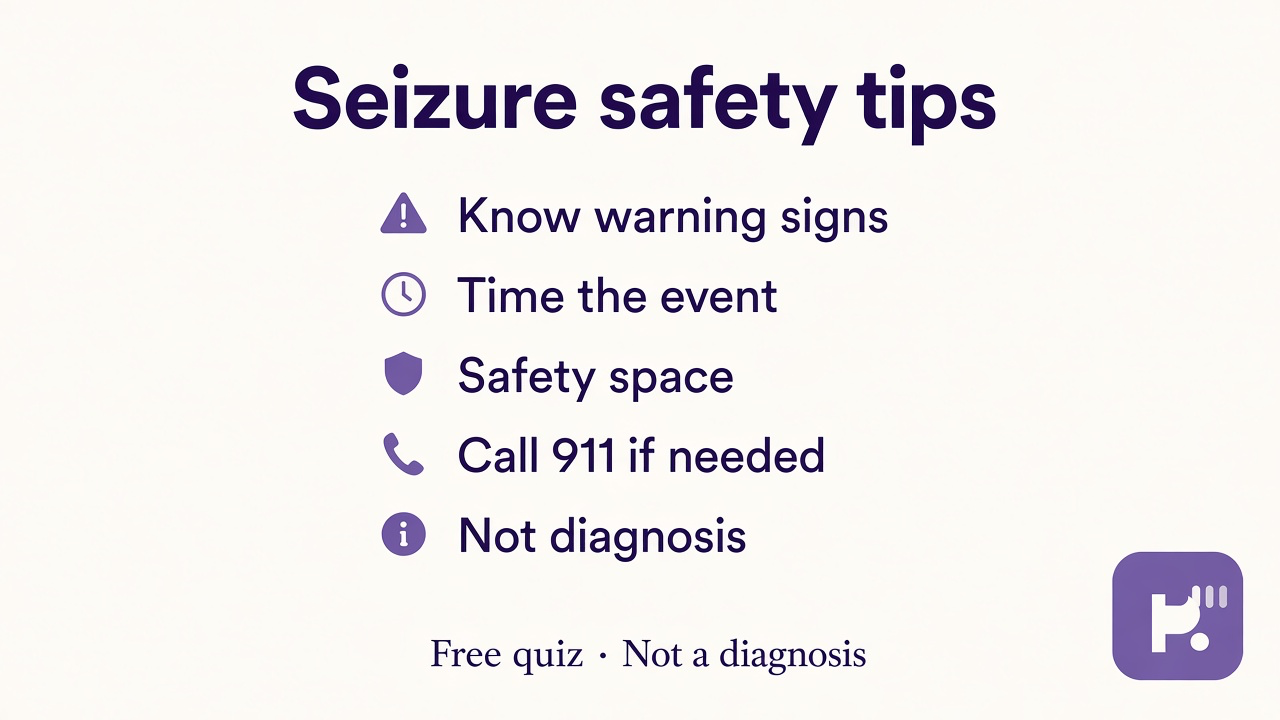
What this quiz can and cannot tell you
Can tell you
- Organize habits into warning signs, diary, safety, and help-seeking buckets
- Give you language for neurologist or primary care intake
- Highlight when missed sleep or safety gaps may raise injury risk
- Offer a baseline if you retake after one safety or diary change
Cannot tell you
- Diagnose epilepsy, psychogenic events, or syncope without evaluation
- Replace EEG, imaging, or exam findings ordered by clinicians
- Tell you whether driving is safe in your jurisdiction
- Prove you should skip emergency care when red flags appear
Seizure symptom literacy: notice, time, stay safer, seek care
Search traffic around seizure symptoms usually wants two things: know whether a spell sounds worrisome, and decide whether to wait or call for help. Lists help orientation, but they rarely ask how often your month included lost timing details, skipped safety plans, or delayed neurology talks. Frequency and safety habits matter because two people can both feel scared while one keeps witness notes and the other minimizes events to avoid labels.
Warning sign awareness sits in one lane because spells vary. Staring episodes, brief jerks, confusion, sensory prodrome, and post-event fatigue can matter even when a dramatic convulsion never appeared on camera. This screener does not rank which spell type you had; it tracks how often patterns made you wonder and whether dismissive myths blocked follow-up.
Timing and diary items ask for clocks, triggers, sleep, medicines, and witness words. Clinicians need duration and sequence more than forum guesses. Safety planning covers bathing alone, driving, sleep deprivation, fall hazards, and teaching housemates when to call emergency services. Pulling back from planning because you lack a formal label is common and can raise injury risk while workup waits.
Emergency and neurology help focuses on 911 judgment and referral delays. Prolonged seizures, repeated events without recovery, breathing trouble, serious injury, and pregnancy are emergency themes in public health education, not trivia debates. Our did I have a seizure quiz sibling emphasizes spell worry reflection when you want a different question frame. Browse the mental health and clinical test hub for more non-diagnostic screeners. Bring domain bars to intake, not only totals.
Higher scores mean more frequent self-reported strain patterns on this tool, not a diagnosis. Pair changes with neurology guidance when spells continue. Retake after one month of diary and safety edits and compare bars. If mood collapses while you wait on appointments, call or text 988 (US) or your local crisis line; seizure worry and mental health support can overlap without replacing emergency rules for active spells.
| Test | Focus |
|---|---|
| Did I have a seizure quiz | Spell worry reflection rather than diary, safety, and 911 habit frequency split |
| Mental health and clinical hub | Broader YMYL screeners when you want non-diagnostic clinical reflection lanes |
Epi Symptoms Quiz FAQ
What does Epi Symptoms Quiz measure?
It measures how often you noticed warning signs, diary gaps, safety planning slips, and delayed emergency or neurology help in the past month. You get an index from 0 to 100 plus four bars. It reports self-reported frequency, not a diagnosis of epilepsy.
Can this quiz diagnose epilepsy?
No. Only a licensed clinician can evaluate seizures after history, exam, and tests such as EEG when indicated. Use this tool to organize habits and questions for intake.
When should I call 911?
Call emergency services for seizures lasting more than five minutes, repeated seizures without recovery, trouble breathing, serious injury, or pregnancy complications. Local protocols may add other red flags; follow dispatcher instructions.
Why include diary and safety items?
Clinicians need timing, witnesses, and context. Safety habits reduce injury risk while workup proceeds. Those lanes stay separate from diagnosis language on purpose.
Who reviewed this quiz?
Dr. Elena Vasquez, PhD reviewed the YMYL framing, medical limits, emergency guidance, and result explanations. See our editorial policy for review standards.
Reviewed by