What the Enemy Quiz measures
This quiz does not diagnose personality disorders, rank your morality, or generate a list of people to harass. It measures how much you agree with playful rivalry literacy grouped four ways: fandom rival not real foe about keeping memes in fiction and fandom lanes, avoiding real coworker or classmate villain casting, and refusing insult permission fantasies; playful banter limits about reading tone, welcoming new chat members gently, choosing private versus public roasts, and rejecting pile-on momentum myths; consent and opt-out about asking before tags, stopping when someone says enough, and refusing silence-as-consent traps; and block not cruelty about muting harassment, reporting sustained slurs or threats when tools exist, rejecting bigotry as banter, and refusing real-name enemy lists. You rate 22 statements from strongly disagree to strongly agree, with reverse-worded myths so edgy agree-everything sessions cannot inflate every bar. Your answers also feed a second chart on closeness and trust habits, because rivalry jokes sometimes mask fear of honest conflict. The total becomes an index from 0 to 100 where higher means more reported boundary literacy on this screener, not proof you should moderate strangers or dunk on plain-text friends.
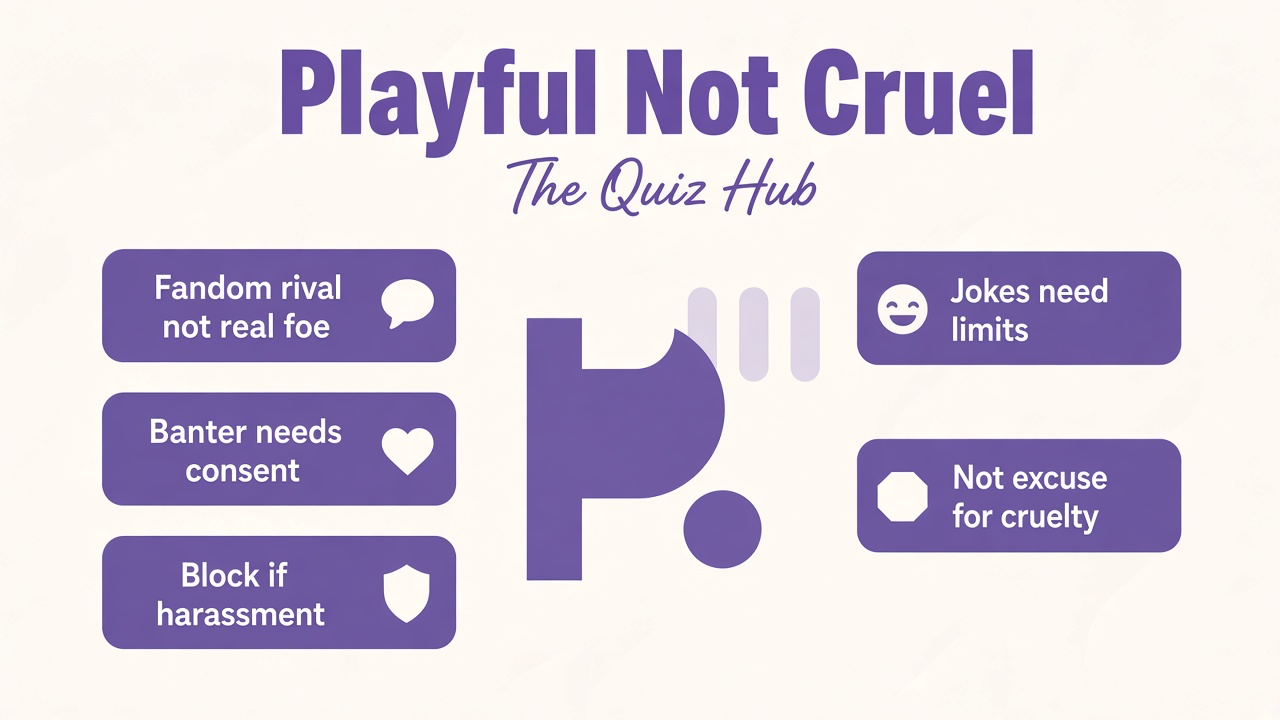
Fandom rival not real foe
Fiction lanes, no real hit lists, and opting out when friends say stop.
Playful banter limits
Tone, timing, audience, and apologies when bits overshoot.
Consent and opt-out
Ask before tags, stop on no, and read rough weeks.
Block not cruelty
Mute harassment, report threats, and reject bigotry as meme cover.
How it works
Answer 22 agreement items
Rate each statement from Strongly disagree to Strongly agree. Tap Next after each answer.
Answers sort into four domains
Each answer feeds one of four rivalry boundary groups, and every item also feeds a closeness and trust layer.
See your index and charts
You get a 0 to 100 index, a band, and two bar charts you can share as couch trivia with consent.
Take the Enemy Quiz
Answer 22 short statements to see your playful rivalry literacy index, four domain bars, and a closeness and trust chart.
What your result means
Your index is the average of all 22 answers, scaled from 0 to 100, with reverse-worded items flipped first. Read consent with block-not-cruelty bars before you treat a high fandom score as permission to tag real people. Meme literacy is for fun; harassment still ends with block, report, or walk away.
| Band | Index range | Typical reading |
|---|---|---|
| Building rivalry literacy | 0 to 35 | Fewer agreed facts on fandom versus real targets, banter limits, consent, or anti-harassment habits on this screener. |
| Mixed rivalry literacy | 36 to 65 | Solid boundaries in some domains with pile-on myths, silence-as-consent traps, or platform ban fantasies in others. |
| Strong rivalry literacy | 66 to 100 | Frequent agreement with fandom boundaries, banter limits, consent, and anti-harassment habits; still not moral licensing. |
Tips at a glance
A quick takeaway graphic with topic tips (not your personal quiz scores). Start the quiz for your index, bands, and charts.
What this quiz can and cannot tell you
Can tell you
- Spark reflection on when enemy jokes stay fictional versus hurt real people
- Highlight consent and opt-out habits worth practicing in group chats
- Encourage muting and reporting instead of feeding public pile-ons
- Separate playful fandom rivalry from bigotry or doxxing dressed as memes
Cannot tell you
- Authorize bullying, dogpiling, or slurs because bars looked high
- Replace therapy, mediation, or school conduct processes for real conflicts
- Prove you are a better person than friends with lower indices
- Force platforms to ban accounts on your quiz score alone
Enemy memes without real targets
People search enemy quizzes when a viral format asks who your nemesis is and group chats start tagging real names. The gap online is not lack of jokes; it is thin guidance on when rivalry stays fictional, when consent matters, and when block beats another public thread. This page scores literacy on those habits, not a roster of people to mock.
Fandom rival not real foe keeps sports wars, ship debates, and villain aesthetics in fiction lanes. Playful banter limits keep tone, timing, and audience visible before a roast becomes a pile-on. Consent and opt-out keep ask-before-tag and stop-on-no visible beside silence-means-yes traps. Block not cruelty keeps mute, report, and anti-bigotry lines visible beside quiz-score ban fantasies.
Reverse items catch edgy over-agreement: insult permission until someone logs off, louder pile-ons as righteousness, silence as daily consent, or high indices commanding platform bans. Those myths should not inflate bars meant to track kinder meme habits.
Pair results with lighter fun on the hub instead of forcing one bit everywhere. Browse the fun and novelty test hub for quizzes that skip real-name targets. If a frenemy quiz sibling exists on your syllabus of memes, treat it as a separate lane with its own bank, not permission to harass. Share captions as couch trivia and skip dunking people who never opted in.
Retake after you practice one consent check or one mute on a harassing account. Boundary literacy grows when fiction stays fiction and apologies land faster than it was just a joke forever.
| Test | Focus |
|---|---|
| Fun and novelty hub | More playful quizzes that avoid real-name enemy lists and bullying themes |
| Frenemy quiz | Separate frenemy meme lane with its own question bank, not a harassment pass |
Enemy Quiz FAQ
What does this quiz measure?
It measures how much you agree with playful rivalry boundary literacy across fandom lanes, banter limits, consent, and anti-harassment habits. You get an index from 0 to 100 and four bars. It is couch trivia, not a personality diagnosis or moral report card.
Does a high score mean I can roast anyone?
No. Strong bars describe habits you reported here. Real people still deserve consent, context, and opt-out. High scores are not licenses to dogpile.
Is this quiz encouraging enemies?
It discusses viral enemy memes to teach boundaries. Fiction rivals and consensual banter are fine; real harassment, slurs, and doxxing are not.
Why are some statements worded as myths?
Reverse-worded myths catch overconfidence. Agreeing that enemy labels grant insult permission, that silence means yes, or that quiz scores command platform bans should not inflate your literacy index.
Who reviewed this quiz?
Dr. James Whitfield, PhD reviewed the playful framing, boundary literacy limits, and result explanations. See our editorial policy for review standards.
Reviewed by