
What RESS measures
This quiz does not certify schema therapy work, diagnose personality disorders, or prove your partner is safe or unsafe without context and professional screening. It measures how much you agree with statements in four groups inspired by widely discussed relationship schema language: abandonment worry about delayed texts, solo time panic, tone catastrophizing, and leave-me alarms; mistrust loops about scanning social cues, loyalty tests, assuming kindness is manipulation, and hypervigilance after past harm; deprivation stories about expecting unmet needs, resenting without asking, hoarding affection, and overgiving to earn care; and patterns not blame about treating RESS as an unofficial mirror, sharing with therapists instead of public verdicts, refusing quiz-proof abuse claims, and inviting repair when safe. You rate 22 statements from strongly disagree to strongly agree, with reverse-worded myths so autopilot responding cannot inflate every bar. Your answers also feed a second chart on closeness and trust habits, because schema talk sometimes overlaps with how much you fear judgment when vulnerability meets performance pressure. The total becomes an index from 0 to 100 where higher means more reported endorsement of these relationship schema habit patterns on this unofficial screener, not proof you should control or leave a partner from one score.
Abandonment worry
Leave-me alarms, delayed-text stories, and panic when partners need space.
Mistrust loops
Scanning, testing, and hypervigilance after betrayal without new facts.
Deprivation stories
Never-enough-care expectations, silent resentment, and overgiving to earn love.
Patterns not blame
Curiosity, direct asks, unofficial framing, and no partner verdicts from bars.
How it works
Answer 22 agreement items
Rate each statement from Strongly disagree to Strongly agree. Tap Next after each answer.
Answers sort into four domains
Each answer feeds one of four relationship schema groups, and every item also feeds a closeness and trust layer.
See your index and charts
You get a 0 to 100 index, a band, and two bar charts you can compare with a partner who processes attachment differently.
Take the Emotional Schemas Scale in Relationships (RESS)
Answer 22 short statements to see your RESS schema index, four domain bars, and a closeness and trust chart.
What your result means
Your index is the average of all 22 answers, scaled from 0 to 100, with reverse-worded items flipped first. Read patterns-not-blame together with mistrust and abandonment bars before you treat the total as a partner verdict, destiny, or a reason to rank someone in group chats.
| Band | Index range | Typical reading |
|---|---|---|
| Quieter schema pattern endorsement | 0 to 35 | Less agreement with abandonment, mistrust, deprivation, or blame-trap items on this screener. |
| Mixed schema pattern endorsement | 36 to 65 | Some domains show strong worry or deprivation stories; others show curiosity, limits, or calmer trust. |
| Stronger schema pattern endorsement | 66 to 100 | Frequent agreement with worry, mistrust, or deprivation items; pair with patterns-not-blame bars. |
Tips at a glance
A quick takeaway graphic with topic tips (not your personal quiz scores). Start the quiz for your index, bands, and charts.
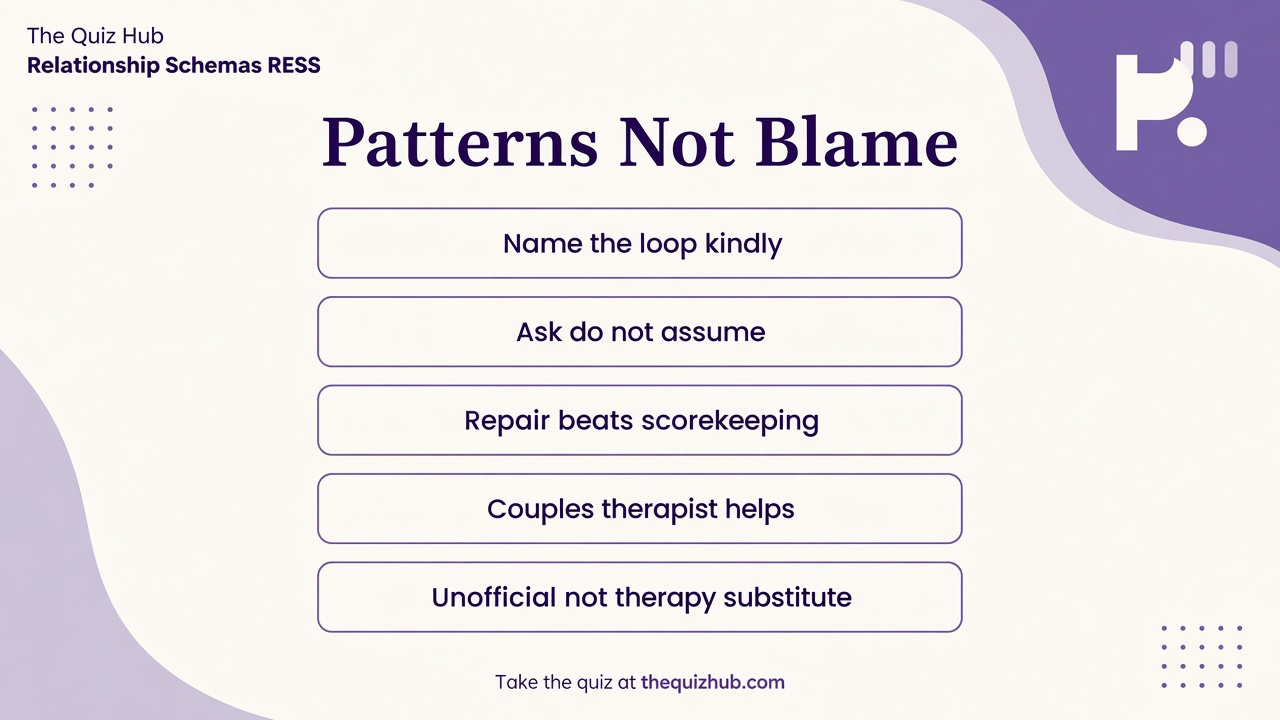
What this quiz can and cannot tell you
Can tell you
- Name whether you lean toward abandonment, mistrust, deprivation, or curiosity habits in the current season
- Separate pattern language from myths about mind-reading or quiz-proof breakup orders
- Spark honest therapist or friend conversations about asks, repair, and surveillance habits
- Highlight limit myths you might unlearn before you type a partner from one score
Cannot tell you
- Replace schema therapy, couples counseling, safety planning, or clinical evaluation
- Prove your partner is abusive or perfect without context, consent, and professional screening
- Replace direct conversation, cultural context, or crisis services when fear disrupts safety
- Override respect for a partner who shares less because your schema bar looks higher today
Relationship schemas, pattern language, and labels that are not partner verdicts
Search traffic around emotional schemas in relationships often wants a verdict: am I anxious, are they toxic, or finally validated. Those questions help when they spark curiosity about story habits without forcing everyone into public blame threads. They hurt when context disappears and rank replaces listening, or when surveillance gets dressed up as loyalty. Pattern language works best when curiosity and consent stay in the same sentence.
Dr. James Whitfield reviews relationship reflection tools with a respect-first lens. Abandonment worry tracks leave-me alarms without shaming people who need reassurance sometimes. Mistrust loops tracks scanning and testing without treating every hypervigilant season as proof a current partner cheated. Deprivation stories tracks unmet-needs narratives without calling someone too much for having needs. Patterns not blame tracks direct asks and unofficial framing so schema talk does not slide into web verdicts, stalking, or dunking partners in group chats.
Real relationship schema habits mix bars. You might score high on abandonment while strong on patterns-not-blame, which often describes people with painful history who still refuse to post scores as public trials. You might score high on deprivation while low on public sharing, which is a cue for one therapist conversation, not shame. Reverse items catch myths: solo time always means secret dating, vigilance is the only honest strategy, mind-reading should replace asking, or web scores prove abuse without safety screening should not inflate bars meant to track habits.
Pair results with siblings on this hub instead of forcing one attachment story. Our attachment style quiz spreads bonding language across broader secure-anxious-avoidant habits when you want stems beyond schema framing here. The fear of abandonment quiz explores leave-me alarms when worry dominates dating seasons. Browse the relationships and dating hub for more low-stakes screeners. Share scores as conversation starters with therapists or trusted friends, not as orders to surveil a partner.
Habits change with sleep, grief, apps, and workload. An abandonment bar might spike after travel while mistrust holds steady from old therapy homework. Retake after an honest couples or solo session and notice whether patterns-not-blame stays high even when worry bars rise; that often marks healthier relationship hygiene. Patterns are data, not destiny boxes.
| Test | Focus |
|---|---|
| Attachment style quiz | Broader secure, anxious, and avoidant bonding habits beyond schema wording on this page |
| Fear of abandonment quiz | Leave-me worry when dating anxiety dominates without full schema framing |
| Relationships and dating hub | More reflection screeners when you want dating habits without clinical labels |
Emotional Schemas Scale in Relationships (RESS) FAQ
What does RESS measure?
It measures how much you agree with statements about abandonment worry, mistrust loops, deprivation stories, and patterns-not-blame limits. You get an index from 0 to 100 plus four bars. It describes self-reported relationship schema habits on this unofficial screener, not Young Schema Therapy certification or a fixed partner label.
Is this the same as Young Schema Therapy or a clinician schema inventory?
No. Schema therapy uses trained protocols and individualized formulation. RESS here is an everyday pattern mirror with its own item bank for reflection only, not partner diagnosis and not a licensed evaluation.
Does a high score mean my partner is toxic or cheating?
No. High scores mean you agreed with many schema-linked statements here. Partner character depends on behavior, consent, safety, and context, not one web bar. Pair bars with patterns-not-blame, and seek professional help if fear or control disrupts safety.
Why include patterns-not-blame items beside worry and mistrust?
Schema searches often skip consent and context. Limit bars keep pattern language separate from surveillance, public verdicts, and treating unofficial screeners like abuse proof.
Who reviewed this quiz?
Dr. James Whitfield reviewed the respectful framing, reverse items on mind-reading myths, and unofficial-not-schema-therapy limits. See our editorial policy for review standards.
Reviewed by
