What the Emotional Detachment Test measures
This quiz does not diagnose depression, post-traumatic stress disorder, alexithymia, dissociation disorders, or any other condition. Only a licensed clinician using interview methods, safety screening, and history can do that. It measures how often you noticed numbness- and distance-linked habits grouped four ways: felt numbness when emotions felt muted, blank, or hard to name; connection distance when warmth, presence, or repair pulled back because closeness felt risky or empty; trauma-aware shutdown when triggers or overload pulled distance while stoic posts or not-caring jokes sometimes hid pain; and study not diagnosis when you treat screeners as reflection, seek clinicians when numbness disrupts life, and reject myths that quiz bars replace evaluation or virtue signaling replaces care. You answer 22 how-often statements about the past two weeks, with reverse-worded items so one clearer day cannot hide frequent strain across other days. Your responses also feed a second chart on closeness and trust habits, because some people go distant when vulnerability feels unsafe. The total becomes an index from 0 to 100 where higher means more frequent reported detachment-linked patterns on this screener. Your responses suggest intensity and habits to discuss with support; they do not mean you are emotionally dead or unlovable as a formal label.
Felt numbness
How often emotions felt flat, distant, or hard to locate in your body and words.
Connection distance
How often closeness, comfort, celebration, or repair pulled back to stay safe.
Trauma-aware shutdown
How often triggers pulled shutdown and whether numbness was protection versus a badge.
Study not diagnosis
How often you keep screeners separate from clinical labels, care, and therapy.
How it works
Answer 22 frequency items
Rate each statement from Never to Very often for the past two weeks. Tap Next after each answer.
Answers sort into four domains
Each answer feeds one of four detachment-pattern groups, and every item also feeds a closeness and trust layer.
See your index and charts
You get a 0 to 100 index, a band, and two bar charts you can bring to a clinician.
Take the Emotional Detachment Test
Answer 22 short statements to see your emotional detachment pattern index, four domain bars, and a closeness and trust chart.
What your result means
Your index is the average of all 22 answers, scaled from 0 to 100, with reverse-worded items flipped first. Higher means more frequent reported numbness- and distance-linked patterns on this screener. Read felt numbness and connection distance bars together before the total, because flatness and pulled-back closeness often rise as a pair.
| Band | Index range | Typical reading |
|---|---|---|
| Lower reported detachment strain | 0 to 35 | Fewer frequent numbness spikes, distance moves, or shutdown loops in the past two weeks. |
| Mixed reported detachment strain | 36 to 65 | Some present days alongside numbness, distance, or shutdown spikes on others. |
| Higher reported detachment strain | 66 to 100 | Frequent numbness, distance, or shutdown strain; trauma-informed care may help. |
Tips at a glance
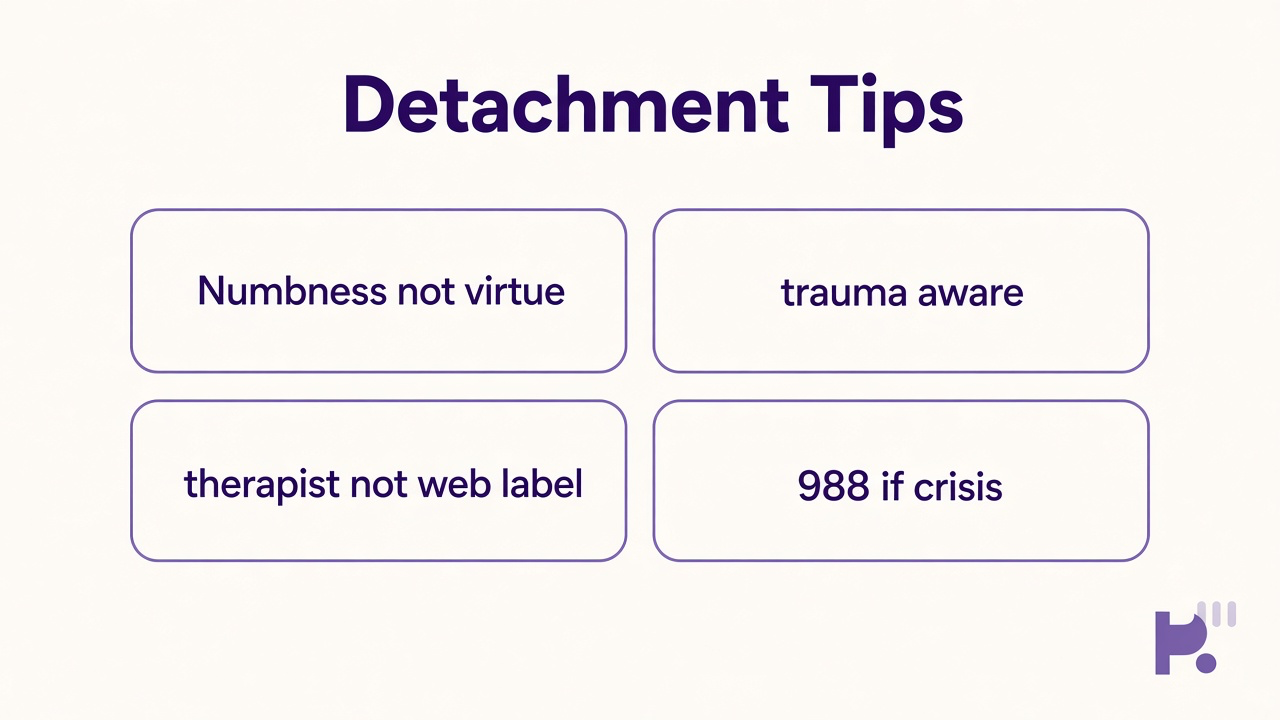
A quick takeaway graphic with topic tips (not your personal quiz scores). Start the quiz for your index, bands, and charts.
What this quiz can and cannot tell you
Can tell you
- Name numbness, distance, and shutdown patterns in plain language for intake
- Highlight when detachment-linked bars run high enough to deserve compassion or care
- Support early conversations with trauma-informed therapists or counselors
- Offer a baseline if you retake after one safe reach-in or boundary experiment
Cannot tell you
- Diagnose PTSD, depression, alexithymia, or personality disorders without evaluation
- Replace trauma therapy, couples work, or medical care when numbness has physical causes
- Prove you are cold or unlovable from one score when context and history matter
- Tell you to force vulnerability without a qualified clinician when shutdown feels unsafe
Numbness beyond stoic posts: distance, trauma context, and care limits
People search emotional detachment tests when flatness stops feeling like a bad week and starts steering every plan. Clinicians hear trauma, mood, and attachment language when numbness protects after harm, yet online quizzes tempt users to self-label as cold or unfeeling before anyone asks how long patterns lasted or what distance cost relationships. This page scores frequency so your responses suggest where habits cluster, not whether you earn a diagnosis from a bar chart.
Felt numbness is the first domain because disconnection can arrive before you have words. Joy, grief, anger, or relief may feel muted while your body still carries tension or fatigue. That is different from choosing calm on purpose: the blankness can feel automatic even when you wish you could cry or celebrate. Noticing numbness without treating it as a virtue is literacy, not proof you are broken.
Connection distance is the second domain because life shrinks quietly. Declining hugs, delaying replies, skipping repair talks, or showing up physically while feeling far away can look like independence while shutdown runs the calendar. Guilt for seeming cold while still choosing distance is a common thread therapists hear in trauma-informed care. One present day with someone you love is a reverse signal that reach still happens sometimes, which many people want to grow with structured support.
Trauma-aware shutdown is the third domain because distance is often protective, not a character flaw. Reminders of harm, conflict that echoes old fear, or overload after caregiving can pull freeze or blankness. Recognizing protection without bragging about not caring online keeps YMYL pages honest: stoic memes are not treatment. Avoiding therapy because numbness feels shameful belongs in the same story as limits: care is practice, not failure when shutdown returns.
Study not diagnosis is the fourth domain, patterned after teaching screeners that separate literacy from credentials. Agreeing that a high score proves a specific disorder without evaluation, or that web results replace therapy because distance is destiny, should not inflate a habit index meant to track real strain. Treating screeners as mirrors, and reaching clinicians when sleep, work, or relationships suffer, keeps detachment quizzes from skipping limits. Our Am I emotionally detached quiz sibling emphasizes relationship-specific distance habits with a separate question bank. The Bermond-Vorst Alexithymia Questionnaire (BVAQ) offers label-and-body-cue reflection when naming feelings is the main struggle. The emotion regulation quiz adds broader daily regulation frequency when heat-of-moment skills matter alongside numbness. Browse the mental health and clinical test hub for more non-diagnostic screeners.
Retake after two weeks of one concrete experiment, such as one honest check-in with a safe person or one therapy consult about shutdown, and compare domain bars. Your responses suggest whether habits are easing, not whether you deserve care. Licensed clinicians turn examples into treatment plans this page cannot deliver. If distress feels unbearable tonight, call or text 988 in the US or your local crisis line before debating results alone.
| Test | Focus |
|---|---|
| Am I emotionally detached quiz | Relationship-specific distance frequency rather than general numbness and trauma-aware shutdown items |
| Bermond-Vorst Alexithymia Questionnaire (BVAQ) | Emotion naming and body-signal literacy rather than go-distant habit frequency |
| Emotion regulation quiz | Broader daily regulation skills when numbness needs heat-of-moment tools too |
Emotional Detachment Test FAQ
What does this quiz measure?
It measures how often you noticed numbness- and distance-linked habits in four areas during the past two weeks: felt numbness, connection distance, trauma-aware shutdown, and study-not-diagnosis limits. You get an index from 0 to 100 plus four domain bars. Your responses suggest self-reported frequency for reflection, not a clinical diagnosis.
Does a high score mean I am emotionally detached or cold?
No. Your responses suggest how often distance-linked habits showed up on this screener. Numbness can follow trauma, grief, burnout, or mood shifts. Only a licensed clinician can evaluate those patterns after a full interview. Use bars to describe habits, not to shame yourself or others.
Is emotional detachment a virtue or strength to aim for?
This page treats frequent numbness and go-distant habits as strain worth compassion, not badges to brag about online. Calm and boundaries can be healthy; chronic shutdown that blocks care or repair is different. Your responses suggest frequency for reflection, not a moral score.
Why are some statements worded as felt emotions or therapy outreach?
Reverse-worded items catch overconfidence. Agreeing that you could name a clear emotion, stayed present with someone you care about, recognized shutdown as protection without treating it as identity, sought clinicians, or kept screeners separate from formal labels should not inflate a detachment index meant to track strain.
What should I do if my score is high or I feel in crisis?
Contact a trauma-informed therapist or your primary care clinician with domain examples from your results. Call or text 988 (US) if you feel hopeless, unsafe, or in emotional crisis. Seek urgent medical care for physical symptoms or medication concerns, not quiz scores alone.
Who reviewed this quiz?
Dr. Elena Vasquez, PhD reviewed the YMYL framing, crisis resources, study-not-diagnosis limits, and result explanations. See our editorial policy for review standards.
Reviewed by