What the Emetophobia Quiz measures
This quiz does not diagnose emetophobia, specific phobia, obsessive-compulsive disorder, or any other condition. Only a licensed clinician using interview methods, safety screening, and history can do that. It measures how often you noticed vomit- and nausea-linked habits grouped four ways: trigger awareness when mentions, images, or illness cues pulled panic, scanning, or body alarms; avoidance habits when food, travel, gatherings, medical settings, or others' choices shrank mainly to reduce exposure; coping limits when reassurance, sleep loss, canceling plans, long rituals, or shame outran skills that eased fear; and study not diagnosis when you treat screeners as reflection, seek clinicians when fear disrupts life, and reject myths that quiz bars replace evaluation or therapy. You answer 22 how-often statements about the past two weeks, with reverse-worded items so one calmer day cannot hide frequent strain across other days. Your responses also feed a second chart on closeness and trust habits, because some people hide illness fear when vulnerability feels unsafe. The total becomes an index from 0 to 100 where higher means more frequent reported fear-linked patterns on this screener. Your responses suggest intensity and habits to discuss with support; they do not mean you have emetophobia as a formal diagnosis.
Trigger awareness
How often vomit, nausea, or illness cues pulled panic, scanning, or body alarms.
Avoidance habits
How often food, travel, events, or medical settings shrank to reduce exposure risk.
Coping limits
How often reassurance, sleep loss, canceling, rituals, or shame outran helpful skills.
Study not diagnosis
How often you keep screeners separate from clinical labels, care, and therapy.
How it works
Answer 22 frequency items
Rate each statement from Never to Very often for the past two weeks. Tap Next after each answer.
Answers sort into four domains
Each answer feeds one of four fear-pattern groups, and every item also feeds a closeness and trust layer.
See your index and charts
You get a 0 to 100 index, a band, and two bar charts you can bring to a clinician.
Take the Emetophobia Quiz
Answer 22 short statements to see your vomit and nausea fear pattern index, four domain bars, and a closeness and trust chart.
What your result means
Your index is the average of all 22 answers, scaled from 0 to 100, with reverse-worded items flipped first. Higher means more frequent reported fear-linked patterns on this screener. Read avoidance and coping limits bars together before the total, because exit plans and reassurance often rise as a pair.
| Band | Index range | Typical reading |
|---|---|---|
| Lower reported fear pattern strain | 0 to 35 | Fewer frequent trigger spikes, avoidance moves, or coping loops in the past two weeks. |
| Mixed reported fear pattern strain | 36 to 65 | Some calmer days alongside trigger spikes, avoidance, or coping loops on others. |
| Higher reported fear pattern strain | 66 to 100 | Frequent triggers, avoidance, or coping strain; anxiety-informed care may help. |
Tips at a glance
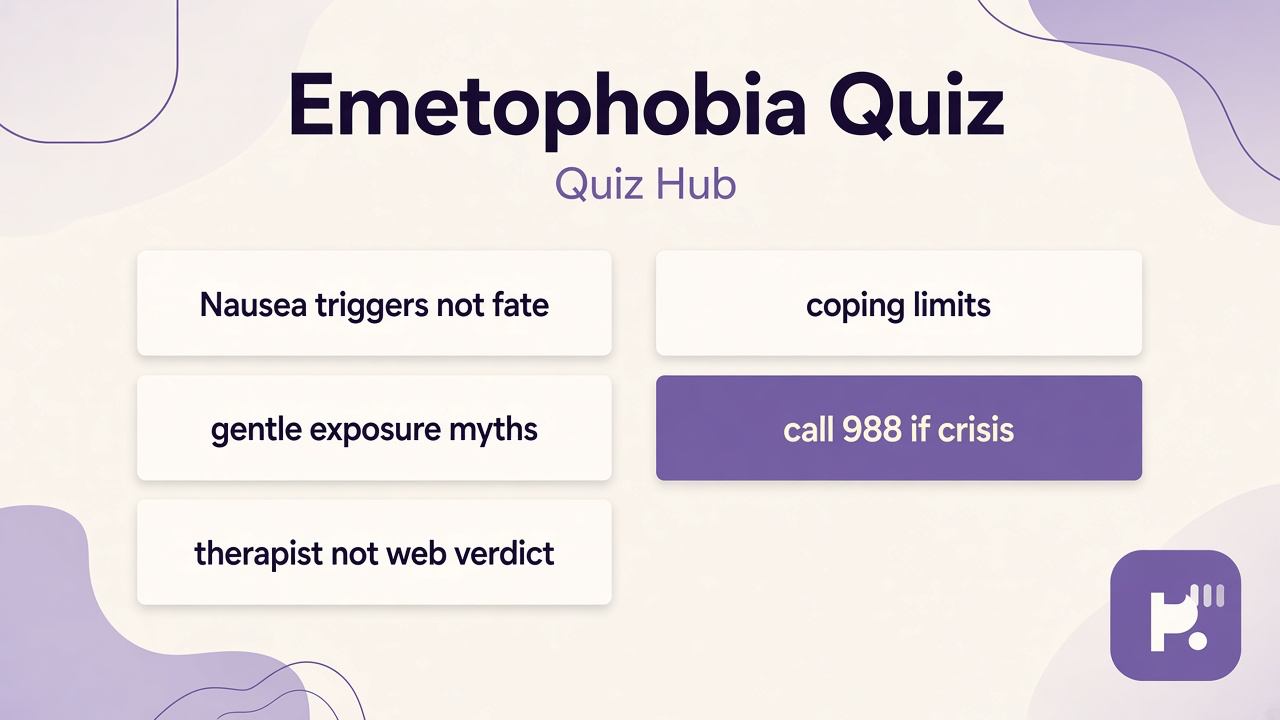
A quick takeaway graphic with topic tips (not your personal quiz scores). Start the quiz for your index, bands, and charts.
What this quiz can and cannot tell you
Can tell you
- Name trigger, avoidance, and coping patterns in plain language for intake
- Highlight when fear-linked bars run high enough to deserve compassion or care
- Support early conversations with anxiety-informed therapists or counselors
- Offer a baseline if you retake after one coping skill or boundary experiment
Cannot tell you
- Diagnose emetophobia, specific phobia, OCD, or health anxiety without evaluation
- Replace exposure therapy, ERP, or medical care when nausea has physical causes
- Prove you are broken or that others see your fear the way you feel it from one score
- Tell you to force exposures without a qualified clinician when panic feels unsafe
Vomit fear beyond picky eating: triggers, avoidance, coping, and care limits
People search emetophobia when disgust and panic around vomiting stop feeling like a quirk and start steering every plan. Clinicians often hear specific phobia language when fear centers on vomit or nausea cues, yet online quizzes tempt users to self-label before anyone asks how long patterns lasted or what safety behaviors cost. This page scores frequency so your responses suggest where habits cluster, not whether you earn a diagnosis from a bar chart.
Trigger awareness is the first domain because body alarms can fire before you consciously decide to leave. Mentions of stomach flu, gag scenes in media, or someone saying they feel queasy can spike heart rate, scanning, or mental images. That is different from ordinary dislike of being sick: the fear can feel urgent even when no one near you is ill. Noticing triggers without shame is literacy, not proof you are dramatic.
Avoidance habits are the second domain because life shrinks quietly. Skipping restaurants, cuisines, planes, school trips, or medical settings can look like preference while fear runs the calendar. Asking others not to eat certain foods near you, leaving when someone looks pale, or only traveling with an escape route are still avoidance when vomit exposure is the hidden reason. One attended plan on a worried day is a reverse signal that exposure sometimes still wins, which many people want to grow with structured help.
Coping limits are the third domain because reassurance and rituals can eat hours. Needing proof no one is sick, replaying images at night, canceling work, or feeling alone with the fear are patterns therapists treat with cognitive behavioral tools and, when appropriate, exposure and response prevention. Grounding skills that ease fear even a little belong in the same story as limits: skills are practice, not failure when panic returns.
Study not diagnosis is the fourth domain, patterned after teaching screeners that separate literacy from credentials. Agreeing that a high score proves clinical emetophobia without evaluation, or that online results replace therapy, should not inflate a fear index meant to track real habits. Treating screeners as mirrors, and reaching clinicians when meals, sleep, or travel suffer, keeps YMYL pages honest. Our health anxiety quiz sibling emphasizes wider illness worry when vomit is only one cue among many. The phobia quiz offers broader fear-pattern reflection when you want language beyond nausea. The OCD quiz can help when checking and reassurance loops dominate alongside vomit themes. Browse the mental health and clinical test hub for more non-diagnostic screeners.
Retake after two weeks of one concrete experiment, such as one meal without reassurance texting or one planned car ride with a coping skill, and compare domain bars. Your responses suggest whether habits are easing, not whether you deserve care. Licensed clinicians turn examples into treatment plans this page cannot deliver. If distress feels unbearable tonight, call or text 988 in the US or your local crisis line before debating results alone.
| Test | Focus |
|---|---|
| Health anxiety quiz | Broader illness worry and body alarm habits when vomit is one cue among many |
| Phobia quiz | General fear-pattern reflection rather than vomit- and nausea-specific frequency items |
| OCD quiz | Checking and reassurance loops when rituals overlap with vomit fear themes |
Emetophobia Quiz FAQ
What does this quiz measure?
It measures how often you noticed vomit- and nausea-linked habits in four areas during the past two weeks: trigger awareness, avoidance habits, coping limits, and study-not-diagnosis limits. You get an index from 0 to 100 plus four domain bars. Your responses suggest self-reported frequency for reflection, not a clinical diagnosis.
Does a high score mean I have emetophobia?
No. Your responses suggest how often fear-linked habits showed up on this screener. Only a licensed clinician can evaluate specific phobia or related conditions after a full interview. Use bars to describe patterns, not to self-diagnose.
Why are some statements worded as calmer days or help-seeking?
Reverse-worded items catch overconfidence. Agreeing that you stayed calm after a stomach-bug mention, joined plans despite worry, used grounding successfully, sought clinicians, or kept screeners separate from formal labels should not inflate a fear pattern index meant to track strain.
Is this exposure therapy or ERP?
No. This page is a frequency screener with education limits. Exposure and response prevention belong in supervised care with a qualified therapist, especially when panic feels intense or avoidance has shrunk nutrition or safety.
What should I do if my score is high or I feel in crisis?
Contact an anxiety-informed therapist or your primary care clinician with domain examples from your results. Call or text 988 (US) if you feel hopeless, unsafe, or in emotional crisis. Seek urgent medical care for physical vomiting or dehydration, not quiz scores alone.
Who reviewed this quiz?
Dr. Elena Vasquez, PhD reviewed the YMYL framing, crisis resources, study-not-diagnosis limits, and result explanations. See our editorial policy for review standards.
Reviewed by