What Egyptian Mythology Quiz measures
This quiz does not ordain you, certify museum work, or rank whose faith is valid. It measures how much you agree with beginner-friendly myth trivia grouped four ways: myth literacy about Ra, Osiris-family stories, Anubis, afterlife imagery, and Maat themes without graduate seminar depth; fiction versus worship about treating ancient religion as historical story context, tagging cosplay and games as fiction, and refusing to mock modern faith neighbors; museum respect about hands-off rules, quiet behavior near human remains, staff instructions, and humble repatriation listening; and curious learning without gatekeeping about welcoming game-first fans, spoiler-safe sharing, and skipping trivia bullying. You rate 22 statements from strongly disagree to strongly agree, with reverse-worded myths so one streaming binge cannot inflate every bar. Your answers also feed a second chart on closeness and trust habits, because intense fandom sometimes chases parasocial god kinship over honest connection. The total becomes an index from 0 to 100 where higher means more reported literacy and respect on this screener, not proof you should lecture docents or cosplay priesthood.
Myth literacy
Major gods, afterlife scenes, Maat themes, and story beats fans cite without Egyptology exam claims.
Fiction versus worship
Ancient stories as context, modern faith respect, fiction tags, and no quiz-as-temple authority.
Museum respect
Exhibit rules, human remains dignity, staff redirects, and humble repatriation awareness.
Curious without gatekeeping
Welcoming newcomers, spoiler-safe facts, and results shared without fan rank wars.
How it works
Answer 22 agreement items
Rate each statement from Strongly disagree to Strongly agree. Tap Next after each answer.
Answers sort into four domains
Each answer feeds one of four mythology literacy groups, and every item also feeds a closeness and trust layer.
See your index and charts
You get a 0 to 100 index, a band, and two bar charts you can compare with a friend who met myths through games or galleries.
Take the Egyptian Mythology Quiz
Answer 22 short statements to see your Egyptian mythology literacy index, four domain bars, and a closeness and trust chart.
What your result means
Your index is the average of all 22 answers, scaled from 0 to 100, with reverse-worded items flipped first. Read fiction-versus-worship and museum respect together before you treat a high myth literacy bar as license to touch exhibits or quiz neighbors on faith. Myth trivia is for fun reflection; living communities and museum staff deserve patience more than scoreboard wins.
| Band | Index range | Typical reading |
|---|---|---|
| Building mythology literacy | 0 to 35 | Fewer agreed facts on gods and stories, fiction boundaries, museum habits, or humble learning on this screener. |
| Mixed mythology literacy | 36 to 65 | Solid facts in some domains with worship boundary traps, museum blind spots, or gatekeeping slips in others. |
| Strong mythology literacy | 66 to 100 | Frequent agreement with accurate stories, respect boundaries, museum habits, and humble fan norms; still fun only. |
Tips at a glance
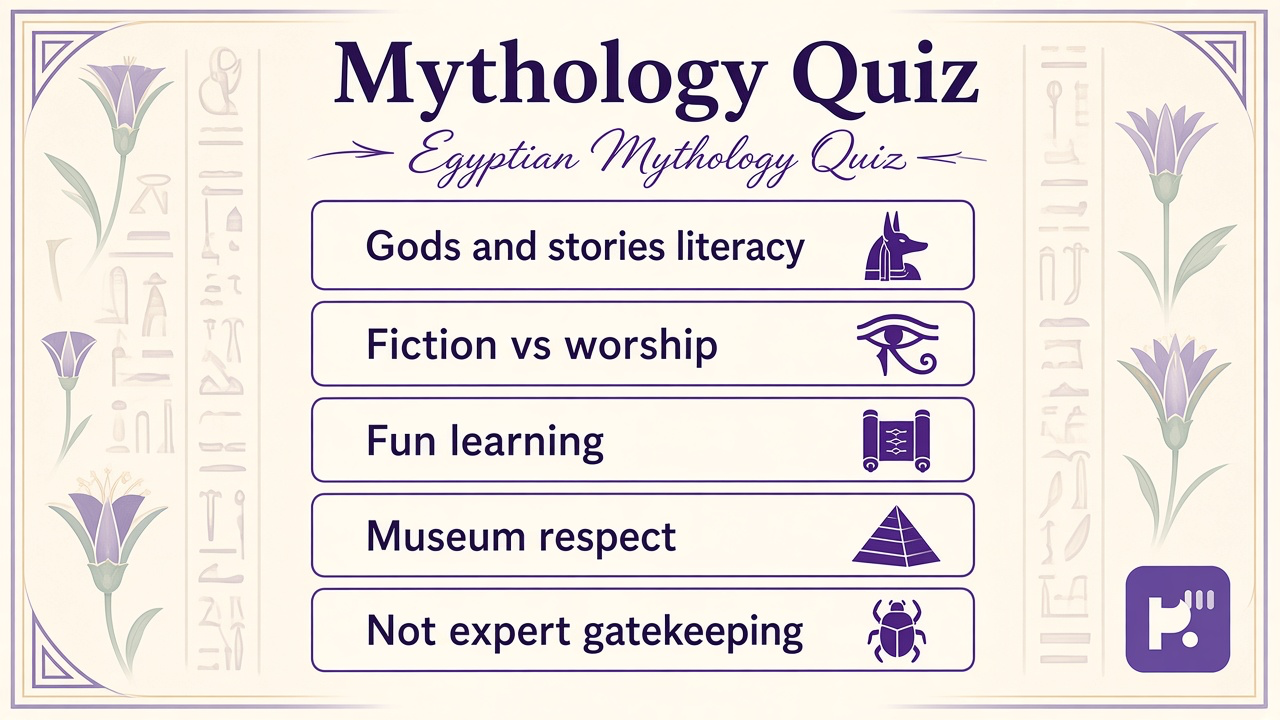
A quick takeaway graphic with topic tips (not your personal quiz scores). Start the quiz for your index, bands, and charts.
What this quiz can and cannot tell you
Can tell you
- Highlight god-and-story facts worth revisiting before trivia night or a museum visit
- Separate ancient story literacy from modern worship respect without merging them into one trick lane
- Encourage exhibit manners and humble learning habits beside game lore
- Spark better questions for school projects, travel prep, and curious friends
Cannot tell you
- Certify Egyptology degrees, museum employment, or religious authority from one online screener
- Prove you should shame faith neighbors or casual fans based on bars
- Replace docents, scholars, clergy, community heritage voices, or assigned coursework
- Turn myth scores into harassment, sacred cosplay claims, or exhibit rule breaking online
Egyptian myth literacy as playful mirror, not temple court
Search traffic around Egyptian mythology quizzes usually wants two things: share a pantheon score without sitting through a lecture hall, and learn one new fact before a museum trip or game sequel. Those goals help when readers notice that myth trivia starts conversations, not courtroom verdicts on whose faith counts. They hurt when people treat bars like proof someone is ignorant, pagan, or culturally superior, or when threads mock kids who met Anubis through cartoons while others pray in living traditions.
Dr. Rachel Kim reviews fandom literacy quizzes with a simple split: reward honest curiosity about ancient stories and honest respect for fiction-versus-worship boundaries at the same time. Myth literacy tracks Ra, Osiris-family arcs, Anubis, afterlife art, and Maat themes without pretending every learner shares one temple syllabus. Fiction versus worship keeps pharaoh-era religion in historical story lanes, tags games and cosplay as entertainment, and refuses trivia bullying of Coptic, Muslim, Jewish, or other neighbors. Museum respect keeps hands-off rules, quiet behavior near human remains, and humble listening in repatriation debates visible beside viral listicles that treat cases like photo props. Curious learning without gatekeeping keeps newcomers welcome when their first hook was a quest line, not a dynastic chart.
Real readers mix bars. You might score high on myth literacy while keeping museum respect moderate, which often describes fans who binge wiki pages yet skip staff instructions on field trips. You might score high on museum habits with moderate story bars, which can mean thoughtful travelers who read signs first and gods second. Reverse items catch sloppy answers: insisting on one-god-only ancient Egypt, claiming quiz scores bless exhibits, pocketing gift-shop shards, or demanding memory tests before anyone may enjoy stories should not inflate bars meant to track layered literacy and respect.
Pair results with siblings on this hub instead of forcing one myth story. Our ancient Egypt map quiz leans Nile geography and region literacy when you want land context without pantheon depth. The what Egyptian goddess are you quiz stays on playful persona picks rather than museum ethics bars. Browse the fandom and entertainment hub for more light screeners. Caption shares as fun literacy and skip faith ambushes on relatives who never asked for a pop quiz.
Games and galleries refresh faster than dynastic charts. When you share results, say curiosity beats ranking. When you visit exhibits, obey ropes before you obey fandom clout. When you borrow story tips, credit docents and libraries who teach kindly and respect people who worship quietly today. Retake after one labeled museum trail or one spoiler-safe anthology and watch whether museum respect bars rise even if game lore bars lag, which often means you separated performative scoring from actual table and gallery manners.
| Test | Focus |
|---|---|
| Ancient Egypt map quiz | Nile geography and regional map literacy rather than god-story and museum respect lanes |
| What Egyptian goddess are you quiz | Playful goddess persona picks rather than fiction-versus-worship and exhibit ethics bars |
Egyptian Mythology Quiz FAQ
What does Egyptian Mythology Quiz measure?
It measures how much you agree with statements about myth literacy, fiction versus worship boundaries, museum respect, and curious learning without gatekeeping. You get an index from 0 to 100 plus four bars. It describes self-rated trivia and habits on this screener, not priesthood, museum employment, or proof you must believe one way only.
Is this a religious test or worship guide?
No. This page uses widely taught ancient story and afterlife art facts alongside respect for modern faith communities. It is playful literacy, not temple instruction. Clergy, scholars, and community teachers remain the right guides for belief and heritage.
Does a high score mean I should quiz people at museums or online?
No. High bars mean you related to trivia and respect statements here. Museum respect items explicitly reject touching cases and clout chasing near human remains. Use curiosity to listen to docents and neighbors, not to ambush.
Why mix god stories with museum and gatekeeping items?
Myth search intent blends game lore, school trips, and story curiosity. Split bars keep literacy separate from worship respect, exhibit manners, and fan kindness so results stay honest about which parts you endorse.
Who reviewed this quiz?
Dr. Rachel Kim reviewed the fun-only framing, fiction-versus-worship respect notes, museum humility tone, and gatekeeping limits. See our editorial policy for review standards.
Reviewed by