What this EPDS-inspired questionnaire measures
This quiz does not administer the copyrighted ten-item Edinburgh Postnatal Depression Scale with published scoring thresholds, and it cannot diagnose postpartum depression, postpartum anxiety, postpartum psychosis, or any mental health condition. Only a qualified clinician using interview methods, history, and sometimes medical evaluation can do that. It measures how often you have noticed perinatal mood habits specialists discuss when pregnancy or new parenthood strains sleep and identity, grouped four ways: low mood and guilt when sadness, emptiness, or harsh self-blame colored your days; anxiety and overwhelm when worry, dread, or stacked tasks felt impossible; sleep, fatigue, and joy when rest fragments, exhaustion, or lost pleasure drained the week; and help, safety, and coping when you reached for clinicians and partners, used crisis resources, or noticed scary thoughts that need immediate support. You answer 22 how-often statements about the past seven days, with reverse-worded items so one good day cannot hide frequent strain across other days. Your responses also feed a second chart on closeness and trust habits, because some parents isolate when vulnerability feels dangerous. The total becomes an index from 0 to 100 where higher means more frequent reported concern on this unofficial screener, not proof of a diagnosis.
Low mood and guilt
How often sadness, bleak outlook, or harsh self-blame showed up around baby care or pregnancy.
Anxiety and overwhelm
How often worry, dread, or stacked tasks felt bigger than your energy.
Sleep, fatigue, and joy
How often broken rest, exhaustion, or lost pleasure drained the week.
Help, safety, and coping
How often you asked clinicians or loved ones for help, used crisis lines, or treated scary thoughts as urgent signals.
How it works
Answer 22 frequency items
Rate each statement from Never to Very often for the past seven days. Tap Next after each answer.
Answers sort into four domains
Each answer feeds one of four perinatal mood groups, and every item also feeds a closeness and trust layer.
See your index and charts
You get a 0 to 100 index, a band, and two bar charts you can bring to a perinatal clinician.
Take the Edinburgh Postnatal Depression Scale (EPDS)
Answer 22 short statements to see your perinatal mood strain index, four domain bars, and a closeness and trust chart.
What your result means
Your index is the average of all 22 answers, scaled from 0 to 100, with reverse-worded items flipped first. Higher means more frequent reported strain on this unofficial screener. Read help, safety, and coping together with low mood before the total, since scary thoughts deserve immediate support regardless of other bars.
| Band | Index range | Typical reading |
|---|---|---|
| Lower reported perinatal mood strain | 0 to 35 | Fewer frequent low mood, anxiety, sleep, or help avoidance loops in the past week. |
| Mixed reported perinatal mood strain | 36 to 65 | Some domains spike while help seeking or safety steps look healthier on other days. |
| Higher reported perinatal mood strain | 66 to 100 | Frequent low mood, anxiety, sleep strain, or help avoidance; perinatal clinician review may help. |
Tips at a glance
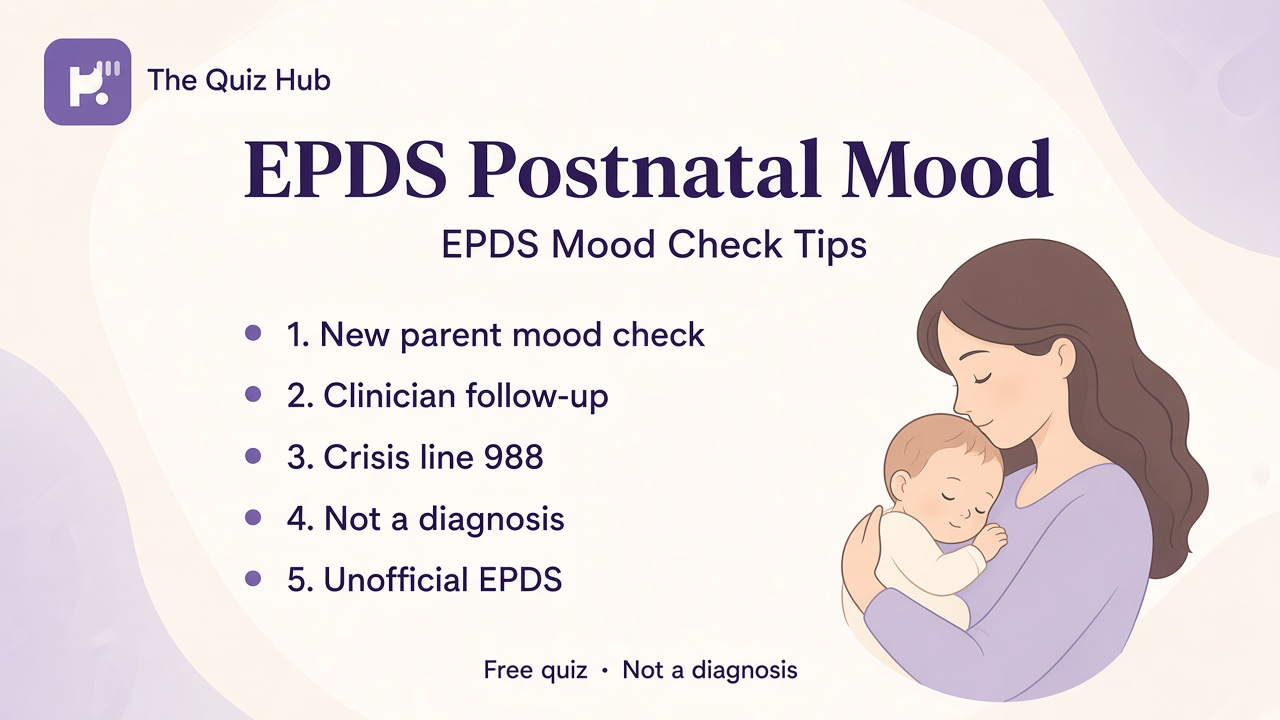
A quick takeaway graphic with topic tips (not your personal quiz scores). Start the quiz for your index, bands, and charts.
What this quiz can and cannot tell you
Can tell you
- Separate low mood, anxiety, sleep strain, and help seeking habits in plain language
- Highlight loops that deserve compassion or perinatal professional support
- Give you vocabulary for OB, midwife, pediatric, or therapy intake
- Offer a baseline if you retake after one week of shared sleep or support
Cannot tell you
- Replace the validated Edinburgh Postnatal Depression Scale or clinic cutoffs
- Diagnose postpartum depression, anxiety, psychosis, or prescribe treatment without evaluation
- Tell you whether you are a bad parent or whether your baby is safe from one score
- Prove you should hide symptoms from clinicians to avoid judgment
EPDS-inspired perinatal mood: naming strain without shame
Clinics worldwide use the Edinburgh Postnatal Depression Scale as a ten-item screening tool with specific scoring rules. This page borrows that familiar EPDS label to organize perinatal mood reflection for expecting and new parents, but it is not an official instrument and your score cannot be compared to published EPDS cutoffs. Treat the result as a map for conversations with obstetric, midwife, pediatric, or mental health teams, not as a letter grade on your parenting.
Low mood and guilt shows up when sadness, tearfulness, or harsh self-blame persists beside feeds, appointments, and congratulations you do not feel inside. Anxiety and overwhelm shows up when worry about the baby, the relationship, or the next sleepless night makes ordinary lists feel impossible. Sleep, fatigue, and joy loss shows up when rest fragments even during quiet windows and pleasure in music, friends, or small rituals fades. Those three bars describe strain and context, not moral failure.
Help, safety, and coping is the fourth bar because perinatal suffering sticks longer when scary thoughts stay secret. Hiding intrusive harm thoughts from clinicians often delays care that protects you and your baby. Naming mood to a midwife, booking perinatal therapy, accepting partner help with sleep, and calling 988 (US) when you feel unsafe are strength moves, not admissions of unfit parenting. When symptoms include psychosis markers, severe insomnia with agitation, or inability to care for yourself or your infant, emergency evaluation matters more than retaking quizzes.
If anxiety and sleep bars run high while help seeking stays moderate, practical support may help first: shared night duty, meal trains, lactation or feeding consults, and limiting doom scrolling. If low mood and guilt run high, talk therapy and medication options through perinatal-informed prescribers may fit alongside social support. Our depression screening questionnaire (PHQ-9) sibling uses general depression language for adults who want broader mood vocabulary; our DASS-21 sibling adds stress and anxiety domains for mixed presentations. Use them for YMYL reflection alongside this perinatal screener, not instead of care when safety is at risk.
Retake after one week with one measurable support change, such as a protected four-hour sleep block or a clinician call, and compare domain bars, not only the total. Parenthood seasons shift quickly around growth spurts, return-to-work weeks, and relationship stress. Licensed clinicians turn your examples into safety plans and treatment this page cannot deliver.
| Test | Focus |
|---|---|
| Depression screening questionnaire (PHQ-9) | General adult depression frequency rather than perinatal guilt, sleep, and help seeking emphasis here |
| DASS-21 | Depression, anxiety, and stress domains rather than EPDS-style perinatal wording on this page |
Edinburgh Postnatal Depression Scale (EPDS) FAQ
Is this the official Edinburgh Postnatal Depression Scale (EPDS)?
No. This is an unofficial, EPDS-inspired perinatal mood screener written for self-reflection on our site. It uses 22 items and does not apply the official ten-item EPDS scoring thresholds or published norms.
What does this quiz measure?
It measures how often you noticed low mood, perinatal anxiety, sleep and joy loss, and help seeking or help avoidance in the past seven days. You get an index from 0 to 100 plus four domain bars. It reports self-reported frequency, not a clinical diagnosis.
I am pregnant but not postpartum yet. Can I still use this?
Yes for reflection, though clinicians may prefer pregnancy-specific screeners at intake. Many items describe perinatal mood strain that can start before birth. Bring results to your prenatal care team either way.
Can this quiz diagnose postpartum depression?
No. Only a licensed clinician can diagnose postpartum depression or related conditions after full evaluation. Use this tool to describe symptoms and decide whether to seek perinatal mental health care, especially if you feel unsafe.
What should I do if I have scary thoughts about harm?
Treat them as urgent. Contact your clinician, partner, or support person today. If you feel unsafe, call or text 988 (US) or use emergency services. Secrecy often delays care that protects you and your baby.
Who reviewed this quiz?
Dr. Elena Vasquez, PhD reviewed the YMYL framing, unofficial EPDS limits, and perinatal crisis resource guidance. See our editorial policy for review standards.
Reviewed by