What Food Web Quiz measures
This quiz does not certify you as a biologist, park ranger, or wildlife rehabilitator. It measures how much you agree with introductory nature learning grouped four ways: producers and consumers about photosynthesizers, herbivores, carnivores, and decomposers in chapter one diagrams; food web energy about sun to producer flows, webs versus chains, arrow direction, trophic loss in typical classroom stories, and linked population effects when one species drops; balance and change about carrying capacity language, predator prey patterns at intro level, disturbances like drought or fire, and human influenced shifts without instant doom framing; and fun park learning about reading posted signs, lookups after misses, playful share captions, and rejecting public mockery of learners who mix up labels. You answer 22 statements from strongly disagree to strongly agree, with reverse worded myths so one lucky streak cannot inflate every bar. Your answers also feed a second chart on closeness and trust habits, because some people perform outdoor expertise instead of admitting they still read signs carefully. The total becomes an index from 0 to 100 where higher means more reported nature learning habits on this screener, not proof you should touch wild animals or ignore closures.
Producers and consumers
Photosynthesizers, herbivores, carnivores, decomposers, and local examples on walks.
Food web energy
Sun to producer flow, webs versus chains, arrows toward eaters, trophic loss in intro models.
Balance and change
Carrying capacity, predator prey links, disturbances, and human influenced community shifts.
Fun park learning
Trail signs, lookups, playful shares, and no expert dunking on strangers.
How it works
Answer 22 agreement items
Rate each statement from Strongly disagree to Strongly agree. Tap Next after each answer.
Answers sort into four domains
Each answer feeds one of four nature learning groups, and every item also feeds a closeness and trust layer.
See your index and charts
You get a 0 to 100 index, a band, and two bar charts you can compare with a friend who loves park walks.
Take the Food Web Quiz
Answer 22 short statements to see your nature learning index, four domain bars, and a closeness and trust chart.
What your result means
Your index is the average of all 22 answers, scaled from 0 to 100, with reverse worded items flipped first. Higher means more reported nature learning habits on this screener. Read fun park learning together with food web energy before you treat the total as field expertise.
| Band | Index range | Typical reading |
|---|---|---|
| Building nature learning confidence | 0 to 35 | Fewer agreed statements about producers, food webs, balance, or fun park limits on this screener. |
| Mixed nature learning profile | 36 to 65 | Solid agreement in some domains with myths or dunking habits in others. |
| Strong nature learning profile | 66 to 100 | Frequent agreement with producers, food webs, balance, and fun park limits. |
Tips at a glance
A quick takeaway graphic with topic tips (not your personal quiz scores). Start the quiz for your index, bands, and charts.
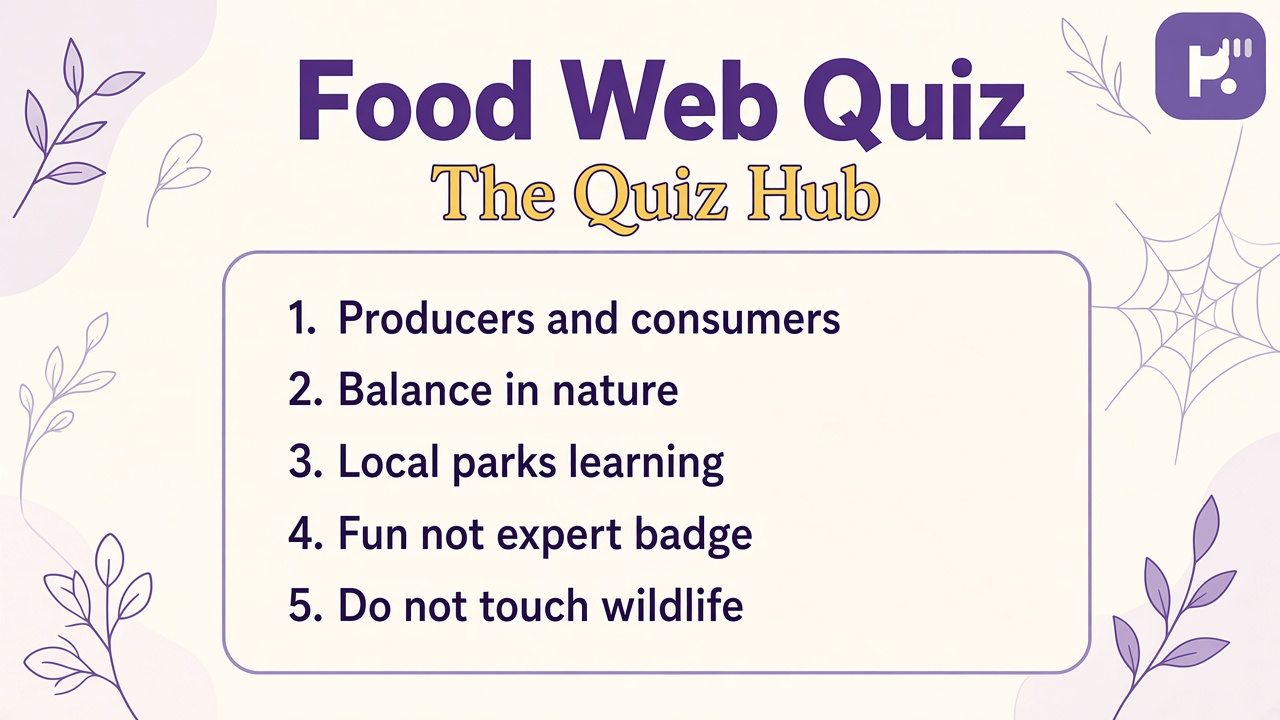
What this quiz can and cannot tell you
Can tell you
- Highlight food web vocabulary worth revisiting before your next science unit or park visit
- Separate producer and consumer roles from moral stories about who deserves respect outdoors
- Encourage sign reading and lookup habits when a chain diagram still feels fuzzy
- Spark friendly nature chats without claiming biology credentials
Cannot tell you
- Certify you to handle wildlife, collect protected plants, or ignore posted closures
- Replace school labs, ranger programs, or site specific safety briefings
- Map every biome, microbiome, or marine zone in one short screener
- Rank human worth based on who missed one trophic level question online
Food webs as playful mirror, not expert badge hunt
Search traffic around nature and food web quizzes usually wants two things: feel curious about local parks and share a score without sitting through a graduate seminar. Those goals help when readers notice that food web language is a map for learning, not a rank order of who belongs outdoors. They hurt when trivia scores become excuses to touch wildlife, ignore signs, or mock beginners who mix up producer labels.
Dr. Rachel Kim reviews fun novelty nature quizzes with a simple split: reward honest recall about producers, consumers, and energy flow and honest limits on expert posturing at the same time. Producers and consumers tracks photosynthesizers, herbivores, carnivores, and decomposers in intro diagrams without pretending every pond organism makes its own food. Food web energy tracks sun to producer paths, webs versus chains, arrow notation, and trophic loss without claiming energy recycles perfectly to top predators. Balance and change tracks carrying capacity words, predator prey stories, disturbances, and human influenced shifts without demanding instant doom for every rainy weekend. Fun park learning keeps sign reading, lookups, and anti dunking framing visible beside feeds that want easy expert clout.
Real learners mix bars. You might score high on producers while keeping balance language moderate, which often describes hikers who notice trees and squirrels before they memorize carrying capacity definitions. You might score high on fun park learning while food web energy stays mid, which can mean you respect closures yet still mix up arrow direction on homework sketches. Reverse items catch overconfidence: claiming every pond organism is a producer, perfect energy recycling, one storm fixing all habitats, or mandatory public mockery should not inflate bars meant to track layered learning habits.
Pair results with siblings on this hub instead of forcing one green story. Our eco quiz focuses everyday shopping, plate, trail, and kind mindset habits rather than textbook food web diagrams on this page. The ecological footprint quiz leans travel, diet, and home habit reflection without duplicating producer consumer stems here. Browse the fun and novelty hub for more light screeners. Caption shares as fun reflection and skip biology dunking on strangers who never asked for a sermon.
Seasons change faster than meme lists. A food web bar might spike after a school unit while fun park learning sleeps until you retake calmly. When you share results, say signs and safety first. When you borrow study tips, credit teachers and rangers who lent you plain sources and respect people who learn quietly on local trails. Retake after one low pressure month and watch whether fun park learning bars rise even if balance bars lag, which often means you separated real safety habits from performative expert scoring online.
| Test | Focus |
|---|---|
| Eco quiz | Everyday green shopping, plate, trail, and kind mindset habits rather than food web vocabulary stems |
| Ecological footprint quiz | Travel, diet, and home habit reflection rather than producer consumer classroom diagrams |
Food Web Quiz FAQ
What does Food Web Quiz measure?
It measures how much you agree with statements about producers and consumers, food web energy, balance and change, and fun park learning. You get an index from 0 to 100 plus four bars. It describes self rated learning habits on this screener, not a biology degree or ranger credential.
Is this the same as the Eco Quiz?
No. This page focuses on food web roles, energy flow, balance language, and playful park learning. The Eco Quiz sibling focuses on shopping, plate, trail care, and kind green mindset habits with different stems. You can take both; they are written to stay distinct.
Does a high score mean I should touch wildlife for photos?
No. High bars mean you related to learning statements here. Posted signs, distance rules, and local staff guidance matter more than scores. Fun park learning items explicitly reject handling wild animals for clout.
Why mix food webs with park sign habits?
Nature search intent blends classroom diagrams with outdoor behavior. Split bars keep vocabulary separate from trail safety and kind sharing so results stay honest about which parts you endorse.
Who reviewed this quiz?
Dr. Rachel Kim reviewed the fun only framing, wildlife safety limits, and playful nature tone. See our editorial policy for review standards.
Reviewed by