What the Drug and Alcohol Quiz measures
This quiz does not diagnose substance use disorder, run blood tests, or tell you whether you must quit forever. Only a licensed clinician using interview tools, safety screening, and sometimes labs can evaluate clinical substance concerns. It measures how often you noticed drinking and drug-related habits grouped four ways: standard drinks and pacing when pours, refills, or stress drinking outrun your plan; mixing and safety when alcohol combines with pills or street drugs, impairment threatens driving, or warning signs get ignored; impact and secrecy when regret, hiding, cravings, or life fallout follow use; and harm reduction and recovery when you plan safer rides, seek clinicians, use peer support, learn overdose response, or treat recovery as possible. You answer 22 how-often statements about the past month, with reverse-worded items so one sober week cannot hide frequent mixing on other nights. Your responses also feed a second chart on closeness and trust habits, because secrecy and shame sometimes chase substances when vulnerability feels unsafe. The total becomes an index from 0 to 100 where higher means more frequent reported harm patterns on this screener, not proof you are broken or beyond help.
Standard drinks and pacing
How often limits, drink counts, and pacing slipped versus stayed intentional.
Mixing and safety
How often combinations, impairment, and overdose warning signs showed up.
Impact and secrecy
How often regret, hiding, cravings, or life fallout followed use.
Harm reduction and recovery
How often help-seeking, safer plans, and recovery hope appeared.
How it works
Answer 22 frequency items
Rate each statement from Never to Very often for the past month. Tap Next after each answer.
Answers sort into four domains
Each answer feeds one of four pattern groups, and every item also feeds a closeness and trust layer.
See your index and charts
You get a 0 to 100 index, a band, and two bar charts you can bring to a clinician.
Take the Drug and Alcohol Quiz
Answer 22 short statements to see your harm pattern index, four domain bars, and a closeness and trust chart.
What your result means
Your index is the average of all 22 answers, scaled from 0 to 100, with reverse-worded items flipped first. Higher means more frequent reported harm patterns on this screener. Read mixing and harm reduction bars together before the total, because one safe ride habit does not cancel nightly pill-and-alcohol mixes.
| Band | Index range | Typical reading |
|---|---|---|
| Lower reported harm patterns | 0 to 35 | Fewer frequent risky drinking, mixing, secrecy, or impact items in the past month. |
| Mixed reported harm patterns | 36 to 65 | Some safer days alongside mixing, secrecy, or regret on others. |
| Higher reported harm patterns | 66 to 100 | Frequent risk, impact, or missing help habits; clinical conversation may help. |
Tips at a glance
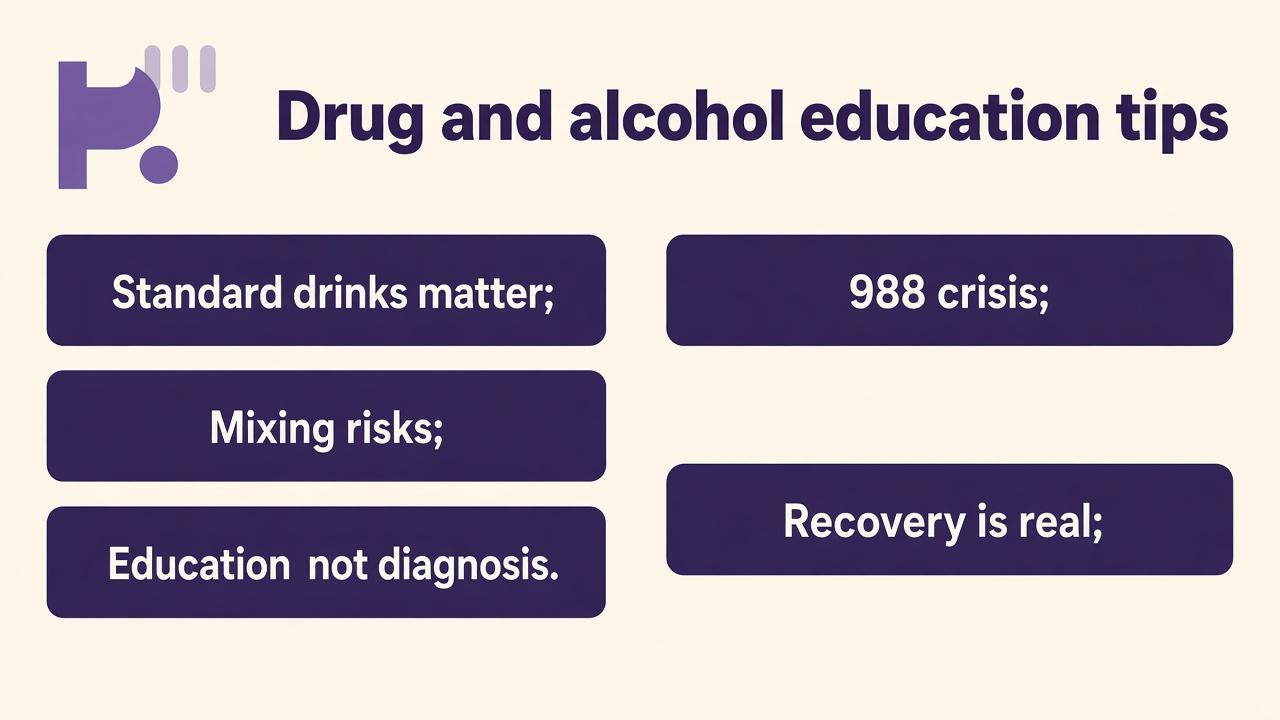
A quick takeaway graphic with topic tips (not your personal quiz scores). Start the quiz for your index, bands, and charts.
What this quiz can and cannot tell you
Can tell you
- Organize past-month drinking and drug habits in plain language
- Highlight when mixing, impairment, or secrecy bars run high
- Support early conversations with clinicians or counselors
- Offer a baseline if you retake after one harm-reduction change
Cannot tell you
- Diagnose substance use disorder or withdrawal syndromes without evaluation
- Replace emergency care for overdose, suicidal crisis, or medical detox
- Prove you are safe to drive or operate machinery from one score
- Tell you which treatment program to enter from self-report alone
Harm reduction basics: drinks, mixing, crisis lines, and recovery
Harm reduction starts with honest math. A standard drink is a unit clinicians use to compare risk, not a moral score. In the United States, one standard drink is often defined as about 14 grams of pure alcohol, which is roughly 12 ounces of regular beer near five percent alcohol, five ounces of wine near twelve percent, or one and a half ounces of distilled spirits near forty percent. Cocktails, tall cans, and generous pours can stack two or three standard drinks in one glass. When you lose count, blackout risk and next-day regret rise even if you still feel functional at the time.
Mixing is where party culture gets dangerous. Alcohol plus opioids, benzodiazepines, or sleep aids can slow breathing. Alcohol plus stimulants can mask how drunk you are until you crash. Cannabis concentrates, unknown powders, and prescription pills shared at parties add unpredictable potency. Harm reduction does not require perfection; it can mean staying with trusted people, spacing substances, refusing unknown doses, and calling emergency services when someone will not wake, is breathing slowly, or has blue lips. Naloxone reverses many opioid overdoses and is worth learning if opioids circulate in your community.
Secrecy and shame often grow faster than use itself. Hiding bottles, lying about rides, or snapping at people who worry can signal that alcohol or drugs are carrying more load than your calendar admits. That is a reason to talk with a clinician, not proof you failed as a person. Recovery is real and takes many paths: therapy, medication-assisted treatment, mutual-aid meetings, religious communities, secular peer groups, and structured outpatient programs. Our CRAFFT 2.1 questionnaire focuses on youth ride-risk and memory lapse cues when you need a teen-oriented screen. The CAGE-AID questionnaire adds drug items beside classic alcohol cut-down questions. The alcohol quiz sibling offers a broader alcohol reflection lane when pills are not in the picture.
Higher scores on this screener mean more frequent self-reported harm patterns, not a permanent label. Bring domain bars to intake so sessions start with examples instead of debate. If you drink heavily every day, do not stop abruptly without medical guidance because withdrawal can cause seizures. If mood collapses or you think about harming yourself, call or text 988 in the US or your local crisis line before you retake another quiz.
Retake after a month of one concrete change, such as a drink cap, a no-mixing rule, or one honest clinical visit, and compare bars. Education tools work best when they feed real support, not when they replace it.
| Test | Focus |
|---|---|
| CRAFFT 2.1 questionnaire | Youth-oriented ride risk, memory lapse, and friend worry frequency items |
| CAGE-AID questionnaire | Brief cut-down, annoyance, guilt, and drug-extension alcohol screen |
| Alcohol quiz | Broader alcohol reflection when mixing and street drugs are not the focus |
Drug and Alcohol Quiz FAQ
What does this quiz measure?
It measures how often you noticed drinking and drug-related habits in four areas during the past month: pacing and standard drinks, mixing and safety, impact and secrecy, and harm reduction or recovery steps. You get an index from 0 to 100 plus four domain bars. It reports self-reported frequency for education, not a clinical diagnosis.
Is this the same as CRAFFT or CAGE-AID?
No. CRAFFT 2.1 targets youth-specific ride and memory cues. CAGE-AID is a brief cut-down screen. This quiz is a general harm-pattern reflection tool with mixing and recovery education, not a validated clone of those instruments.
Can this quiz diagnose addiction or tell me to quit?
No. Only a licensed clinician can diagnose substance use disorder after a full evaluation. Use this tool to notice patterns and decide whether to seek medical or counseling support.
What should I do if my score is high or someone may be overdosing?
For possible overdose, call local emergency services immediately. For ongoing concern, contact a clinician or SAMHSA 1-800-662-4357 (US). Call or text 988 if you feel hopeless, unsafe, or in emotional crisis. Do not stop heavy alcohol or sedative use suddenly without medical supervision.
Who reviewed this quiz?
Dr. Elena Vasquez, PhD reviewed the YMYL harm reduction framing, crisis resources, and non-diagnostic limits. See our editorial policy for review standards.
Reviewed by