What this trend literacy screener measures
This screener is not affiliated with Dr Mehmet Oz, not endorsed by him or any television production, and not medical advice. It measures how much you agree with popular apple-pear body-type trend statements grouped four ways: apple waist habits around midsection gain, belt-line shifts, and waist-first jean fit as described in TV and article shorthand; pear hips habits around hip-thigh curves, pear-shaped graphics, and lower-body weight stories contrasted with apple belly talk; waist-hip literacy habits around ratio language, measure-your-waist advice, and knowing apple-pear risk framing is shorthand,not a full workup; and mirror self-story habits around outfit hiding, friend-chat labels, post-quiz silhouette critique, and camera-angle avoidance trained by trend vocabulary. You answer 22 statements from strongly disagree to strongly agree, with reverse-worded items so one lucky streak cannot inflate every bar. Your answers also feed a second chart on closeness and trust habits, because body-story obsession and vulnerability often trade places under stress. The total becomes an index from 0 to 100 where higher means more reported fit with these trend clusters on this screener, not proof of diabetes, heart disease, or any clinical body-type assignment.
Apple waist
Waist-first jean fit, belt-line shifts, midsection softness, and apple-type mirror talk.
Pear hips
Hip-thigh pinch, pear graphics, lower-body weight stories, and lean-leg contrast seasons.
Waist-hip literacy
Apple-pear risk shorthand, measure-your-waist advice, and ratio language from pop health media.
Mirror self-story
Outfit hiding, friend labels, post-segment critique, and camera angles shaped by trend words.
How it works
Answer 22 agreement items
Rate each statement from Strongly disagree to Strongly agree. Tap Next after each answer.
Answers sort into four domains
Each answer feeds one of four apple-pear trend groups, and every item also feeds a closeness and trust layer.
See your index and charts
You get a 0 to 100 index, a band, four domain bars, and a second chart for intimacy habits.
Take the Dr Oz Body Type Quiz
Answer 22 short statements to see your apple-pear trend fit index, four domain bars, and a closeness and trust chart.
What your result means
Your index is the average of all 22 answers, scaled from 0 to 100, with reverse-worded items flipped first. Higher means more reported fit with these apple-pear trend clusters on this screener. Read the tallest domain bar before you treat the total as a medical risk score or buy a type-specific program.
| Band | Index range | Typical reading |
|---|---|---|
| Quieter apple-pear trend fit | 0 to 35 | Less agreement with apple, pear, literacy, and mirror-story items on this screener. |
| Mixed apple-pear trend fit | 36 to 65 | Strong fit with some apple-pear domains and softer fit with others. |
| Broad apple-pear trend fit | 66 to 100 | Frequent agreement across apple waist, pear hip, literacy, and mirror-story items. |
Tips at a glance
A quick takeaway graphic with topic tips (not your personal quiz scores). Start the quiz for your index, bands, and charts.
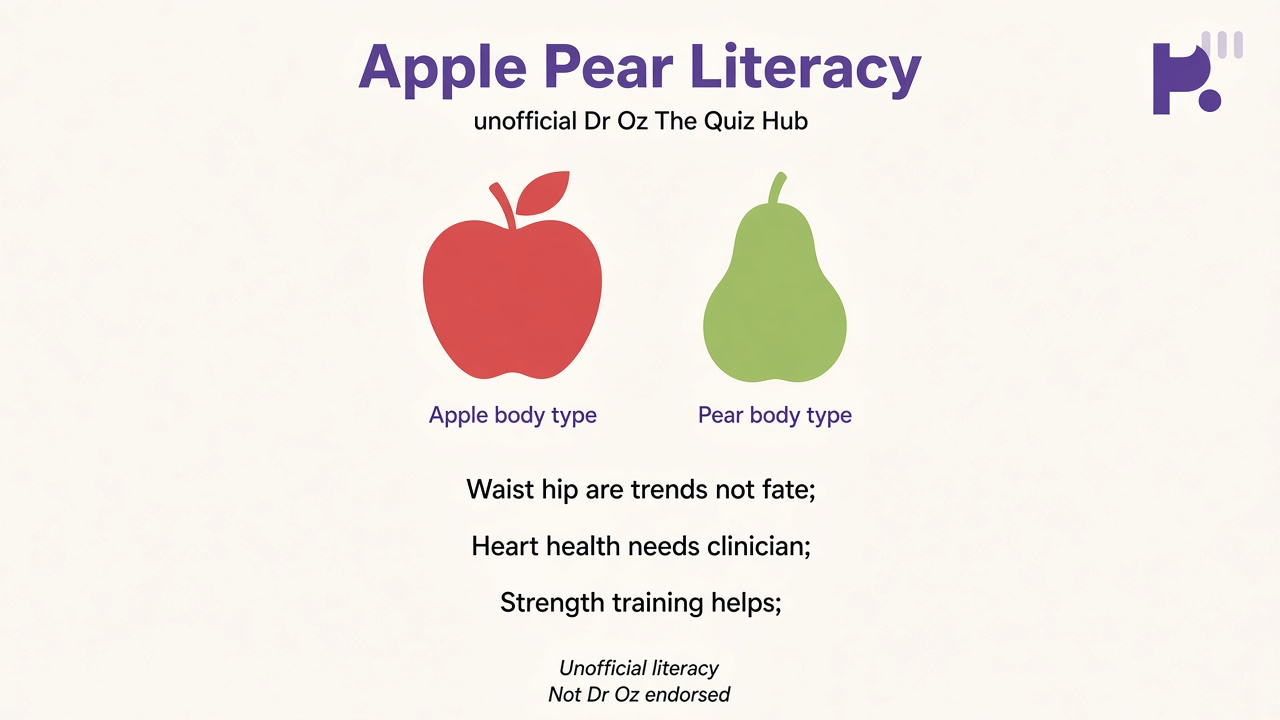
What this quiz can and cannot tell you
Can tell you
- Show which apple-pear storyline your self-report resembles most
- Separate feed-fueled mirror talk from how you want to treat your body
- Spark safer questions for clinicians when symptoms persist
- Encourage reading four bars instead of one catchy apple or pear sticker
Cannot tell you
- Diagnose cardiometabolic disease or assign clinical body-type risk
- Endorse or replicate any television doctor protocol as medical care
- Prove you must eat, fast, or train based on a bar height
- Replace labs, blood pressure checks, or exams when weight or energy shifts worry you
Why apple-pear TV talk needs literacy, not labels
Daytime and streaming wellness loves a two-icon story: apple means waist fat, pear means hip-thigh curves, and somewhere in the segment someone mentions health risk without replacing your doctor. The frame spreads because it feels more personal than generic lose-weight advice and because old photos suddenly have vocabulary. Trend literacy means knowing what apple and pear are good for,naming where you feel seen in the mirror,and what they are bad for,pretending a scrollable quiz replaced blood pressure, lipids, or a thoughtful exam.
Apple-style language points to waist-first habits: belts and jeans tightening above the hips, shirts sitting differently after a busy season, wellness posts with round-belly icons that feel eerily specific. Pear-style language points to hip-thigh curves, skirts that fit at the waist but pinch lower, graphics with wider hips that match locker-room talk more than apple belly memes. Real bodies mix both; influencers rarely admit overlap in a thirty-second clip. None of that proves disease; it proves the algorithm found a silhouette story you might repeat.
Waist-hip literacy items track whether measure-your-waist advice and ratio explanations stuck,whether you know the shorthand is not a full workup yet still use it when you scroll past before bed. Mirror self-story items track outfit hiding, friend-chat labels, and camera angles trained by segments you half remember. Reverse items catch myth absorption: agreeing that weight never hits your midsection, that hips stay lean through every season, that apple-pear labels never touched your health thinking, or that mirrors rarely connect to trend words should not inflate bars meant to track active fit.
Unofficial quizzes exist because searchers want language for self-image without signing up for a product funnel tied to a famous doctor brand. A responsible screener stays clear: not affiliated, not medical advice, not permission to ignore symptoms. Pair bar charts with kindness. High apple with rising fear-of-intimacy on the stack might mean you critique your stomach instead of asking for support. High literacy with moderate pear might mean you know the jargon while your shape sits between icons,which is normal.
Use results to notice which stories you internalize, then choose one gentle habit if you want experimentation, like regular meals or sleep, without calling it an apple or pear cure. Retake after a lower-scroll month. Literacy grows when you can name the trend, laugh at oversimplification, and still show up for real care when your body asks for it.
| Test | Focus |
|---|---|
| Dr Berg body type quiz | Adrenal-liver-thyroid-ovary metabolic trend language rather than classic apple-pear waist-hip framing |
| Body type quiz | Fashion and silhouette body shape habits rather than TV apple-pear risk shorthand |
Dr Oz Body Type Quiz FAQ
Is this quiz official or endorsed by Dr Mehmet Oz?
No. It is an unofficial trend literacy screener on The Quiz Hub. Dr Mehmet Oz and related television brands did not create, sponsor, or review it. It reflects popular apple-pear body-type language online and on TV, not any official show protocol or medical advice.
What does the trend fit index measure?
It measures how much you agree with statements about apple waist habits, pear hip habits, waist-hip ratio literacy, and mirror self-story patterns as described in wellness trend content. You get an index from 0 to 100 and four bars. It reflects self-report on this screener, not a clinical body type or cardiometabolic diagnosis.
Can this quiz tell me my heart or diabetes risk?
No. Apple-pear talk is educational shorthand in media; real risk assessment needs a licensed clinician, history, vitals, and appropriate tests. Do not treat bar heights as proof you are safe or in danger.
Why are some statements worded opposite to the trend?
Reverse-worded items catch autopilot responding. Agreeing that weight never lands on your midsection, that hips stay lean through every season, that apple-pear labels never influenced your health thinking, or that mirrors rarely connect to trend words should not inflate trend-fit bars.
Who reviewed this quiz?
Dr. Elena Vasquez, PhD reviewed the unofficial framing, non-medical limits, and symptom referral language. See our editorial policy for review standards.
Reviewed by