What this unofficial reflection measures
This screener is not affiliated with Mehmet Oz, M.D., Dr Oz, Harpo Productions, RealAge, or any trademarked television wellness product. It does not measure telomeres, arterial age, or clinical biological age. It measures how much you agree with everyday TV-wellness and lifestyle-body-age meme statements grouped four ways: move, sleep, recover habits that segments often praise as younger-lifestyle signals; wear-and-tear drift about sedentary weeks, ultra-processed defaults, substance habits, and skipped checkups described in older-age clip language; stress and mind load about chronic worry, loneliness, tension, and feeling older than your birthday in energy and mirror talk without turning scores into a depression diagnosis here; and TV age self-story about unofficial quiz culture, comparing yourself to show numbers, birthday dread after montages, and keeping fiction boundaries clear. You answer 22 statements from strongly disagree to strongly agree, with reverse-worded items so autopilot responding cannot inflate every bar. Your answers also feed a second chart on closeness and trust habits, because aging shame and wellness performance sometimes hide loneliness. The total becomes a reflection index from 0 to 100 where higher means more reported endorsement of these clusters on this screener,not proof of a RealAge result or a treatment plan.
Move, sleep, recover
Intentional movement, workable sleep, recovery routines, and energy that friends read as younger-lifestyle habits.
Wear-and-tear drift
Ultra-processed defaults, long sitting, smoking or heavy drinking, skipped checkups, and sedentary junk-heavy weeks.
Stress and mind load
Worry seasons, lonely weeks, mental fog, tension cues, and feeling older in skin and stamina.
TV age self-story
Unofficial quiz culture, mirror comparisons to show numbers, birthday dread after montages, and meme literacy boundaries.
How it works
Answer 22 agreement items
Rate each statement from Strongly disagree to Strongly agree. Tap Next after each answer.
Answers sort into four domains
Each answer feeds one of four lifestyle body-age groups, and every item also feeds a closeness and trust layer.
See your index and charts
You get a 0 to 100 index, a band, four domain bars, and a second chart,unofficial reflection, not a lab age test.
Take the Dr Oz Age Quiz
Answer 22 short statements to see your unofficial lifestyle body-age index, four domain bars, and a closeness and trust chart.
What your result means
Your index is the average of all 22 answers, scaled from 0 to 100, with reverse-worded items flipped first. Higher means more reported endorsement of these lifestyle-age and TV-wellness meme clusters on this screener,not a RealAge trademark result or medical proof. Read the tallest domain bar before you treat the total as destiny, buy a show-branded stack, or skip professional care.
| Band | Index range | Typical reading |
|---|---|---|
| Quieter lifestyle body-age endorsement | 0 to 35 | Less agreement with older-drift, stress-age, and TV wellness story items on this screener. |
| Mixed lifestyle body-age endorsement | 36 to 65 | Stronger agreement in some habit clusters with softer fit in others. |
| Broad lifestyle body-age endorsement | 66 to 100 | Frequent agreement across older-drift, stress-age, and TV wellness story items. |
Tips at a glance
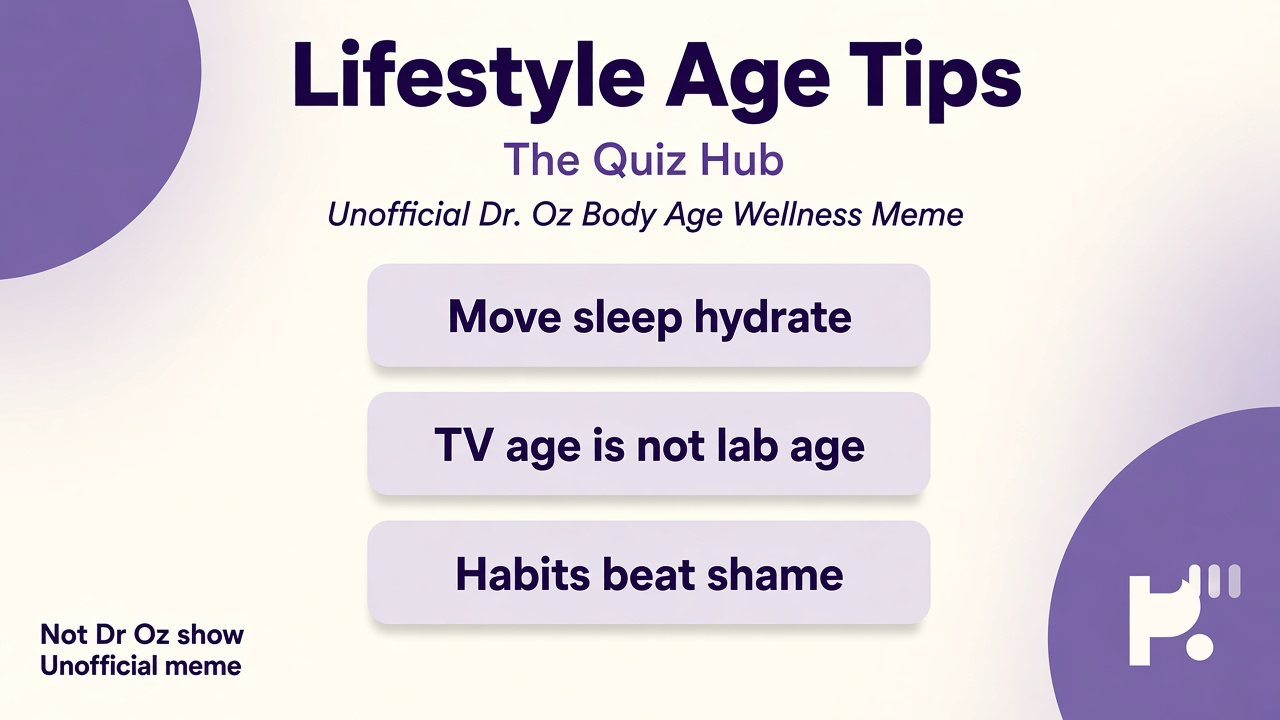
A quick takeaway graphic with topic tips (not your personal quiz scores). Start the quiz for your index, bands, and charts.
What this quiz can and cannot tell you
Can tell you
- Translate TV wellness meme language into four habit bars you can discuss with friends or clinicians
- Separate unofficial fan education from RealAge marketing or show endorsement claims
- Highlight reverse-item myths like one score equals Mehmet Oz reviewing your chart
- Encourage professional review when drift and stress bars stay high and life feels unmanageable
Cannot tell you
- Affiliate with or replicate Dr Oz, Harpo, RealAge, or proprietary television wellness programs
- Measure clinical biological age, telomere length, or vascular age from blood or imaging
- Diagnose depression, anxiety, substance use disorder, or any medical condition
- Prove you need specific supplements because a meme bar or fan quiz scored high
Why TV lifestyle-age memes need loud unofficial disclaimers
Daytime and streaming wellness turned habits into a game show number: subtract years if you walk, add years if you smoke, gasp at a real-age reveal. The format helps people notice sleep and movement without reading a textbook. It also blurs into fan quizzes that imply a celebrity doctor signed your chart. This page stays in meme-education lane on purpose. It is reflection about habit clusters and self-image you already recognize online, not a Harpo product, not RealAge certification, and not a shortcut around licensed care when symptoms hurt your body or mood.
Move-sleep-recover items mirror the virtuous montage: intentional movement beyond January guilt, sleep that makes mornings workable, light strength or stretch habits, protecting recovery during travel crunch, and friends who read your energy as younger-lifestyle. Reverse items where exercise is always sacrificed and sleep is never protected keep fantasy responders honest. Memes are not moral scores; they are invitations to notice one kinder routine, not to shame a disabled body that cannot meet clip-culture stairs.
Wear-and-tear drift items borrow older-age clip language: ultra-processed defaults, all-day sitting without breaks, smoking vaping or heavy drinking flags, skipped dental and medical checkups, and weeks that stay sedentary despite Monday promises. Reverse items denying processed food and sitting should not deflate a bar meant to track active drift. If substance use or neglect feels out of control, clinicians plan safety and treatment; this screener only nudges you toward that conversation when bars stay high.
Stress-and-mind load items echo how people say worry ages them: conflict seasons, lonely face-to-face weeks, mental fog and burnout, tension in jaw or gut. Reverse items where stress never touches felt age keep the bar meaningful. Overlap with depression or anxiety is possible; only a licensed professional can interpret that overlap and plan care. Pair your tallest bar with offline experiments,a five-minute walk before opening wellness feeds, one voice note to a friend instead of comparing mirror lines to a show still.
TV age self-story items track meme literacy and self-image: knowing unofficial quizzes are not medical charts, comparing stamina or face to montage promises, sharing fan tests for fun, rejecting myths that Mehmet Oz personally reviewed your score, and birthday dread after before-and-after scrolls. Reverse items endorsing celebrity endorsement fantasies should not inflate literacy bars. Retake to notice shifts, but let clinicians own labs, meds, and safety planning. Lifestyle-age literacy is a mirror for habits and self-talk, not a television contract.
| Test | Focus |
|---|---|
| Biological age quiz | Broader biological-age framing rather than Dr Oz TV wellness meme clusters |
| Are you fit for your age quiz | Fitness-for-age habits rather than wear-and-tear drift and show-number self-story |
Dr Oz Age Quiz FAQ
Is this quiz affiliated with Dr Mehmet Oz or RealAge?
No. It is unofficial fan and education content about popular TV wellness and lifestyle body-age memes. It is not endorsed by Mehmet Oz, M.D., Dr Oz, Harpo, RealAge, or any official television wellness program, and it does not use show branding as medical assignments.
What does the lifestyle body-age reflection index measure?
It measures how much you agree with habit statements about movement and sleep, wear-and-tear drift, stress that makes you feel older, and TV wellness self-story language. You get an index from 0 to 100 and four bars. It reflects self-report on this screener, not lab biological age or a clinical diagnosis.
Can a high bar tell me my real biological age?
No. Clinical biological age uses validated tools, history, exam, and sometimes labs or imaging chosen by licensed clinicians. This quiz reflects meme-language habits and self-image here, not telomeres, arterial age, or a RealAge trademark score.
Why are some statements worded opposite to the habit?
Reverse-worded items catch autopilot responding. Agreeing that you never exercise or sacrifice sleep, that processed food and sitting never describe your month, that stress never changes felt age, or that Mehmet Oz personally reviewed your fan quiz score should not inflate bars meant to track active clusters.
Who reviewed this quiz?
Dr. Elena Vasquez, PhD reviewed the unofficial not-affiliated framing, YMYL limits on diagnosis and show endorsement, and crisis guidance. See our editorial policy for review standards.
Reviewed by