What this trend literacy screener measures
This screener is not affiliated with Dr Philip Goglia, G-Plans, or any official metabolic typing product. It is not endorsed by those brands and is not medical advice. It measures how much you agree with popular metabolic typing trend statements grouped four ways: protein type fit about steady energy after protein-forward meals, fog after carb-heavy plates, and fast-oxidizer language in celebrity coach posts; carb type fit about grains and fruit feeling energizing, heavy protein days feeling flat, and slow-oxidizer trend talk; mixed dual fuel about rotating macro emphasis and resisting one-size-fits-all ratios; and fuel rhythm habits about meal skipping dips, hydration cues, self-labeling as a type, and timing rules from feeds. You answer 22 statements from strongly disagree to strongly agree, with reverse-worded items so one lucky streak cannot inflate every bar. Your answers also feed a second chart on closeness and trust habits, because body-and-food identity and vulnerability often trade places under stress. The total becomes an index from 0 to 100 where higher means more reported fit with these typing clusters on this screener, not proof of oxidative metabolism, insulin resistance, or a license to follow any influencer meal plan.
Protein type fit
Steady energy after protein plates, fog after big carbs, and protein-type celebrity trend language.
Carb type fit
Energy from grains and fruit, flatness on meat-heavy days, and carb-type slow-oxidizer talk.
Mixed dual fuel
Rotating macro emphasis, mixed-type posts, and resistance to identical ratios for everyone.
Fuel rhythm habits
Meal-skipping mood dips, hydration habits, type self-labels, and timing rules from feeds.
How it works
Answer 22 agreement items
Rate each statement from Strongly disagree to Strongly agree. Tap Next after each answer.
Answers sort into four domains
Each answer feeds one of four typing-fit groups, and every item also feeds a closeness and trust layer.
See your index and charts
You get a 0 to 100 index, a band, four domain bars, and a second chart for intimacy habits.
Take the Dr Goglia Metabolic Quiz
Answer 22 short statements to see your metabolic typing trend fit index, four domain bars, and a closeness and trust chart.
What your result means
Your index is the average of all 22 answers, scaled from 0 to 100, with reverse-worded items flipped first. Higher means more reported fit with these metabolic typing clusters on this screener. Read the tallest domain bar before you treat the total as a diagnosis or buy a type-specific program.
| Band | Index range | Typical reading |
|---|---|---|
| Quieter metabolic typing fit | 0 to 35 | Less agreement with protein, carb, mixed, and fuel-rhythm trend items on this screener. |
| Mixed metabolic typing fit | 36 to 65 | Strong fit with some typing domains and softer fit with others. |
| Broad metabolic typing fit | 66 to 100 | Frequent agreement across protein, carb, mixed, and fuel-rhythm trend items. |
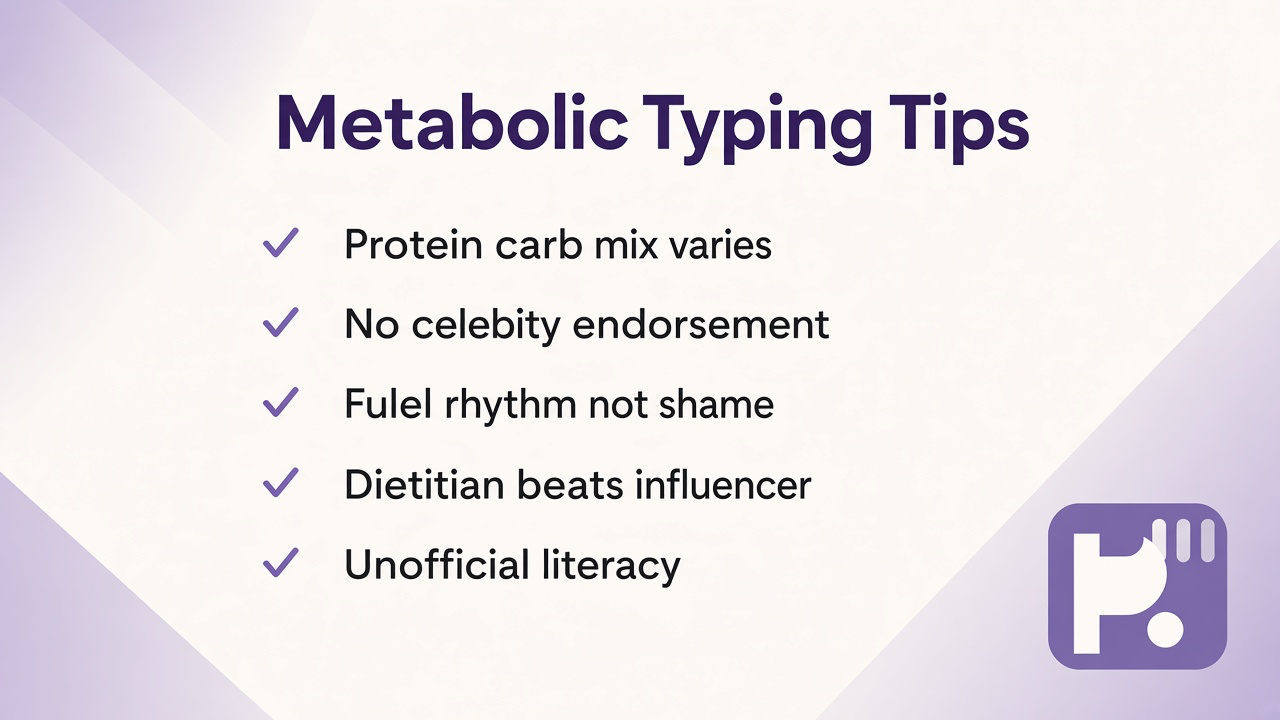
Tips at a glance
A quick takeaway graphic with topic tips (not your personal quiz scores). Start the quiz for your index, bands, and charts.
What this quiz can and cannot tell you
Can tell you
- Show which popular macro-type storyline your self-report resembles most
- Separate feed-fueled meal guilt from how you want to fuel your body
- Spark safer questions for clinicians when energy or eating patterns worry you
- Encourage reading four bars instead of one catchy protein-or-carb label
Cannot tell you
- Diagnose metabolic disorders, eating disorders, or nutrient deficiencies
- Endorse or replicate Dr Goglia, G-Plans, or any celebrity protocol as medical care
- Prove you must eat, fast, or supplement based on a bar height
- Replace labs, body composition testing, or dietitian care when symptoms persist
Why metabolic typing trends need literacy, not labels
Short-form wellness sells metabolism with three buckets: protein types who need meat-forward plates, carb types who need grains and fruit, and mixed types who rotate. Celebrity coaches and app funnels amplify the story because it feels more personal than generic eat-less advice. Trend literacy means knowing what those names are good for, usually naming where you feel seen at the dinner table, and what they are bad for, pretending a scrollable quiz replaced individualized medical nutrition therapy.
Protein-type language points to steady energy after eggs or fish and fog after pastry-heavy breakfasts. Carb-type language points to irritability on all-meat days and brightness after starch and fruit. Mixed-type language points to seasons where appetite shifts and rigid camps feel wrong. Fuel-rhythm language points to meal clocks, water bottles, and calling yourself a type in group chat. None of that proves oxidative rate on a lab chart; it proves the algorithm found a story you might repeat about your body.
Unofficial quizzes exist because searchers want language for self-image without signing up for a sales funnel. A responsible screener stays clear: not affiliated with Dr Goglia or G-Plans, not medical advice, not permission to ignore symptoms or restrict food without support. Reverse items catch myth absorption: agreeing that carbs never affect your morning alertness, that meat-heavy days always feel fine, that appetite never rotates, or that type labels never touch your shopping should not inflate bars meant to track trend fit.
Pair bar charts with kindness and boundaries. High protein-type fit with rising fear-of-intimacy on the stack might mean you fixate on macros instead of asking for emotional support. High carb-type with low mixed might mean fruit-and-grain talk fits while rotation talk does not, which is normal. If a type label makes you purge, hide meals, or panic before restaurants, step back from the feed and talk with a licensed clinician or eating-disorder-informed provider who can interpret habits in context.
Use results to notice which stories you internalize, then choose one gentle experiment if you want, like consistent meal times or hydration, without calling it a type cure. Retake after a lower-scroll month. Literacy grows when you can name the trend, laugh at oversimplification, and still show up for real care when your body or relationship with food asks for it.
| Test | Focus |
|---|---|
| Dr Berg body type quiz | Adrenal-liver-thyroid-ovary body-shape trend language rather than protein-carb-mixed fuel typing |
| Body type quiz | Fashion and silhouette shape habits rather than metabolic macro-type labels |
Dr Goglia Metabolic Quiz FAQ
Is this quiz official or endorsed by Dr Philip Goglia or G-Plans?
No. It is an unofficial trend literacy screener on The Quiz Hub. Dr Philip Goglia, G-Plans, and related brands did not create, sponsor, or review it. It reflects popular metabolic typing language online, not their programs or medical advice.
What does the trend fit index measure?
It measures how much you agree with statements about protein-type energy, carb-type plates, mixed dual-fuel rotation, and fuel-rhythm identity habits as described in wellness trend content. You get an index from 0 to 100 and four bars. It reflects self-report on this screener, not a clinical metabolic typing test.
Can this quiz diagnose metabolism problems or tell me exactly what to eat?
No. It cannot diagnose metabolic disorders, eating disorders, or nutrient needs. Only a licensed clinician or registered dietitian can evaluate symptoms, history, and appropriate tests before prescribing an individualized plan.
Why are some statements worded opposite to the trend?
Reverse-worded items catch autopilot responding. Agreeing that carbs never affect morning alertness, that meat-heavy days always feel fine, that appetite never rotates, or that type labels never shape your eating should not inflate trend-fit bars.
Who reviewed this quiz?
Dr. Elena Vasquez, PhD reviewed the unofficial framing, non-medical limits, and symptom referral language. See our editorial policy for review standards.
Reviewed by