What Dorm Room Aesthetic Quiz measures
This quiz does not certify you as an interior designer or score your worth as a roommate. It measures how much you agree with college dorm taste statements grouped four ways: cozy minimalist habits around neutrals, texture, and calm surfaces; maximalist color habits around posters, pattern, and saturated decor; study-first habits around desk layout, lighting, and coursework zones; and social lounge habits around seating, hosting, and hangout flow. You answer 22 statements from strongly disagree to strongly agree, with reverse-worded items so one lucky guess cannot inflate every bar. Your answers also feed a second chart on closeness and trust habits, because shared rooms sometimes hide how openly you claim space. The total becomes an index from 0 to 100 where higher means more reported aesthetic clarity on this screener, not proof your RA will approve every mount.
Cozy minimalist
Soft neutrals, warm lighting, plants, throws, and clutter-conscious surfaces.
Maximalist color
Bold posters, tapestries, pattern mix, and decor that feels loud on purpose.
Study-first
Desk priority, charging zones, planners, and layouts that protect focus.
Social lounge
Extra seating, lights, speakers, and furniture aimed at hosting friends.
How it works
Answer 22 agreement items
Rate each statement from Strongly disagree to Strongly agree. Tap Next after each answer.
Answers sort into four domains
Each answer feeds one of four aesthetic groups, and every item also feeds a closeness and trust layer.
See your index and charts
You get a 0 to 100 index, a band, and two bar charts you can use to name your dorm vibe.
Take the Dorm Room Aesthetic Quiz
Answer 22 short statements to see your college dorm aesthetic index, four domain bars, and a closeness and trust chart.
What your result means
Your index is the average of all 22 answers, scaled from 0 to 100, with reverse-worded items flipped first. Higher means more reported aesthetic clarity on this screener. Read study-first and social lounge bars together before you treat the total as a decorating mandate.
| Band | Index range | Typical reading |
|---|---|---|
| Softer dorm aesthetic signal | 0 to 35 | Fewer strong pulls toward one clear cozy, bold, study, or lounge story. |
| Mixed dorm aesthetic signal | 36 to 65 | Solid pulls in some domains with opposite habits in others. |
| Clear dorm aesthetic signal | 66 to 100 | Frequent agreement with a recognizable cozy, bold, study, or lounge pattern. |
Tips at a glance
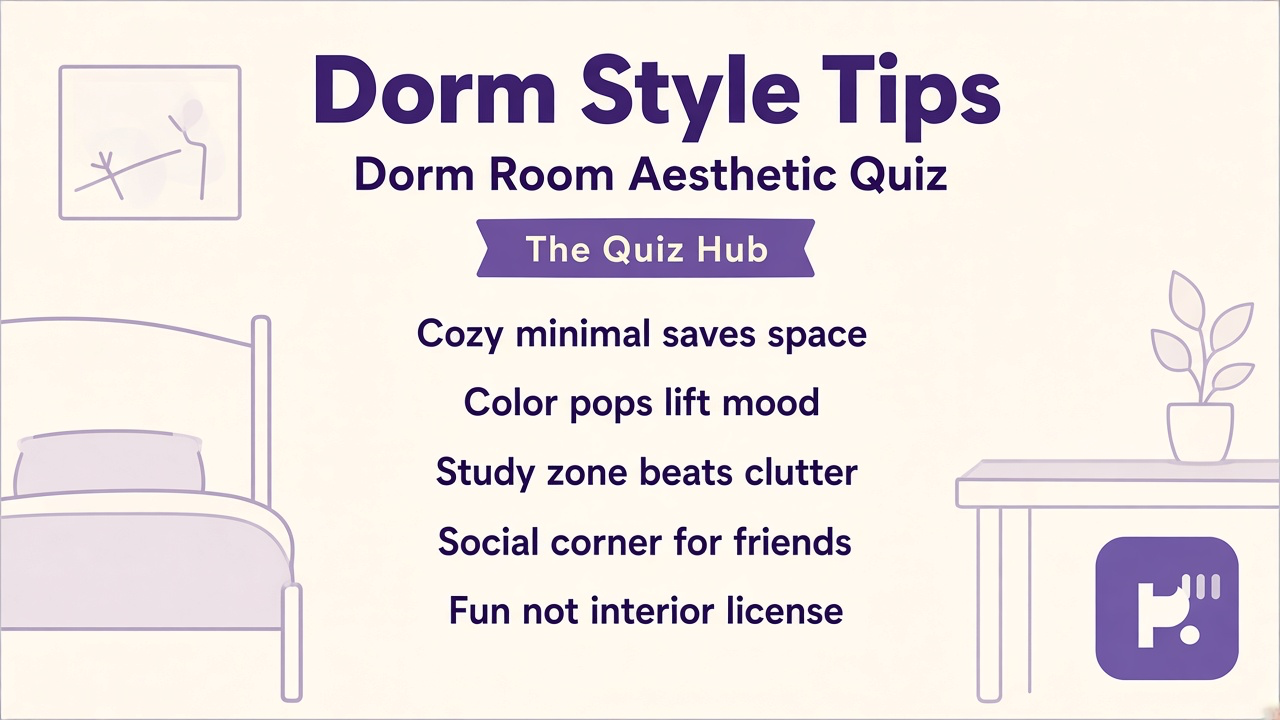
A quick takeaway graphic with topic tips (not your personal quiz scores). Start the quiz for your index, bands, and charts.
What this quiz can and cannot tell you
Can tell you
- Highlight whether you lean cozy, bold, study-heavy, or hangout-heavy
- Spark roommate conversations about shared zones and decor budgets
- Offer a fun label for group chats and move-in posts
- Encourage small, affordable room tweaks without shame
Cannot tell you
- Certify you for professional interior design or paid staging work
- Override campus housing, fire-code, or roommate agreement rules
- Predict GPA, social popularity, or mental health from decor taste
- Prove your room is safe if mounts, candles, or clutter break policy
Why dorm aesthetics are personality, not a design degree
College dorms are tiny stages where sleep, study, and friendship collide. A cozy minimalist might chase one lamp, a neutral duvet, and bins that hide chaos before parents visit. A maximalist color fan stacks posters, LED strips, and thrift finds because blank cinderblock walls feel like a holding cell. Neither camp is more sophisticated; they are different stories about comfort in a box.
Study-first aesthetics show up when the desk becomes sacred ground. Good light, cable control, and a chair that survives long readings matter more than another plush chair for guests. That is not boring; it is honest about why the room exists during midterms. Social lounge aesthetics flip the script: floor pillows, movable seating, and a speaker corner signal that your room is a third place between dining hall and library.
Most real rooms blend all four pulls across the semester. Finals week raises the study bar; homecoming weekend raises the social bar. Roommate taste, gift clutter, and what your school forbids on walls matter as much as Pinterest. Reverse items catch all-or-nothing myths, like pretending you never need a calm surface or that cables never matter if the hangout looks cute.
Treat results as language for negotiation, not a license to drill into masonry or ignore a roommate who needs quiet. Fire codes, weight limits on loft beds, and banned candles exist because dorms are shared infrastructure, not solo design studios. If you love decor, channel that energy into reversible, budget-friendly moves: command hooks rated for weight, washable textiles, and one statement wall instead of a fire hazard collage.
Save your highest bar as a hashtag for move-in day, then notice what changes after you live in the space for a month. Retake when your habits get honest. Aesthetic clarity is a mirror for how you want to feel in a small room, not a certificate that you should charge friends for redesign advice.
| Test | Focus |
|---|---|
| Aesthetic quiz | Broader visual aesthetic labels beyond college dorm layout habits |
| Which aesthetic am I 2026 | Trend-forward aesthetic typing when you want more than a dorm snapshot |
Dorm Room Aesthetic Quiz FAQ
What does this quiz measure?
It measures how much you agree with statements about cozy minimalist, maximalist color, study-first, and social lounge dorm habits. You get an index from 0 to 100 and four bars. It reflects self-reported taste on this screener, not a design degree or roommate report card.
Is this an interior design certification?
No. It is fun self-image reflection about college room vibes. Professional designers train for codes, accessibility, and client work this quiz does not touch.
Why are some statements worded as opposites?
Reverse-worded items catch all-or-nothing answering. Agreeing that you want zero calm space or that messy cables never matter should not inflate every bar.
What if my roommate disagrees with my highest bar?
Use the bars as conversation starters about shared zones, budgets, and housing rules. The quiz does not pick a winner in real-life negotiations.
Who reviewed this quiz?
Dr. Rachel Kim, PhD reviewed the fun-only framing, dorm aesthetic domains, and limits on treating results as design expertise. See our editorial policy for review standards.
Reviewed by